Yellowjacket
Bright yellow-black, smooth body, often nests in ground
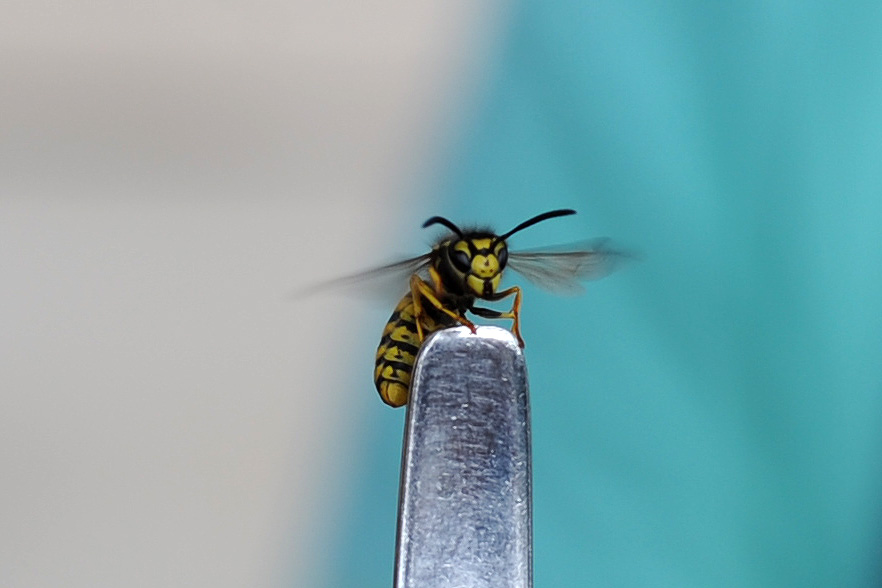
Individual
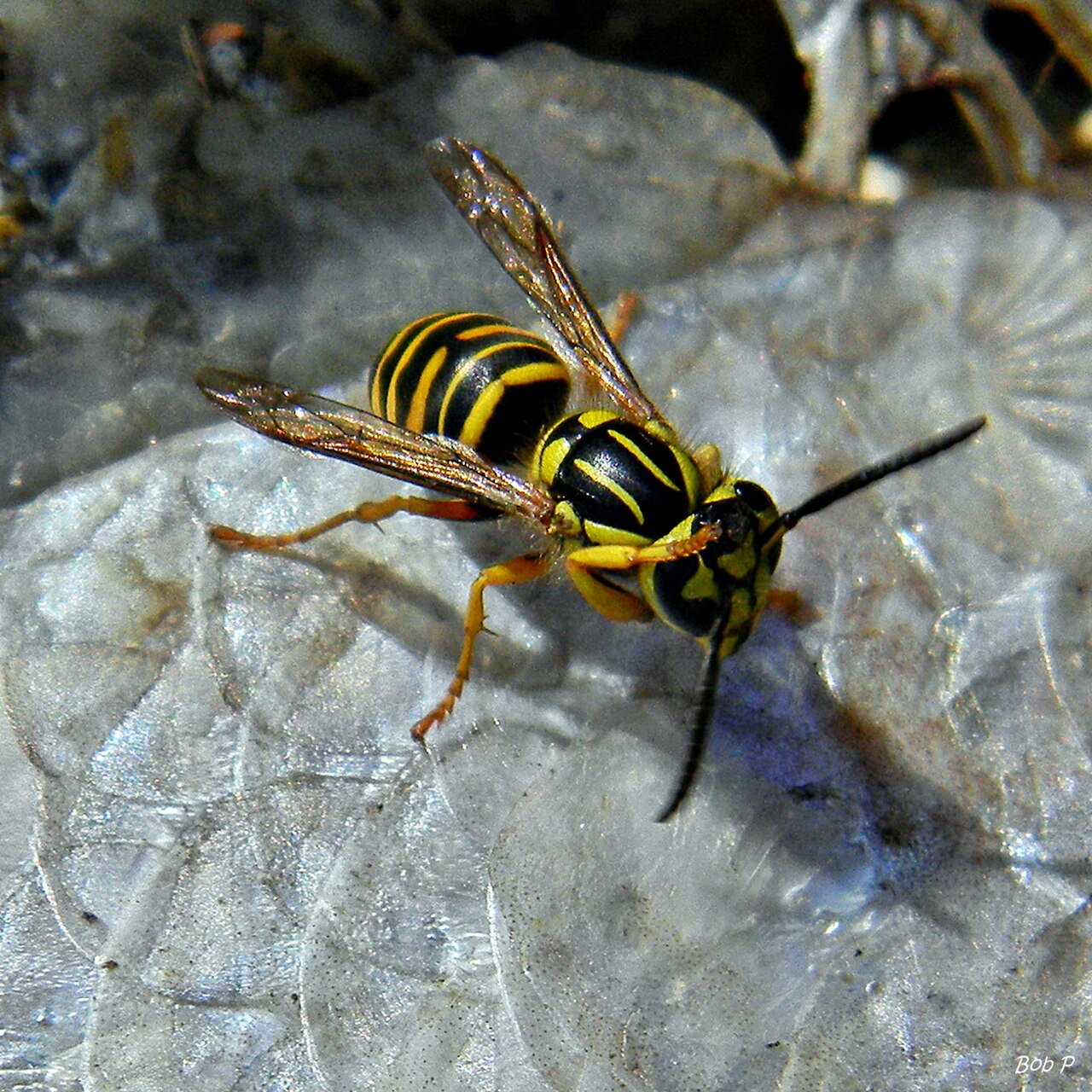
Swarm
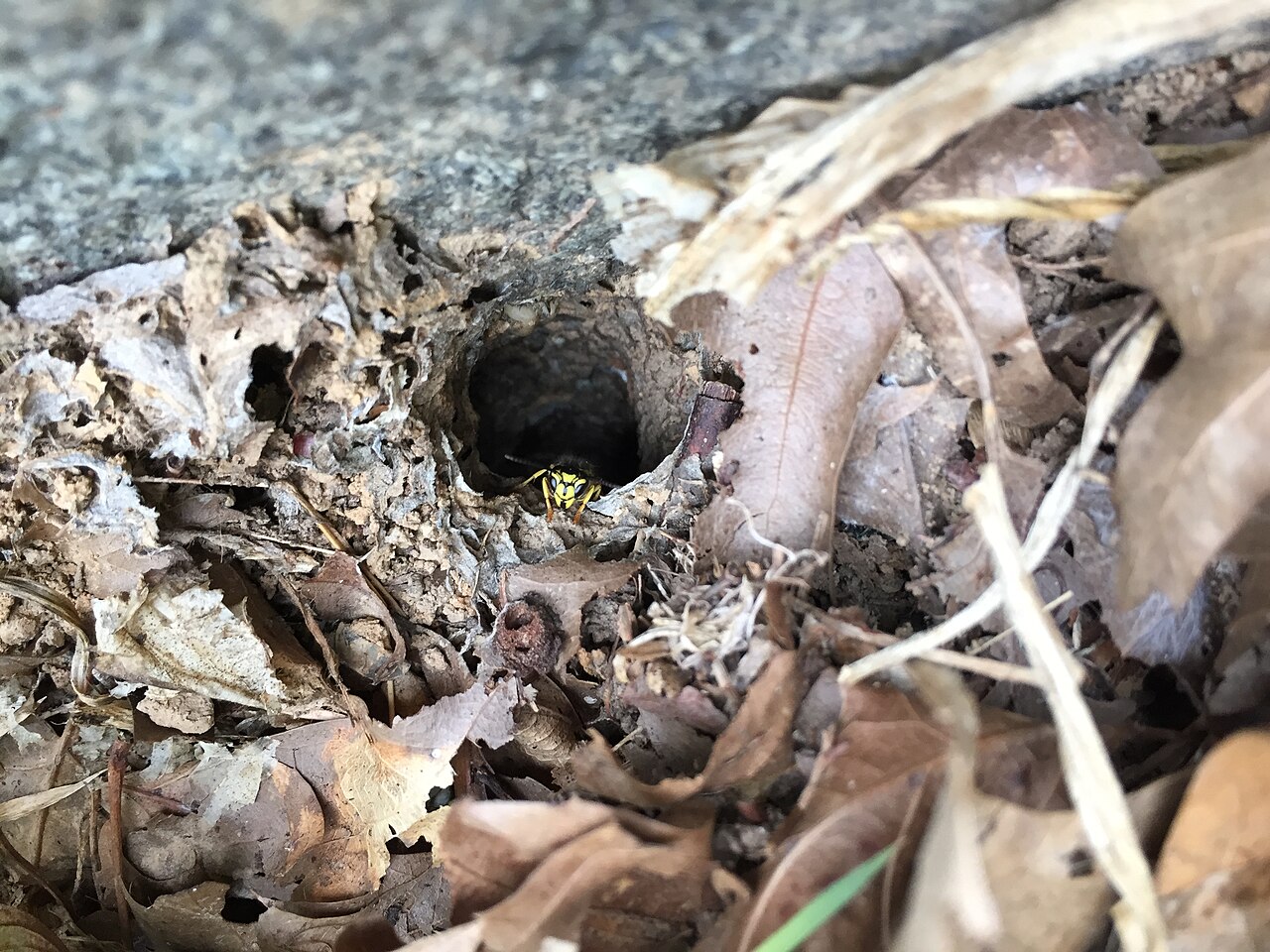
Nest / Hive
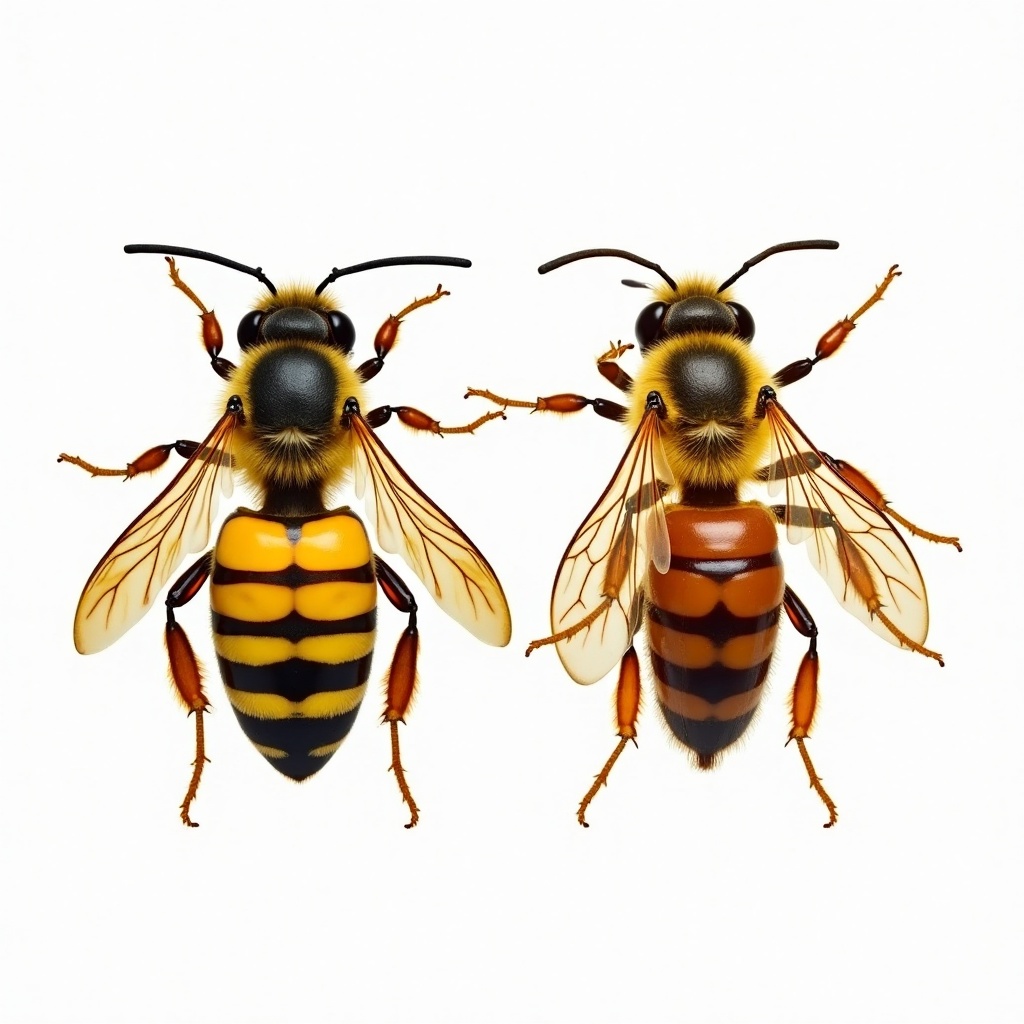
Wing / Body Pattern
What It Is
Yellowjackets are social wasps, not bees, in the genera Vespula and Dolichovespula. They are the insect most commonly misidentified as a bee by homeowners and the most commonly encountered stinging insect in late-summer residential situations. Colony sizes peak in late summer and can reach tens of thousands in established nests. Size: roughly 1/2 inch, compact and stocky.
How to Identify
Bright, high-contrast black and yellow banding. Smooth body with no body hair. A pronounced narrow waist. This is the insect most people picture when they say bee but it is a wasp. Yellowjackets are seen at outdoor food and garbage, foraging for protein and sugar, especially in late summer. Honeybees forage at flowers. If an insect is investigating your food or garbage, it is almost certainly a yellowjacket. Nest: most commonly underground in soil cavities. Also in wall voids, crawl spaces, and attic spaces. The nest itself is enclosed gray paper material.
Behavior and Risk
Yellowjackets are highly defensive. They sting without direct provocation if the nest is disturbed, and they respond quickly in numbers. Alarm pheromone from one sting triggers others. They can sting multiple times. Ground nest disturbance during lawn mowing or stepping near the entry is the most common cause of mass yellowjacket stings. Late summer colonies are at maximum size and workers are at peak defensiveness. Venom causes pain and local swelling. Allergic individuals face anaphylaxis risk.
How to Handle
If you discover a ground nest or wall void nest: do not disturb it. Mark the area to prevent accidental approach. Keep people and pets away. Contact a pest control company. If you accidentally disturb a ground nest: move away rapidly in a straight line. Do not swat. Get indoors or into a vehicle immediately.
Yellowjacket vs. honeybee: yellowjackets are bright yellow-black, smooth, and often seen at food; honeybees are amber-brown, fuzzy, and seen at flowers. If it is fuzzy, it is a bee. If it is smooth and bright yellow, it is a yellowjacket.
Frequently Asked Questions
Are yellowjackets bees?
No. Yellowjackets are wasps. They do not produce honey in the quantities that honeybees do, do not build wax comb, and are removed by pest control, not bee relocation.
Why are yellowjackets so aggressive in late summer?
Colony size is at its annual peak and worker populations are at maximum. Workers become more active foragers and more defensive as the colony maximizes before the winter die-off.
What should I do if there is a yellowjacket nest in my lawn?
Do not disturb it. Mark the area to prevent accidental approach. Contact a pest control company for treatment, typically done at night when workers are in the nest.
Does Beecasso remove yellowjackets?
Yellowjackets are wasps, not bees. Contact a licensed pest control company. If you are unsure whether you have yellowjackets or a honeybee colony, send us a photo and we will identify it for free.
Is a yellowjacket the same as a bee?
No. The fastest check: if it is fuzzy and amber-brown, it is a bee. If it is smooth and bright yellow-black, it is a yellowjacket. Yellowjackets are also commonly seen at food and garbage, where honeybees are not.
What our customers say
4.9 stars · 119 reviews
I can’t say enough good things about Steve and team! They came out on incredibly short notice when we were dealing with a stressful situation, and from the moment they arrived, they were professional, knowledgeable, and genuinely cared about doing the job right. What really stood out was how much they went above and beyond. They didn’t just handle the immediate issue—they took the time to thoroughly assess everything, explain the process, and make sure we felt comfortable every step of the way. Their attention to detail and work ethic were next-level. It’s rare to find a team this responsive, reliable, and committed to quality. I’m so grateful we found them and wouldn’t hesitate to recommend them to anyone dealing with a similar situation. Truly exceptional service.
They were incredible. Came out on super short notice, were extremely professional, and went above and beyond to handle everything thoroughly. You can tell they really care about doing the job right. So grateful we found them--highly recommend!
Steve is honest and fair. They do great work. I just used them and highly recommend them.