Found a Bee Swarm This Summer in Nashville? What It Means and What to Do
June 25, 2026 · 4 min read
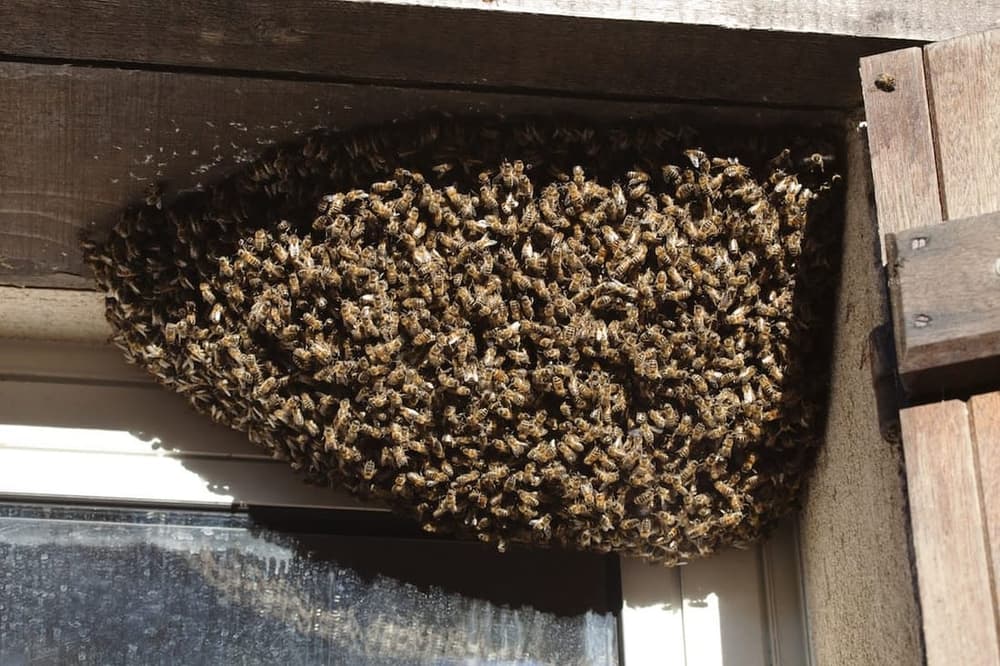
A cluster of bees hanging on a branch or fence in summer is almost certainly a honey bee swarm searching for a new home. It is usually calm, temporary, and safe to leave alone while you call for live removal.
If you just walked outside to a dense clump of bees on a tree limb, a fence post, or a mailbox, take a breath. This is one of the most common bee situations homeowners run into in the warm months, and in most cases it is far less alarming than it looks.
What is a bee swarm, and why is it in my yard?
A swarm is how a honey bee colony reproduces. When a hive gets crowded, the colony splits: the old queen leaves with about half the workforce to start a new home, while the rest stay behind to raise a new queen. The bees you are looking at are that traveling half, resting in a cluster while their scout bees fan out to search for a permanent cavity. Your tree or fence is just a temporary waypoint, not the nest. A primary swarm can be several thousand bees, sometimes up to around 20,000, which is why even a calm cluster looks dramatic.
Because they have no honey stores, no comb, and no brood to protect at this stage, a resting swarm has nothing to defend. That is a big part of why it stays so calm.
Swarm or established hive? How to tell
The fastest way to tell what you are dealing with is to look at where the bees are and whether there is comb.
- A swarm is an exposed cluster of bees out in the open, on a branch, fence, eave, or shrub, with no wax comb visible. It is transient and moves on once the scouts choose a new home.
- An established colony is different. Those bees are flying in and out of a single point on your house, usually a gap in a wall, soffit, or eave, and they have built comb inside the cavity. That is no longer a swarm; it is a hive living in your structure, and it needs a different kind of removal.
If the bees are already going into a wall or soffit of your home, read what to do when you find a beehive in your attic, because that is a structural job rather than a quick swarm catch.
Is a swarm dangerous?
A resting swarm is typically docile, but it is still thousands of bees, so treat it with respect. Keep a safe distance of about 15 to 20 feet, and keep children and pets well back. Do not swat at it, do not spray it, and do not knock it down. If you want to be sure you are looking at honey bees and not wasps, compare it from a distance against our honey bee identification guide.
Why do swarms happen in Nashville summers?
Swarming peaks in late spring and continues right through the summer here in Middle Tennessee. A strong colony plus a good nectar flow pushes hives to outgrow their space and split, and later in the season you can also see smaller afterswarms, which are secondary swarms led by new queens. So if you are seeing this in June, July, or August, it is right on schedule.
One reassuring note for our area: the honey bees in Tennessee are European honey bees. Africanized bees are not established here, so the defensive behavior people read about in other regions is not what you are facing in your Nashville backyard.
What to do right now
While the swarm is still clustered, you have a short, easy window. Here is the move:
- Keep your distance and keep kids and pets inside or well away.
- Do not spray it, hose it, or try to knock it down.
- Photograph it from a safe distance so we can size up the job.
- Call for live swarm removal while it is still in the open.
What not to do
No spray. No garden hose. And do not seal the bees into a wall if they have started moving into a gap, because trapping a colony inside makes the job harder and leaves comb and honey behind. The goal is to collect them alive while they are still easy to reach.
How fast should I act?
Quickly, but you do not need to panic. A clustered swarm usually moves on within a few hours up to two or three days, once the scouts agree on a new home. Calling while the bees are still exposed and clustered means an easy outdoor removal. If you wait and they choose the wall of your house, that same colony becomes a cut-out later, which is more involved and more expensive. Catching it early is the cheaper, simpler path, and it gets the bees moved alive.
If you are trying to plan the right timing for a removal in general, our guide on the best time to remove bees in Nashville walks through the seasons.
Spotted a swarm? Reach us through our Tennessee bee removal page or contact us and we will get it handled while it is still easy.
Frequently Asked Questions
Is a bee swarm in my yard dangerous? A resting swarm is usually calm; keep 15 to 20 feet back and do not spray it.
How long will a bee swarm stay in one spot? Usually a few hours up to two or three days before scout bees lead it to a new home.
Should I spray a bee swarm? No; spraying provokes defense and kills beneficial honey bees. Call for live removal.
Do bee swarms happen in summer in Nashville? Yes; swarming peaks in late spring and continues into summer in Middle Tennessee.