Africanized Bee
Not established in Tennessee. Local colonies are European honeybees.
Individual

Nest / Hive

Wing / Body Pattern
What It Is
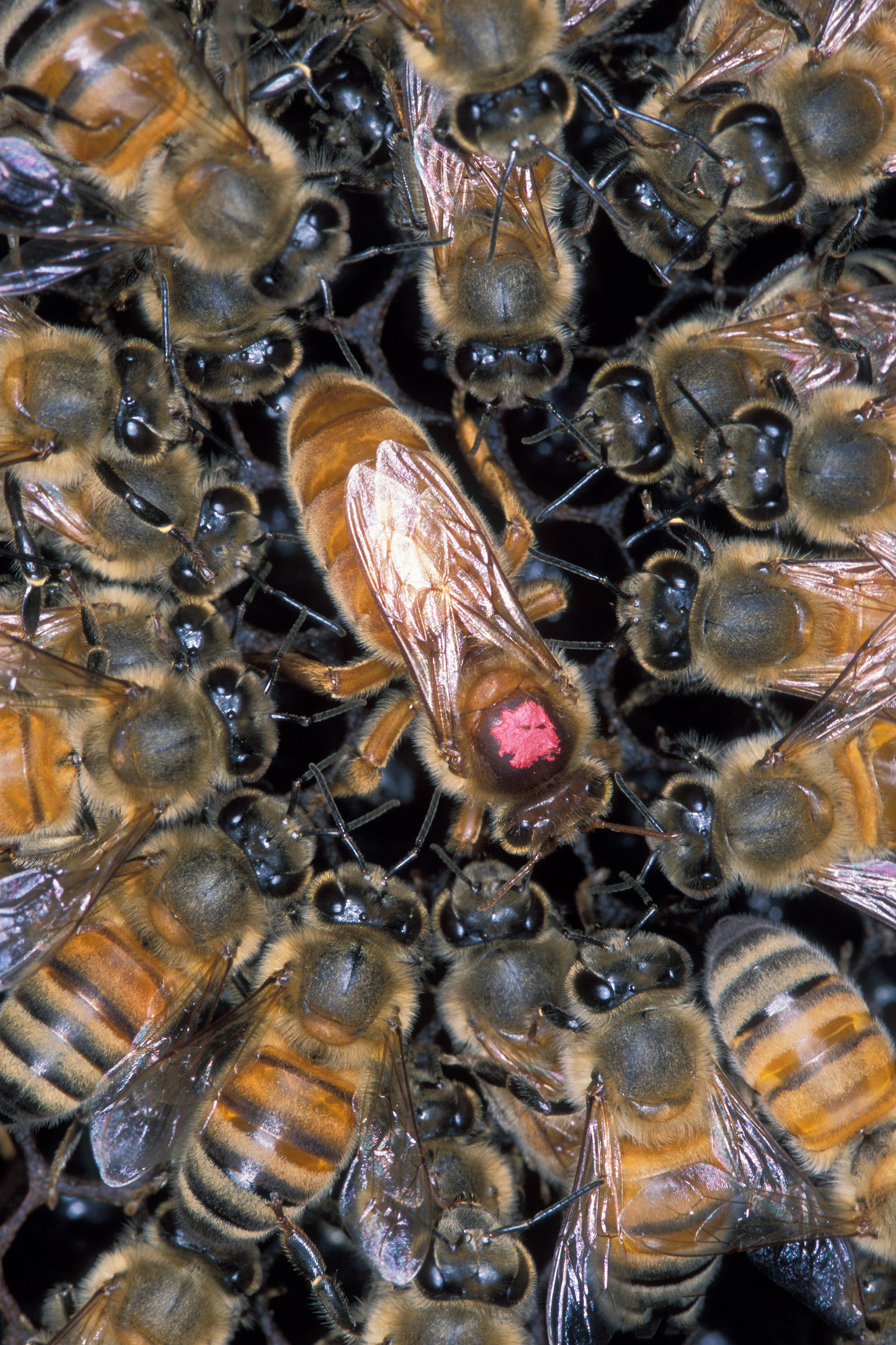
The Africanized honeybee is a hybrid of African and European honeybee subspecies, the result of a breeding program in Brazil in the 1950s. The hybrid spread north through Central America and Mexico and is now established across parts of the southern and southwestern United States, including Texas, Arizona, and the desert Southwest. It is not established in Tennessee. Africanized bees do not survive the colder winters of the mid-South, which holds their range well to the south of Middle Tennessee. The honeybees in and around Nashville are European honeybees. Size: identical to the European honeybee, because the two are the same species.
How to Identify
You cannot identify an Africanized bee by appearance. Body color, size, markings, and shape are effectively identical to a European honeybee, and a true distinction requires laboratory measurement. For a Middle Tennessee homeowner this is mostly academic, because Africanized colonies are not found here. The behavioral signals people associate with Africanized bees, a colony that responds very fast and in large numbers to a small disturbance and bees that pursue a threat far from the nest, are not what you should expect from a local colony. A normal European honeybee colony in the Nashville area can still defend itself if the hive is disturbed, but that is ordinary honeybee behavior, not Africanized behavior.
Behavior and Risk
Because Africanized bees are not established in Tennessee, the heightened-defensiveness risk that applies in the desert Southwest does not apply here. A local European honeybee colony is defensive near the hive, like any honeybee, and should not be disturbed, but it does not carry the rapid, large-scale, long-pursuit response that makes Africanized colonies dangerous further south. The practical rule for the Nashville area: treat a honeybee colony with normal caution, keep your distance, and call a professional. You do not need to assume it is Africanized.
How to Handle
If you find a honeybee colony in Middle Tennessee, treat it as a standard honeybee situation. Do not spray the entry, tap the wall, or block the opening while bees are active. Keep people and pets back, take a photo from a safe distance, and call us. There is no need to attempt your own assessment of whether a colony is Africanized, because that is not the local reality.
Africanized bees and European honeybees are visually identical, so appearance never tells them apart. The distinction matters in the southern and southwestern states where Africanized colonies are established. In Middle Tennessee they are not, so a wild colony you find here is a European honeybee.
Frequently Asked Questions
Are the bees in Tennessee Africanized?
No. Africanized honeybees are not established in Tennessee. They live in parts of the southern and southwestern United States and do not survive the colder winters of the mid-South. Honeybee colonies in the Nashville area are European honeybees.
Are Africanized bees the same as killer bees?
Killer bee is the media term for Africanized honeybees. The venom is not more potent than a standard honeybee. The risk, where they are established, comes from defensive behavior: responding faster, in larger numbers, and pursuing further. None of that applies in Tennessee, where they are not found.
Could Africanized bees ever reach Tennessee?
Their spread north is limited by cold. Africanized colonies do not overwinter well where winters are sustained and cold, which has kept their established range well to the south of Tennessee. For now, the honeybees in Middle Tennessee are European honeybees, and a wild colony you find here should be treated as one.
What do I do if I am stung by many bees in Nashville?
Get away from the nest area quickly, indoors or into a vehicle. Remove stingers by scraping, not squeezing. Anyone stung many times, or anyone with a known bee allergy who is stung at all, should seek medical attention. A large defensive response from a local colony is uncommon but possible if a hive is disturbed, which is exactly why you should not disturb one.
Does Beecasso remove honeybee colonies in Tennessee?
Yes. We remove honeybee colonies with live extraction and no extermination, relocating them whenever viable. Because Africanized bees are not established here, Nashville-area colonies are European honeybees, which we handle as a standard live removal. Send us a photo for a free assessment.
What our customers say
4.9 stars · 119 reviews
I can’t say enough good things about Steve and team! They came out on incredibly short notice when we were dealing with a stressful situation, and from the moment they arrived, they were professional, knowledgeable, and genuinely cared about doing the job right. What really stood out was how much they went above and beyond. They didn’t just handle the immediate issue—they took the time to thoroughly assess everything, explain the process, and make sure we felt comfortable every step of the way. Their attention to detail and work ethic were next-level. It’s rare to find a team this responsive, reliable, and committed to quality. I’m so grateful we found them and wouldn’t hesitate to recommend them to anyone dealing with a similar situation. Truly exceptional service.
They were incredible. Came out on super short notice, were extremely professional, and went above and beyond to handle everything thoroughly. You can tell they really care about doing the job right. So grateful we found them--highly recommend!
Steve is honest and fair. They do great work. I just used them and highly recommend them.