Bald-Faced Hornet
Black with white face and tail, large gray paper globe nest
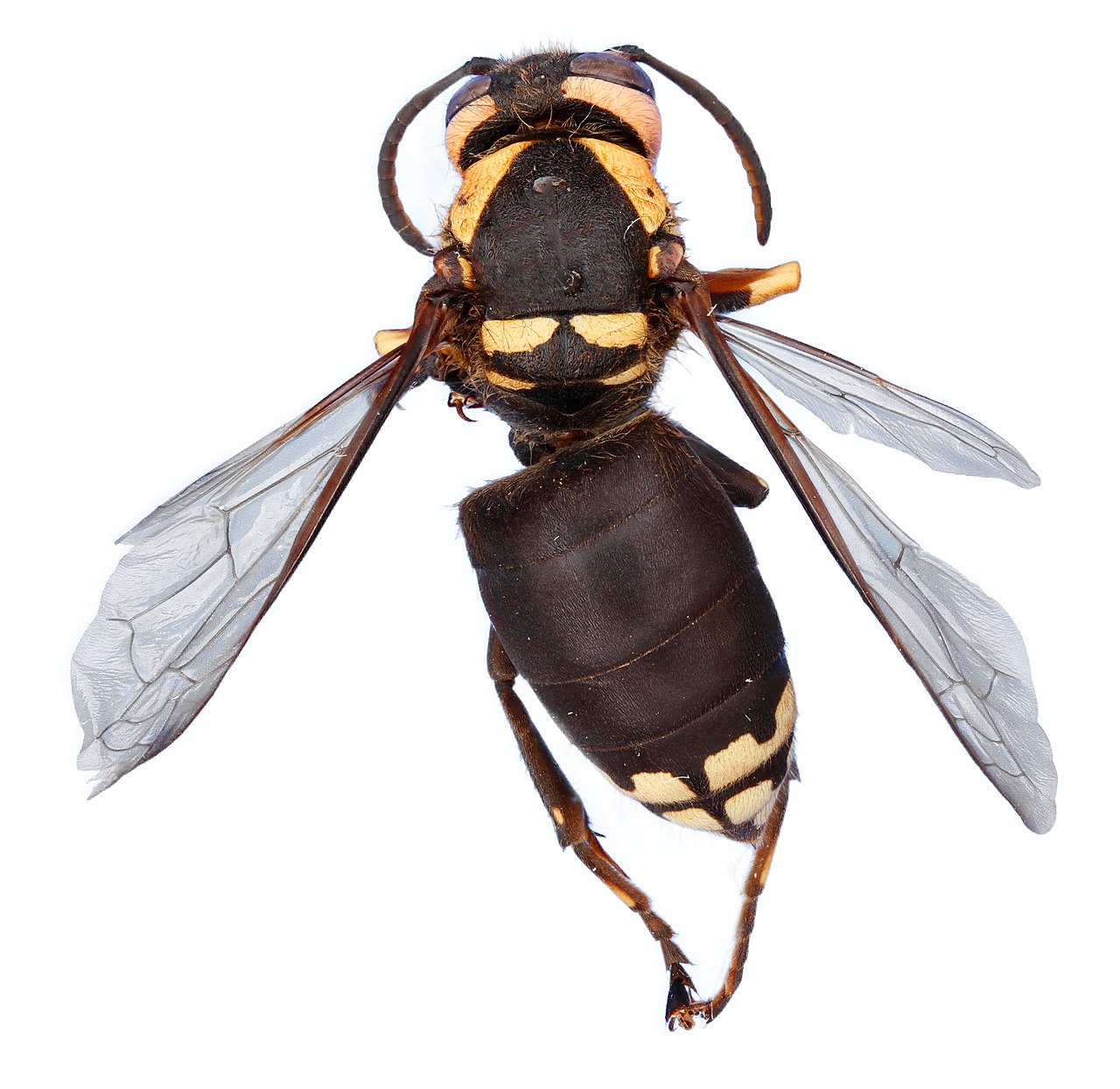
Individual
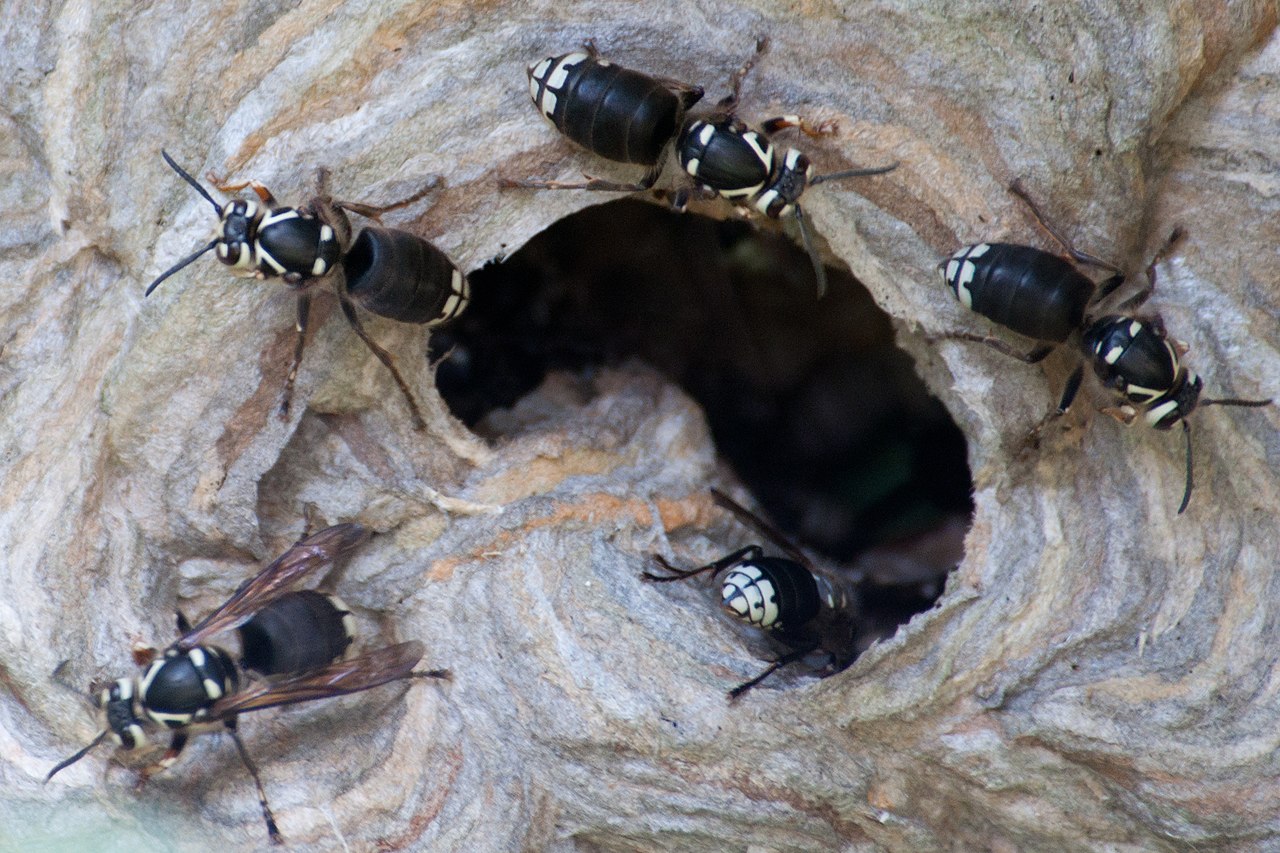
Swarm
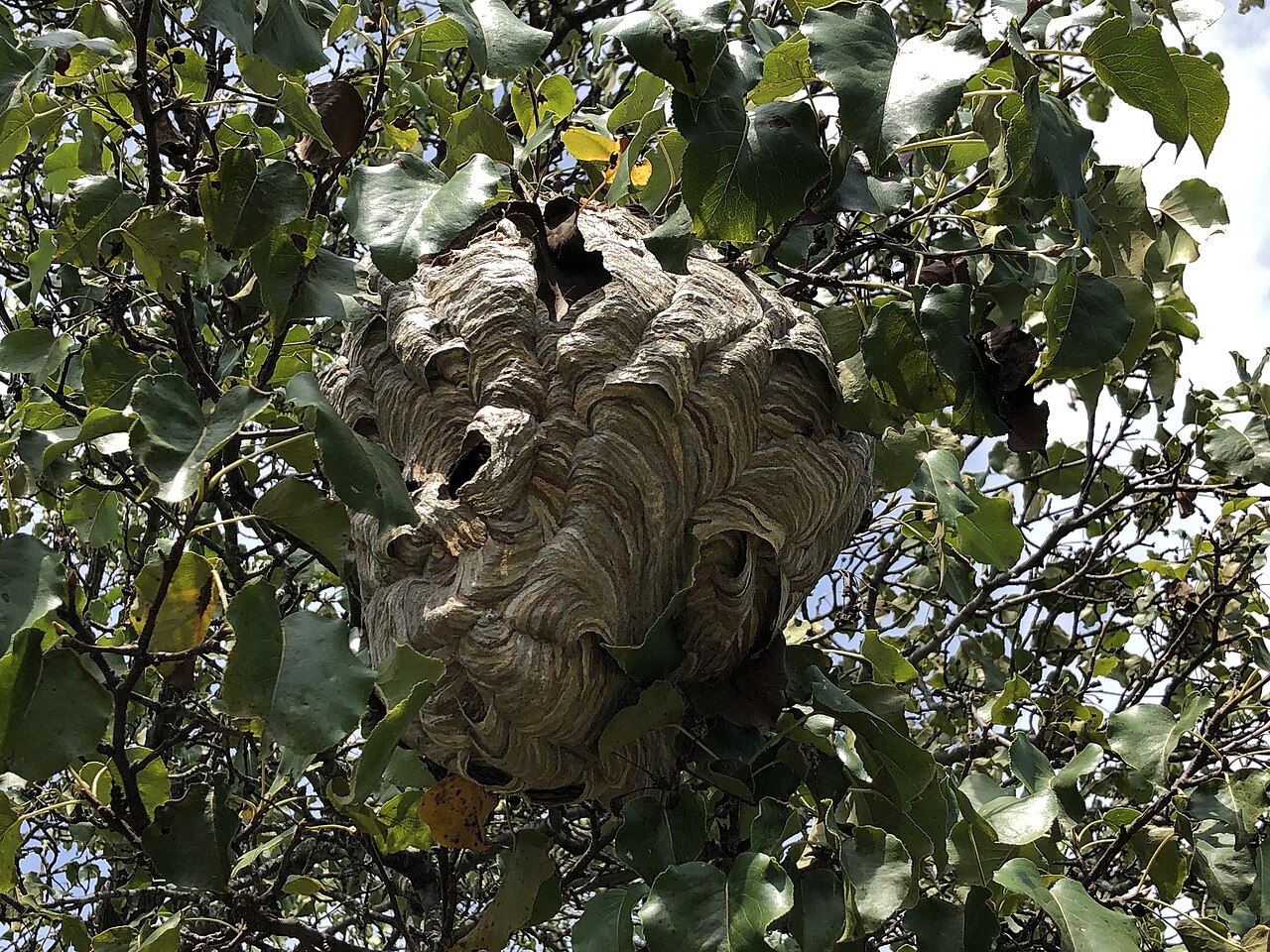
Nest / Hive
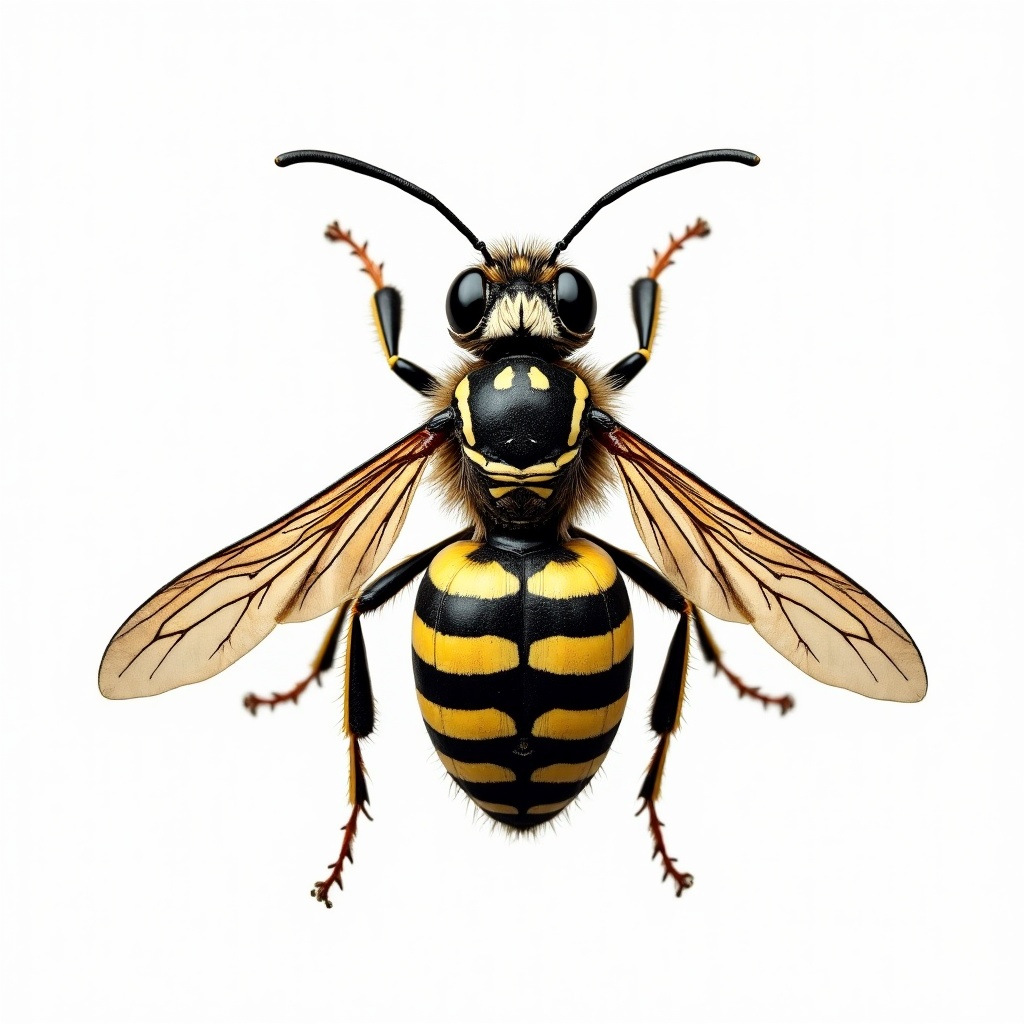
Wing / Body Pattern
What It Is
Despite the name, the bald-faced hornet is not a true hornet. It is a large yellowjacket relative in the genus Dolichovespula, and one of the more visually striking stinging insects in North America. It is common across Middle Tennessee, where its large gray paper nests turn up in trees and on building exteriors. Size: 5/8 to 3/4 inch, visibly larger than a yellowjacket.
How to Identify
The color pattern is distinctive: a black body with white or ivory markings on the face, white stripes on the abdomen, and a white tail tip. This black-and-white pattern stands out, and you should not expect yellow. The nest is the strongest homeowner identifier. Bald-faced hornets build large, enclosed paper nests, football to basketball sized, with a gray papery shell and no cells visible on the outside. Nests hang from tree branches and shrubs or attach to building exteriors, with the entrance at the bottom.
Behavior and Risk
Bald-faced hornets aggressively defend the nest. They will sting repeatedly and hold an active exclusion zone around the nest that reaches further than most stinging insects. The venom causes significant pain and swelling, with anaphylaxis risk for sensitive individuals. The colony dies in fall, and the nest is not reused the following year.
How to Handle
Do not approach the nest and do not throw anything at it. If the nest is in a low-risk location, high in a tree well clear of foot traffic, and fall is near, the colony will die off on its own. For a nest in a high-traffic area or near a building entrance, keep people back and call us.
Bald-faced hornets are black with white markings, not yellow. The large enclosed gray paper globe nest in a tree or on a structure is the strongest identifier. Compare with yellowjackets, which are yellow-black with a smaller enclosed nest that is often underground.
Frequently Asked Questions
Are bald-faced hornets dangerous?
They are aggressive defenders of the nest. A nest in a location with regular foot traffic or near a building entrance poses genuine risk. A nest high in a tree away from activity is lower urgency. The colony ends naturally in fall.
Will bald-faced hornets reuse the same nest next year?
No. The colony dies in fall and the nest is not reused. New queens start fresh the following spring and may build in the same area but not in the old nest.
Why is it called a hornet if it is not a true hornet?
Common names for stinging insects are not always scientifically precise. True hornets are in the genus Vespa. Bald-faced hornets are in Dolichovespula, a yellowjacket genus. The size and the enclosed nest earned them the hornet name colloquially.
Does Beecasso remove bald-faced hornets?
Yes. Beecasso handles hornet and wasp nests in addition to bees. If you are not sure whether you are looking at a hornet nest or a bee colony, send us a photo and we will identify it for free.
Found a large gray nest in a tree. What is it?
A large gray enclosed paper globe nest in a tree is almost certainly a bald-faced hornet nest. Do not approach it, because the colony defends an active exclusion zone around the nest. Send us a photo and we will confirm it and tell you how we handle it.
What our customers say
4.9 stars · 119 reviews
I can’t say enough good things about Steve and team! They came out on incredibly short notice when we were dealing with a stressful situation, and from the moment they arrived, they were professional, knowledgeable, and genuinely cared about doing the job right. What really stood out was how much they went above and beyond. They didn’t just handle the immediate issue—they took the time to thoroughly assess everything, explain the process, and make sure we felt comfortable every step of the way. Their attention to detail and work ethic were next-level. It’s rare to find a team this responsive, reliable, and committed to quality. I’m so grateful we found them and wouldn’t hesitate to recommend them to anyone dealing with a similar situation. Truly exceptional service.
They were incredible. Came out on super short notice, were extremely professional, and went above and beyond to handle everything thoroughly. You can tell they really care about doing the job right. So grateful we found them--highly recommend!
Steve is honest and fair. They do great work. I just used them and highly recommend them.