Mud Dauber
Very slender thread-waist, clay tubes on walls
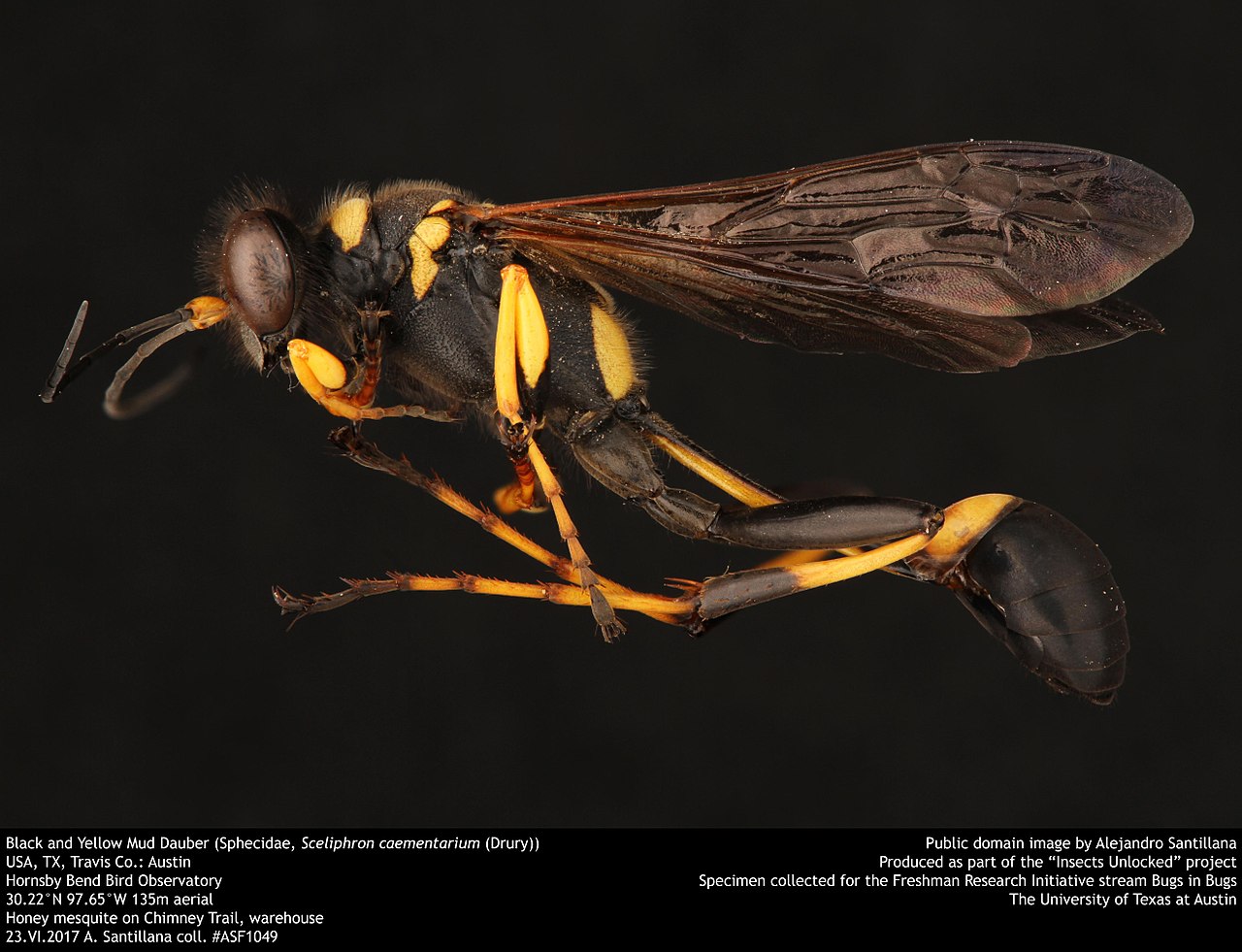
Individual
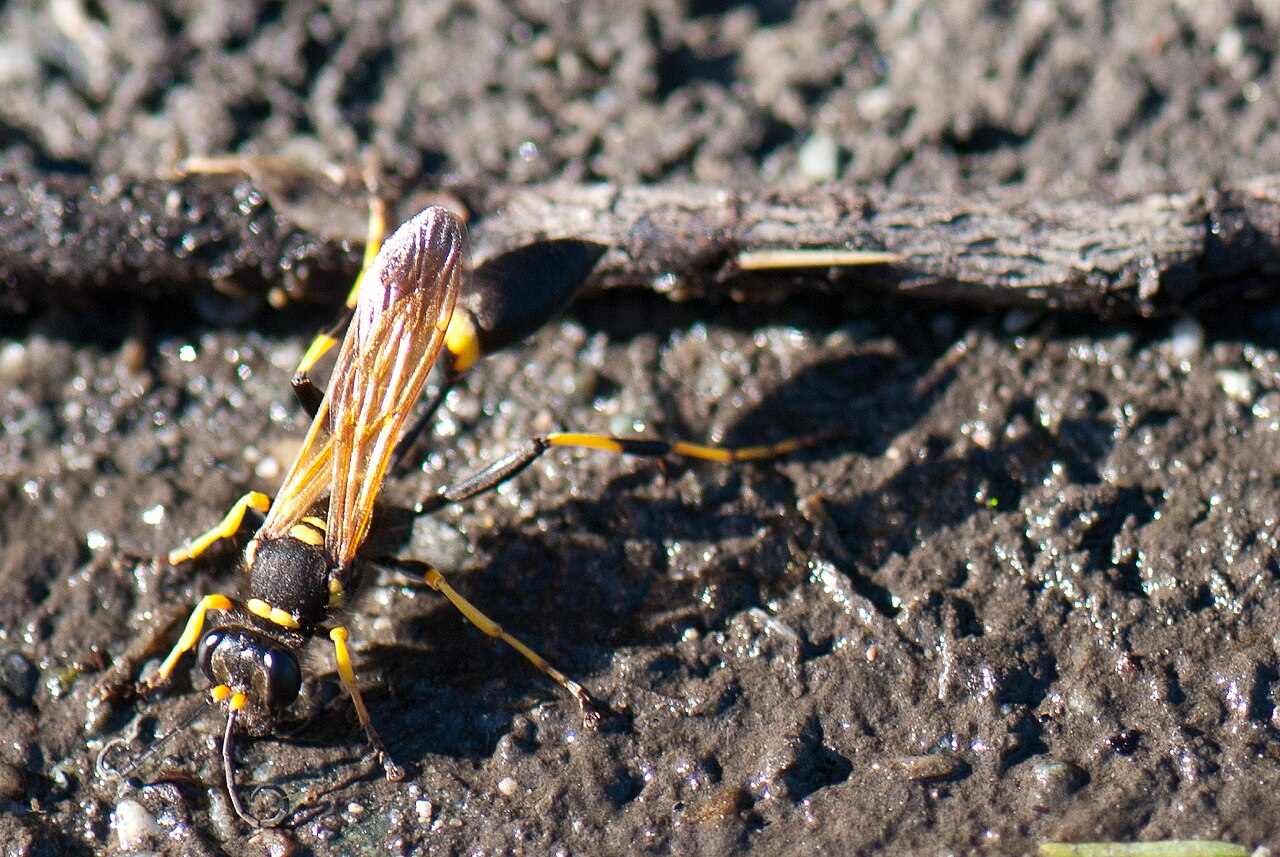
Swarm
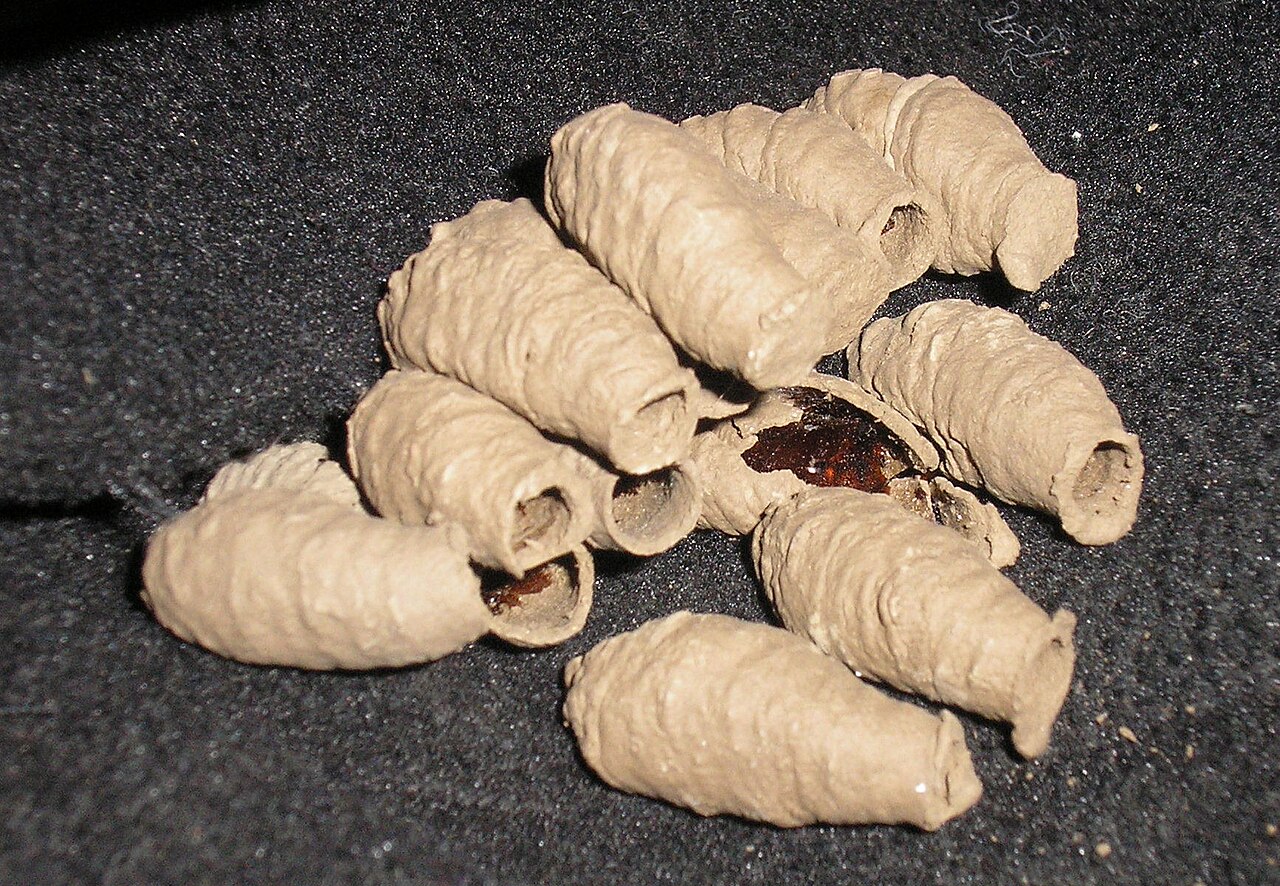
Nest / Hive
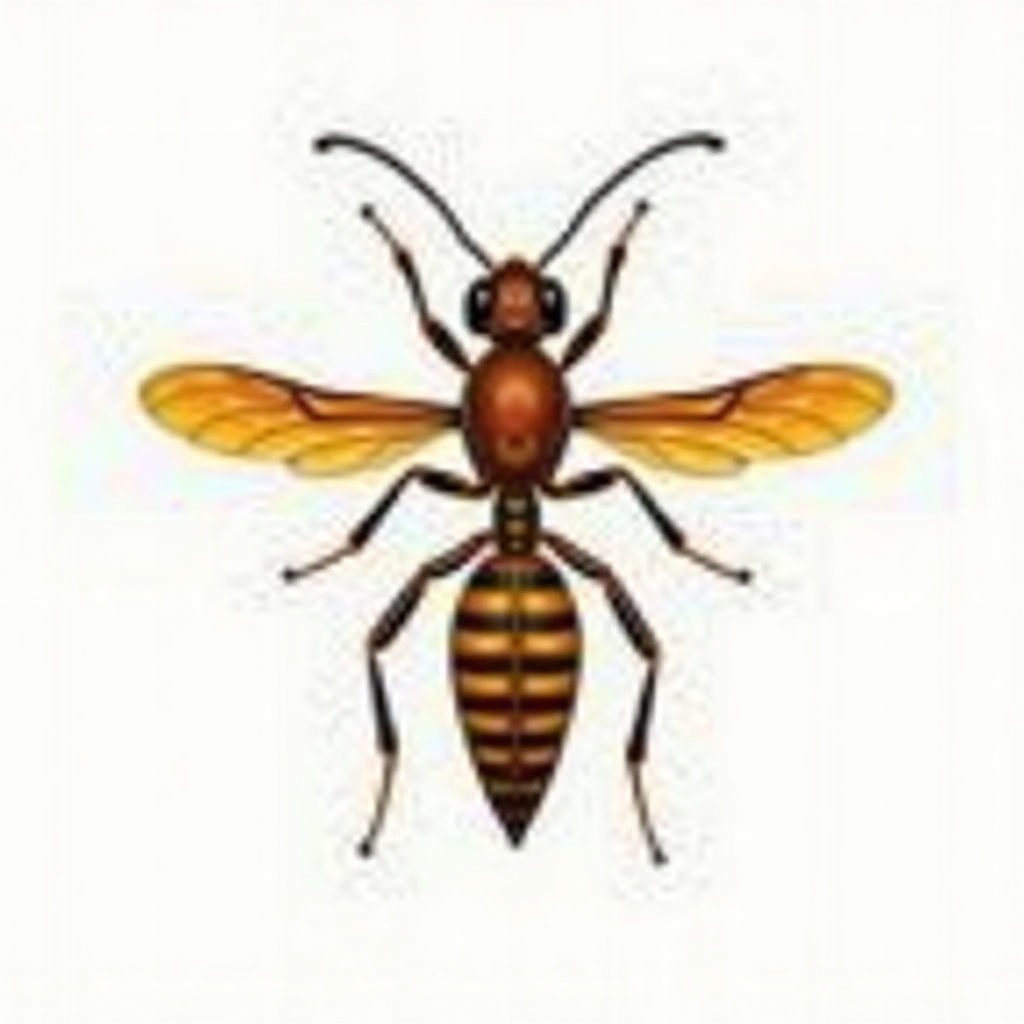
Wing / Body Pattern
What It Is
The mud dauber is a solitary wasp, not a bee. There is no colony, no queen, and no hive to remove. Each female builds her own nest from wet clay, packs the cells with paralyzed spiders as food for her larvae, and seals everything shut. Several mud daubers may share a wall or structure without being a colony, because each nest belongs to one female alone. Mud daubers are common across Middle Tennessee through the warm months. Size: 1 to 1.5 inches, with a dramatically narrow thread-waist that makes them unlike almost anything else you will see on a Nashville-area property.
How to Identify
The thread-waist is the identifying feature: an extremely slender, elongated connector between the thorax and abdomen, so narrow it looks fragile. Nothing else around the home has quite this silhouette. Body color is black, sometimes with yellow markings on the legs or abdomen, and some local mud daubers are a metallic blue. The nest is the other clear tell: cylindrical clay tubes, gray-brown, pressed directly onto a wall, beam, window frame, garage ceiling, or exterior eave. The material is clay, not paper. Tubes run 1 to 4 inches long and often appear in parallel clusters or irregular groups. A mud dauber in the act of building is distinctive: she lands again and again on the surface, pressing wet clay into the tube with her mandibles, smoothing and packing until the cell is done.
Behavior and Risk
Mud daubers are among the least threatening insects a homeowner encounters. They have no colony to defend and no investment in a finished, sealed nest, so they fly away rather than hold their ground. Sting risk is very low, and even accidental close contact with an active mud dauber rarely brings a defensive response. This is an identification situation, not a removal situation.
How to Handle
If you find mud tubes on a wall or beam, the wasp that built them has almost certainly already left, because the sealed tubes are finished nests, not active hives. Scrape them off with a putty knife or stiff scraper and they come away cleanly. Fill any cracks or seams where the tubes were anchored. Painting or sealing the surface discourages rebuilding, since mud daubers prefer rough, untreated surfaces that wet clay can grip. No specialist required.
The thread-waist and the clay tube nest make mud daubers unmistakable once you know what to look for. Paper wasps build open, umbrella-shaped nests from chewed wood fiber, a gray papery material, hanging by a stalk with the hexagonal cells visible underneath. Mud daubers build sealed cylindrical tubes from clay pressed directly onto a solid surface. Packed gray-brown clay tubes on a wall mean a mud dauber.
Frequently Asked Questions
Is a mud dauber dangerous?
No. Mud daubers are solitary and rarely sting. They have no colony to defend and no reason to hold their ground near a finished, sealed nest. Even close proximity to an active mud dauber at the nest surface rarely results in a defensive response. Sting risk is very low.
Does Beecasso remove mud daubers?
Mud daubers are solitary wasps with no hive or colony. Mud tubes on a wall are a homeowner-manageable situation: scrape the tubes off with a putty knife, fill any cracks in the surface, and paint or seal the area. If you are not sure what you are looking at, send us a photo.
What does a mud dauber nest look like?
Cylindrical clay tubes pressed directly onto a surface: a wall, beam, window frame, or exterior eave. The material is gray-brown hardened clay, not paper. Tubes are typically 1 to 4 inches long and may appear in parallel clusters or irregular groups. There is no open cell structure visible from the outside. If you see a small hollow opening at the end of a clay tube, the cell has already been emptied and the nest is done.
Is a mud dauber the same as a wasp?
Yes. Mud daubers are wasps, not bees. They do not produce honey, do not build wax comb, and are not removed using bee relocation methods. What sets them apart from other wasps is the combination of a solitary lifestyle and clay tube nests; no other local wasp builds this way.
I found mud tubes on my garage wall. What do I do?
The wasp that built them has almost certainly already left; the sealed tubes are finished nests. Scrape them off the surface with a putty knife. Fill any cracks or gaps in the wall where the tubes were anchored, then paint or seal the surface to make it less hospitable for future nesting. No professional service is needed. If you are not sure what you are looking at, send us a photo.
What our customers say
4.9 stars · 119 reviews
I can’t say enough good things about Steve and team! They came out on incredibly short notice when we were dealing with a stressful situation, and from the moment they arrived, they were professional, knowledgeable, and genuinely cared about doing the job right. What really stood out was how much they went above and beyond. They didn’t just handle the immediate issue—they took the time to thoroughly assess everything, explain the process, and make sure we felt comfortable every step of the way. Their attention to detail and work ethic were next-level. It’s rare to find a team this responsive, reliable, and committed to quality. I’m so grateful we found them and wouldn’t hesitate to recommend them to anyone dealing with a similar situation. Truly exceptional service.
They were incredible. Came out on super short notice, were extremely professional, and went above and beyond to handle everything thoroughly. You can tell they really care about doing the job right. So grateful we found them--highly recommend!
Steve is honest and fair. They do great work. I just used them and highly recommend them.