Bees Inside a Stucco Column: What We Found During This Los Angeles Bee Removal
August 19, 2026 · 6 min read
Bees Inside a Stucco Column: What We Found During This Los Angeles Bee Removal
"The bees are going into a tiny hole in the column. Can't we just seal it?"
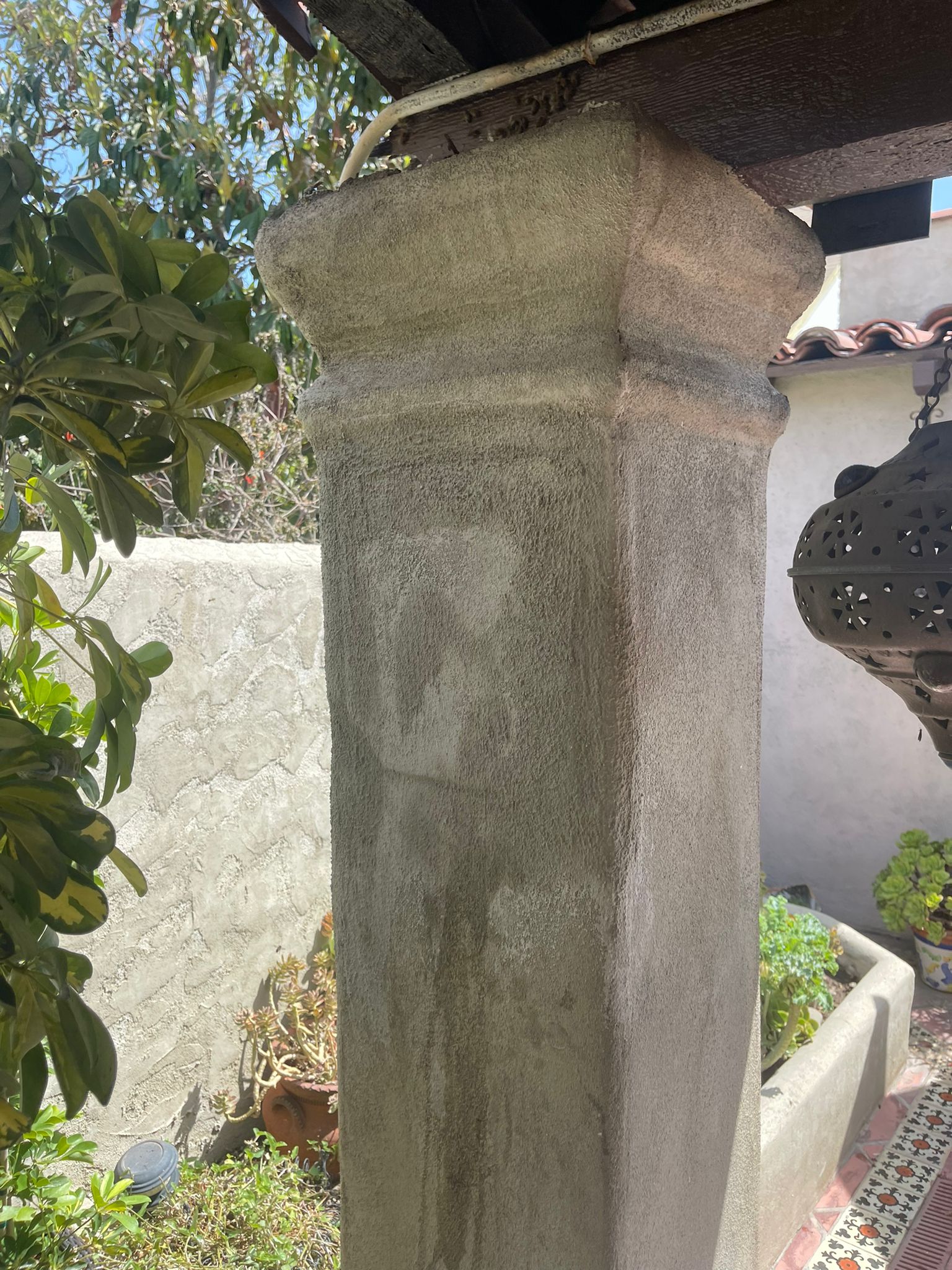
We get some version of this question all the time. And looking at this Los Angeles home from the outside, sealing the opening probably seemed reasonable. There wasn't a big cluster of bees hanging outside and there was no exposed hive. There was just regular bee traffic disappearing into a small opening in the stucco.
But once bees are consistently using the same entrance, we're less concerned about the size of the hole and more interested in what's behind it.
On this job, there was quite a bit behind it.
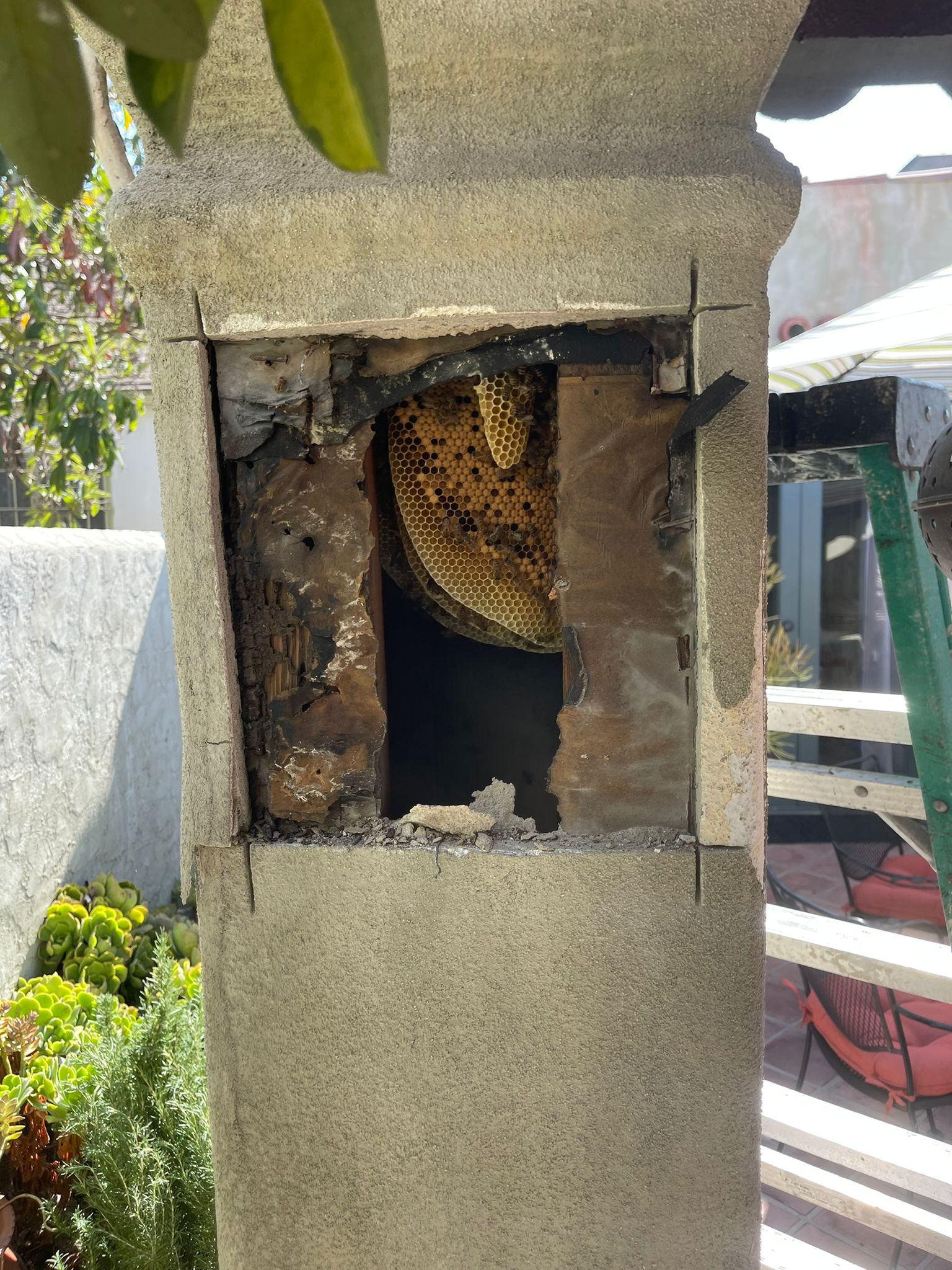
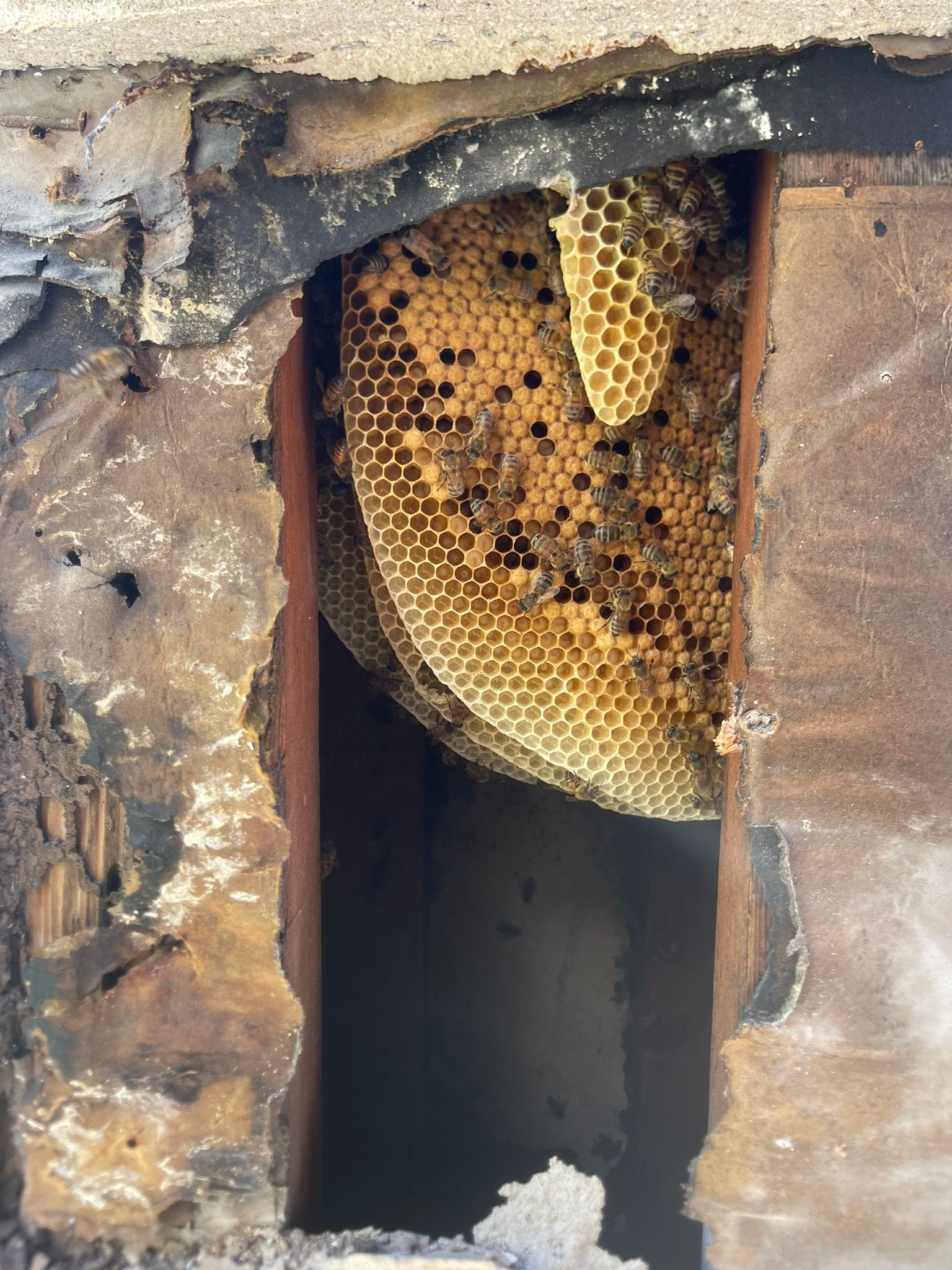
We marked out a controlled section of the stucco column and opened it carefully. After getting through the exterior stucco and backing material, we found an established honeybee colony with multiple sheets of comb built inside the column.
The homeowner had been seeing only the entrance. The actual hive was completely hidden.
What tells us there may be an established hive inside?
A swarm and an established colony are two very different jobs.
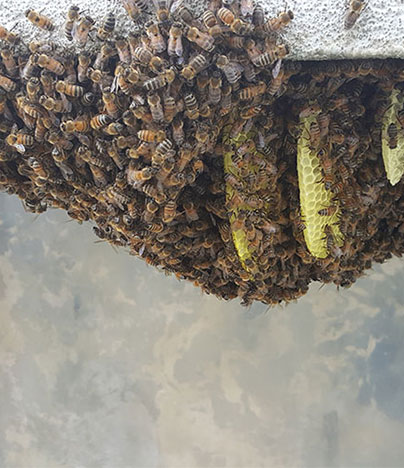
A swarm will often be a visible cluster of bees hanging from a tree, fence, roof edge or other surface while scout bees search for somewhere permanent to live. If we can collect a swarm before it moves into a structure, removal is usually much simpler.
Once bees move into a wall, column, roof or soffit and begin building comb, we're dealing with a structural colony.
One of the things we watch is the flight pattern. If bees are repeatedly entering and exiting the exact same small opening throughout the day, that's a good indication they're using the cavity. Bees carrying pollen back through that entrance are an even stronger sign that the colony is established and raising brood inside.
You can't determine the size of the colony from the entrance alone.
We've opened structures where a very small exterior gap led to a substantial amount of comb hidden behind the surface.
That's exactly why we don't start cutting randomly. We first determine where the bees are entering and, as closely as possible, where the colony is positioned behind the exterior.
Why we didn't just plug the hole
Sealing an active bee entrance is one of the easiest ways to turn a manageable bee problem into a bigger one.
If the colony is still alive, sealing the exterior entrance doesn't make thousands of bees disappear. They may search for another route out of the cavity, and sometimes that route leads farther into the structure or even toward the interior of the home.
Even killing the bees and sealing the entrance doesn't necessarily finish the job.
An established hive can contain wax comb, brood, stored pollen and honey. If that material is abandoned inside a hot Southern California wall or column, honey can soften and leak, wax can melt, and the remaining hive material can attract ants, wax moths and other pests.
We've seen new swarms move back into cavities that still contain old comb and hive odor, which is another reason we don't just remove the bees and close the hole.
If we're going to open a structure, we want to deal with what's actually inside it.
Opening the column
On this job, we marked the access area before cutting so we could keep the opening contained and make the repair as practical as possible.
Once the stucco section was removed, there were still layers of building material between us and the colony. We opened those progressively rather than tearing out the entire face of the column.
Eventually the comb came into view.
At that point we could see that the bees had built several sheets of comb inside the protected cavity. The close-up photos from this job show capped brood as well as open cells and bees working across the comb.
Once we could see the comb, we had a much better idea of how established the colony was and what needed to come out.
For a live removal, we use smoke as needed to help manage the colony and a bee vacuum designed to collect the bees without simply spraying the cavity. The bees are transferred into a hive box for relocation. We work through the comb carefully, looking for the queen while removing the bees, brood, honeycomb and wax from the structure.
Finding the queen is important. When she is successfully captured with the colony, the remaining bees are much more likely to settle into the transfer hive.
The amount of time this takes varies. A small, accessible colony can be relatively straightforward. A large or older colony extending through multiple sections of a wall or roof can take considerably longer.
And sometimes the first opening tells us that we need more access than we originally expected. We'd rather explain that to a homeowner than leave half a hive behind just to keep the opening small.
Removing the bees is only part of the job
After the bees and comb are removed, we clean out the cavity as thoroughly as access allows.
This part isn't particularly dramatic, so it doesn't get photographed as often as the honeycomb, but it's an important part of structural bee removal.
We don't want to close a wall with chunks of wax, honey and hive debris still sitting inside.
We also inspect the cavity and the bees' original access point before closing everything back up. If the entry point isn't addressed, another swarm can potentially discover the same protected space later.
What about the damage from opening the stucco?
This is one of the biggest concerns homeowners have when we recommend a cut-out.
It's a fair concern. Nobody wants a large hole cut into their house unnecessarily.
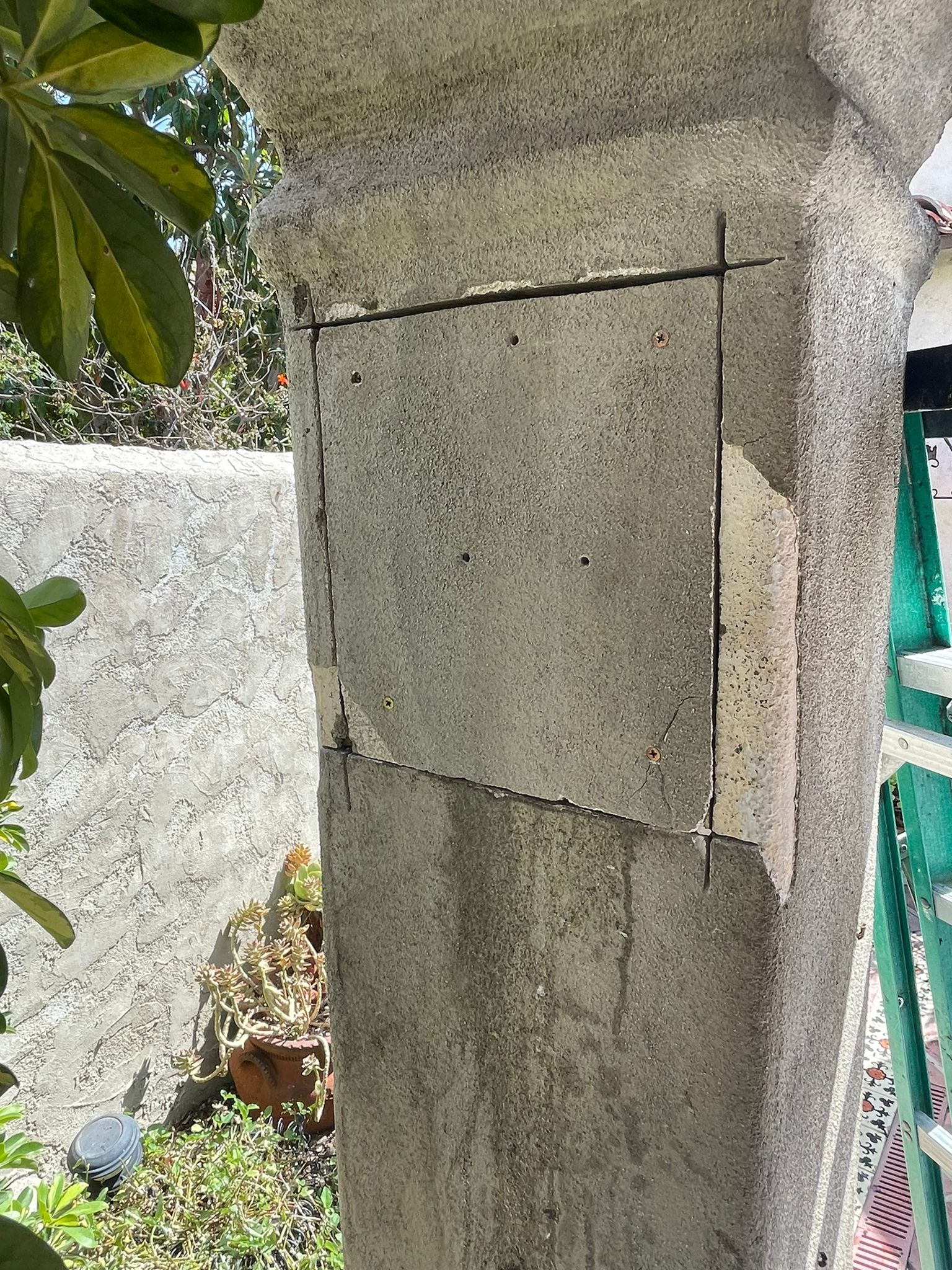
Our approach is to create enough access to properly remove the colony while disturbing as little of the surrounding structure as practical. On this column, you can see the progression in the photos: the marked opening, the structure opened, the colony exposed, and then the access panel installed again after the removal.
Stucco repairs can still be visible until the finish work and paint are completed, particularly when you're matching an older texture or color. We don't tell homeowners that every repair will magically disappear.
Different materials also change the job. Stucco, siding, fascia, roofing and decorative columns all have different access and repair considerations.
That's why we prefer to inspect the location before promising exactly how a structural removal will be accessed.
Do honeybees always need to be removed alive?
We specialize in live bee removal and relocation, and when the colony is accessible and it can be done safely, that's our preferred approach.
There are situations where live removal isn't reasonably possible or where public safety has to come first. A highly defensive colony in a dangerous location, an emergency involving people at immediate risk, or a colony that cannot be safely accessed may require a different approach.
The important distinction is that killing bees at the entrance isn't the same thing as removing an established hive from a structure. Even when extermination is necessary, the comb and hive material inside may still need to be addressed.
If you're seeing bees disappear into stucco
Watch where they're going.
If it's a handful of bees investigating different cracks for a short period, they may simply be scouting. If you see steady traffic using one specific opening day after day, there's a much better chance they've moved in.
Don't seal the opening while the bees are actively using it.
If you're seeing bees repeatedly entering the same opening in your stucco, wall or roofline, send Beecasso a clear photo or short video showing where they're entering. We can usually tell quite a bit from the flight pattern and location and let you know whether an inspection is the next step.
This Los Angeles colony is a good example of why. From outside, we had a
small entrance in a stucco column. Behind it was an established hive
that could only be properly dealt with once the structure was opened.
 Beecasso Live Bee Removal
Los Angeles, California
beecassobeeremoval.com