What Does It Take to Remove Thousands of Honeybees From a Roof?
October 23, 2026 · 5 min read
What Does It Take to Remove Thousands of Honeybees From a Roof?
Removing thousands of honeybees from a roof isn't simply a matter of collecting the bees flying around the entrance. The colony may be hidden behind fascia boards, beneath roof tiles, or inside a cavity that extends several feet beyond the opening.
Before we can remove the bees, we need to locate the comb and determine how to access it without causing unnecessary damage to the roof.
We've removed honeybee colonies from roofs throughout Los Angeles where the only visible sign was a small opening beneath the roofline.
Finding the Colony Behind the Roofline
Honeybees frequently enter through gaps beneath roof tiles, damaged fascia boards, openings around eaves, or spaces where roofing materials meet exterior walls.
A small entrance doesn't necessarily mean a small colony. Bees can pass through a gap less than half an inch wide before reaching a much larger space behind the fascia or inside the roof.
We begin by observing flight activity and identifying the main entrance. Depending on the building, we may also inspect the surrounding fascia, roofline, or accessible attic areas to determine where the colony has established itself.
Bees entering beneath one roof tile may have built their comb some distance from that opening.
Opening the wrong section of the roof creates unnecessary work and damage. Locating the colony as accurately as possible helps us determine where access is needed and how much material may have to be removed.
Working Safely at Roof Height
Roof removals can be considerably more complicated than collecting a swarm from a tree branch.
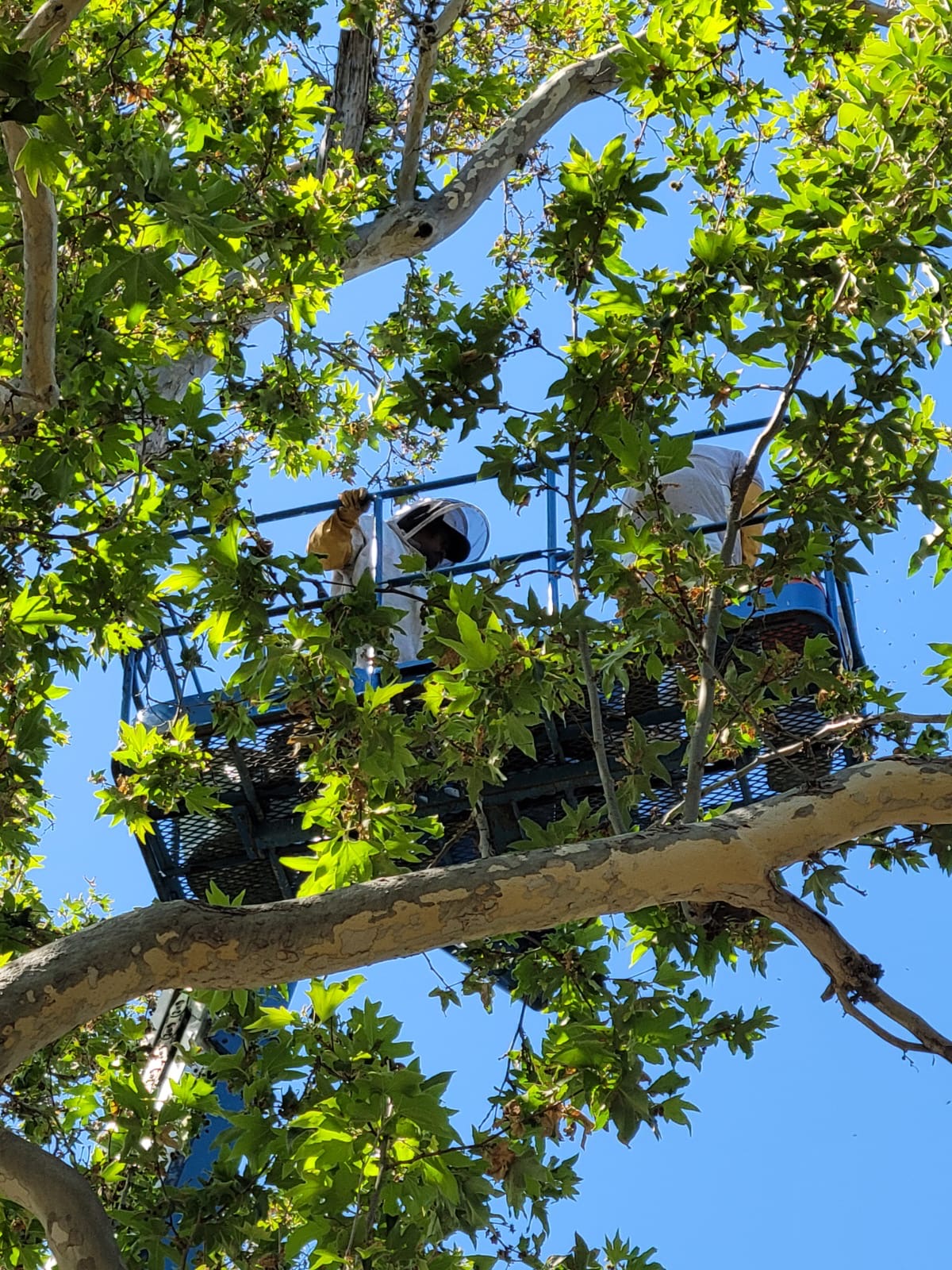
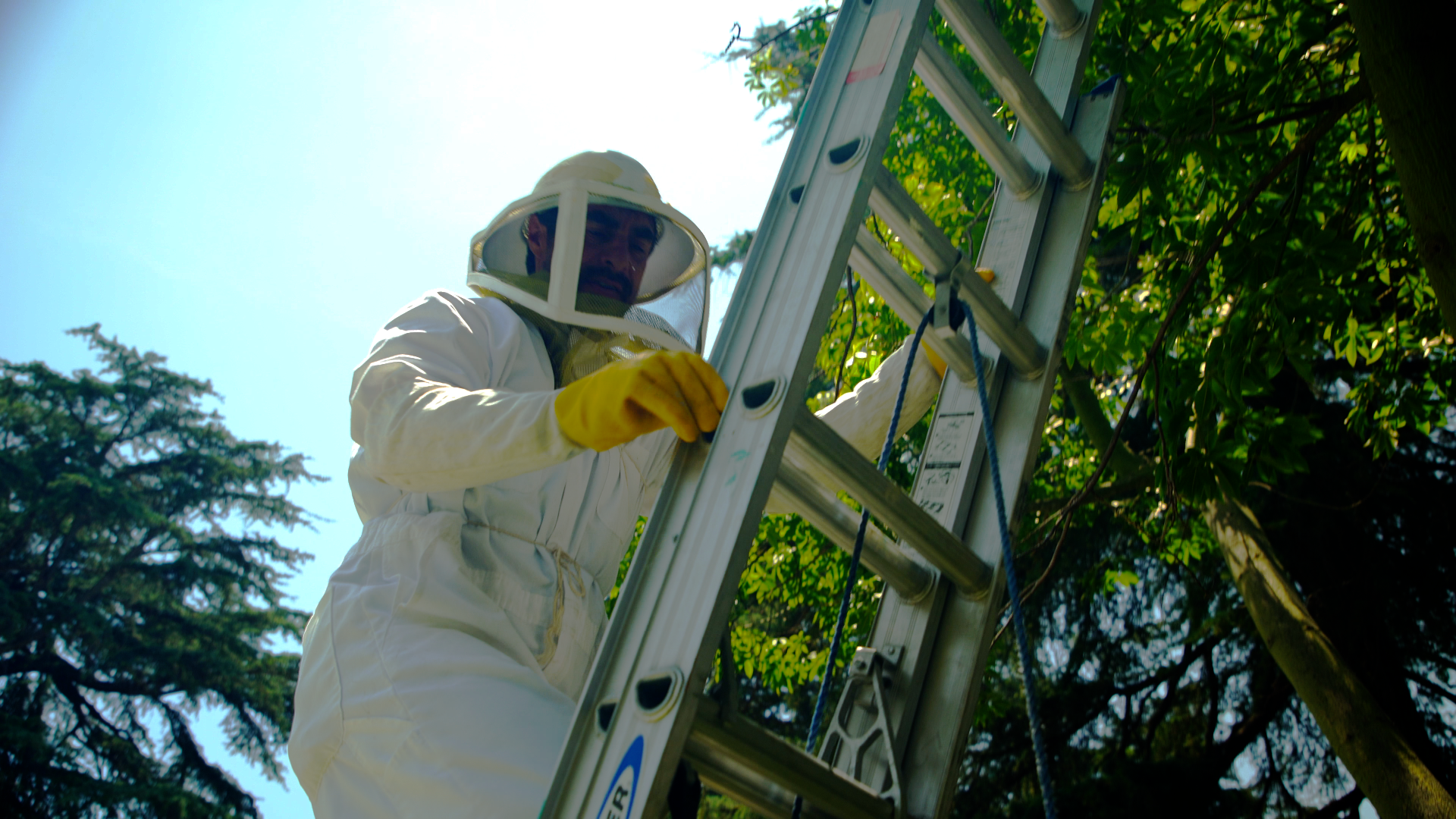
Depending on the building's height, roof pitch, and available working space, we may use an extension ladder, scaffolding, or an aerial lift. Second-story removals or difficult rooflines sometimes require a lift to provide safe access.
Uneven ground, landscaping, electrical lines, and nearby structures can also affect how the job is approached.
Working from a ladder or lift while wearing protective equipment requires careful planning, especially when thousands of bees are flying around the exposed colony.
What Happens When Thousands of Bees Are Exposed?
An established colony may contain thousands or tens of thousands of bees, along with multiple sheets of wax comb attached to the interior surfaces.
Some sections contain developing bees, known as brood. Others hold pollen or stored honey.
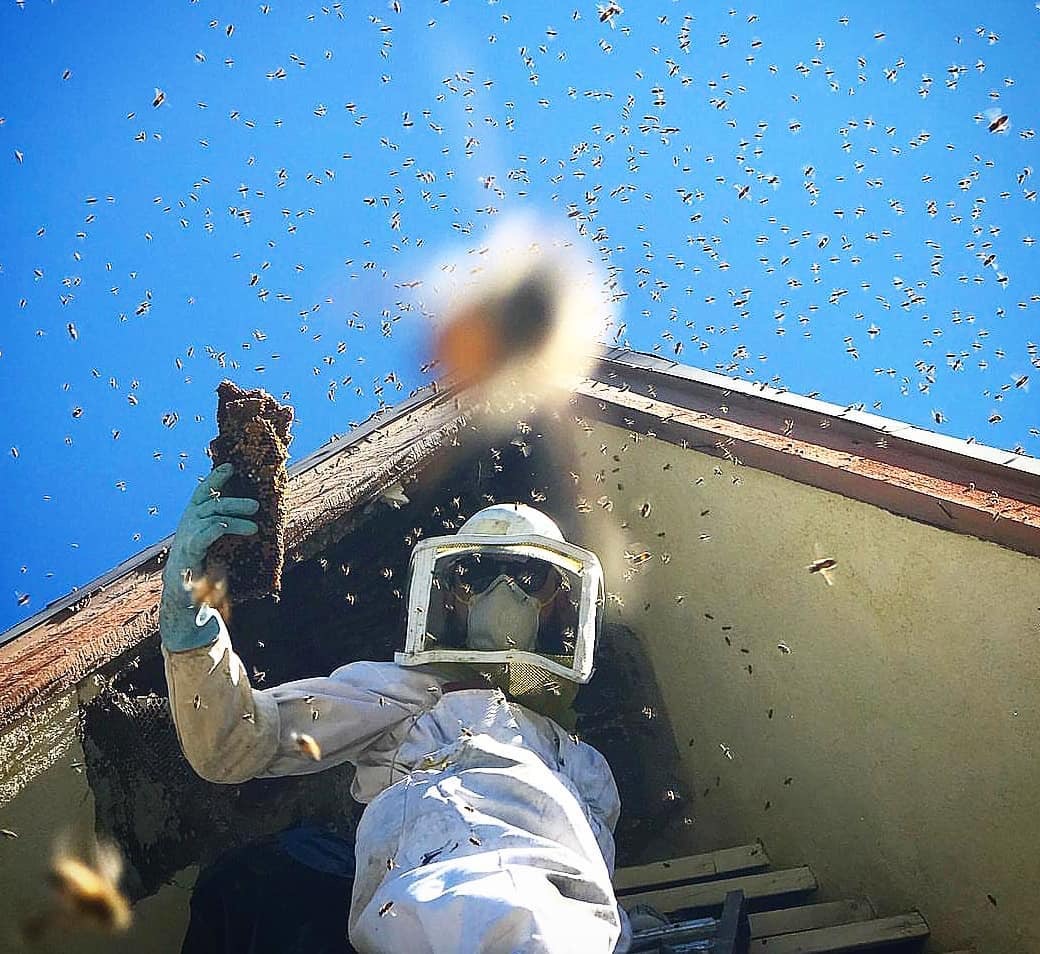
Once the cavity is opened, thousands of bees may take flight while others remain clustered on the comb. The amount of activity depends on the colony's temperament, weather conditions, and how the removal progresses.
At Beecasso, we remove the honeybees and comb by hand, working through the exposed colony section by section.
The comb must be separated from the surfaces where the bees have attached it. Brood comb is handled carefully and, where suitable, secured into hive frames so developing bees can remain with the relocated colony.
Honey-filled comb requires particular care because its weight can cause large sections to break apart. Wax also becomes softer in warm weather, making removal more difficult.
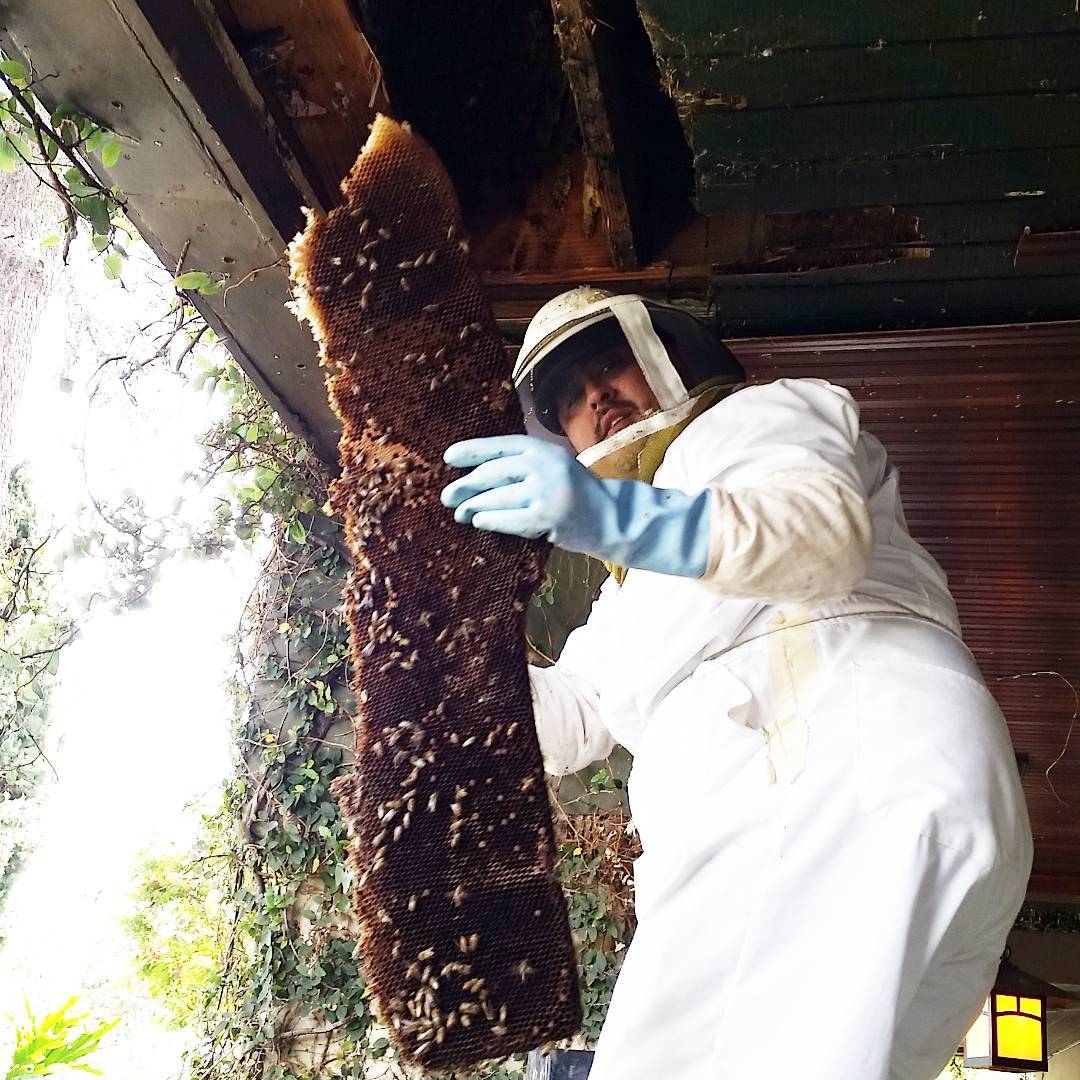
During one removal, Steve Downs, Beecasso's founder, recovered a section of honeycomb nearly as long as his upper body. Large sections like this can be difficult to extract without breaking, particularly when they're filled with honey.
Recovering the Queen and Relocating the Colony
We work to locate and recover the queen whenever possible. Her condition is important to the colony's ability to continue developing after relocation.
The recovered bees and suitable brood comb are transferred into beekeeping equipment, where the colony can be managed and monitored.
Not every colony can be successfully relocated. A colony's condition, the health of its queen, and the amount of brood recovered all influence its chances of becoming established in a managed hive. Colonies hidden deep inside inaccessible cavities can be particularly difficult to recover.
Why Removing the Honeycomb Matters
 One of the biggest mistakes when dealing with an established roof colony is removing or exterminating the bees while leaving the honeycomb behind.
After recovering the bees, we remove the remaining honeycomb and honey from the accessible cavity. In hot Los Angeles weather, abandoned comb can soften, allowing honey to leak into surrounding materials and attract ants or other pests.
Abandoned brood can also produce unpleasant odors as it deteriorates.
Leaving this material inside the roof can create additional cleanup and repair problems long after the bees are gone.
Sealing the Roof and Preventing Bees From Returning
Once the colony and comb have been removed, the cavity needs to be cleaned and the openings that allowed the bees to enter must be addressed.
Depending on the structure, this may involve repairing fascia, replacing roofing components, or sealing gaps around the affected area.
A wooden fascia repair is different from repairing stucco or restoring a section of tiled roofing. The appropriate approach depends on the materials involved and the condition of the surrounding structure.
Other nearby openings may also need attention, particularly if they provide access to the same cavity.
Proper removal and sealing reduce the likelihood of bees occupying that space again. However, no repair can guarantee that another swarm will never investigate a different opening elsewhere on the property.
How Long Does a Roof Bee Removal Take?
A straightforward removal from an accessible section of fascia may be completed in a few hours. A second-story roof removal requiring an aerial lift, extensive structural access, or repairs can take considerably longer.
The time required isn't determined by the number of bees alone. A relatively small colony concealed behind difficult roofing materials may take longer to remove than a much larger colony in an accessible cavity.
Photographs of the affected area and an inspection can help determine the likely scope of work, although the full extent of the colony may not be visible until the cavity is opened.
If you notice honeybees repeatedly entering your roofline, don't spray or seal the opening while the colony is active. Trapped bees may find another exit, potentially entering your home.
Beecasso Bee Removal provides live honeybee removal, comb extraction, relocation, and structural repairs throughout Los Angeles, Orange County, and Ventura County. Contact us to arrange an inspection and determine the best approach for your property.