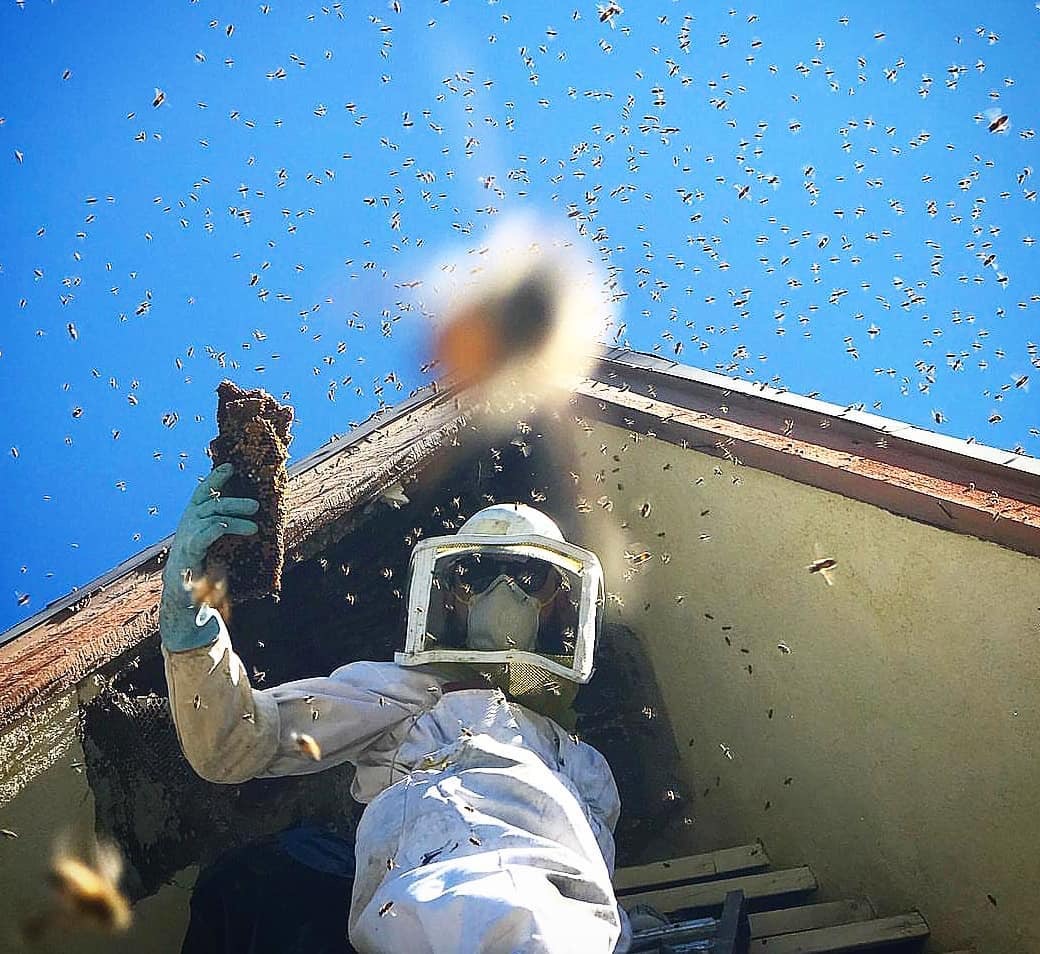
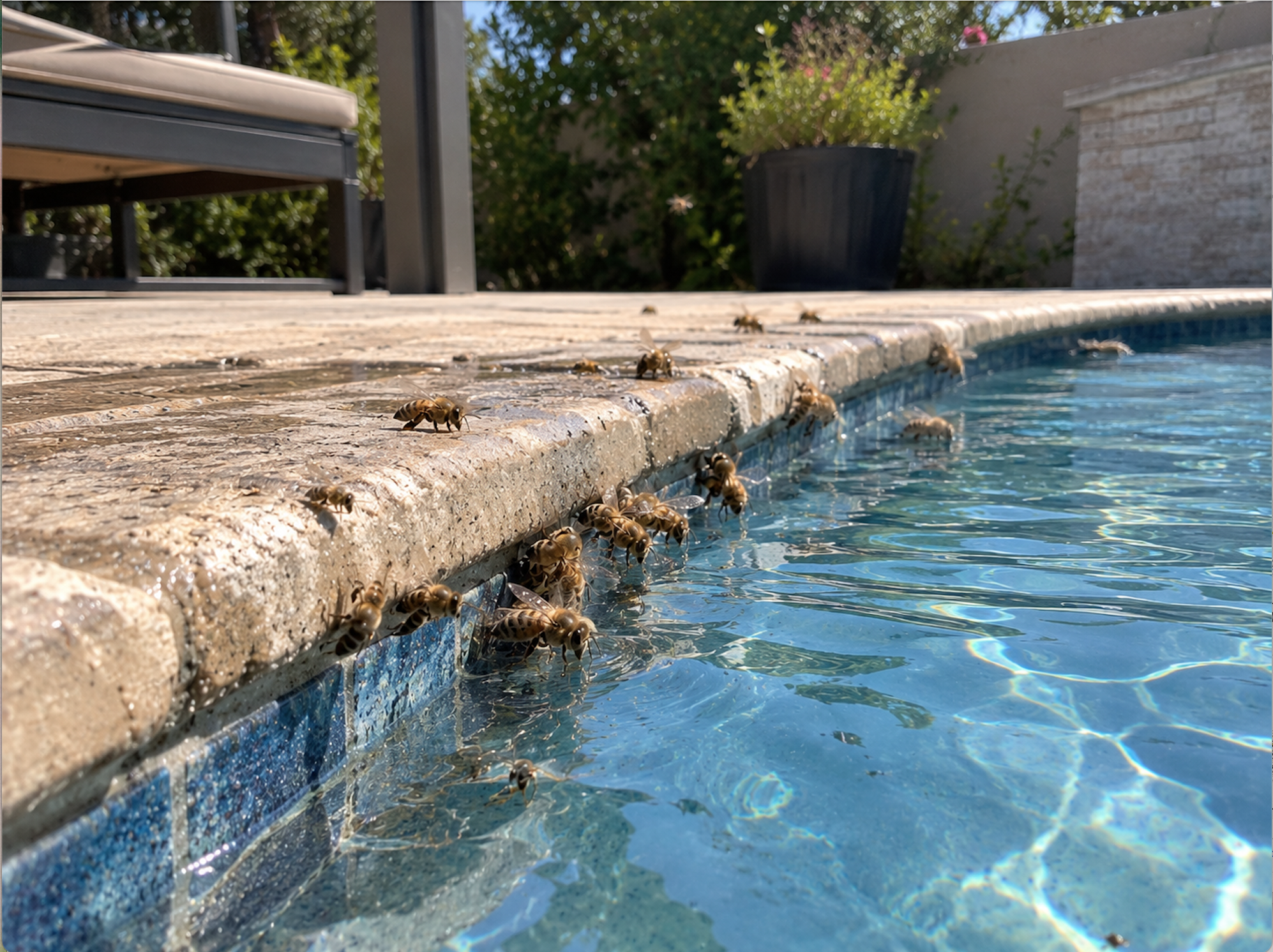
Honeybees in Water Meter & Irrigation Boxes: Why They Move In and How They’re Removed
November 13, 2026 · 5 min read
Why Do Bees Build Hives Inside Water Meter Boxes and Irrigation Boxes?
Bees flying in and out of your water meter box or irrigation valve box usually mean one of two things: a swarm is investigating the space, or a colony has already moved in and started building honeycomb.
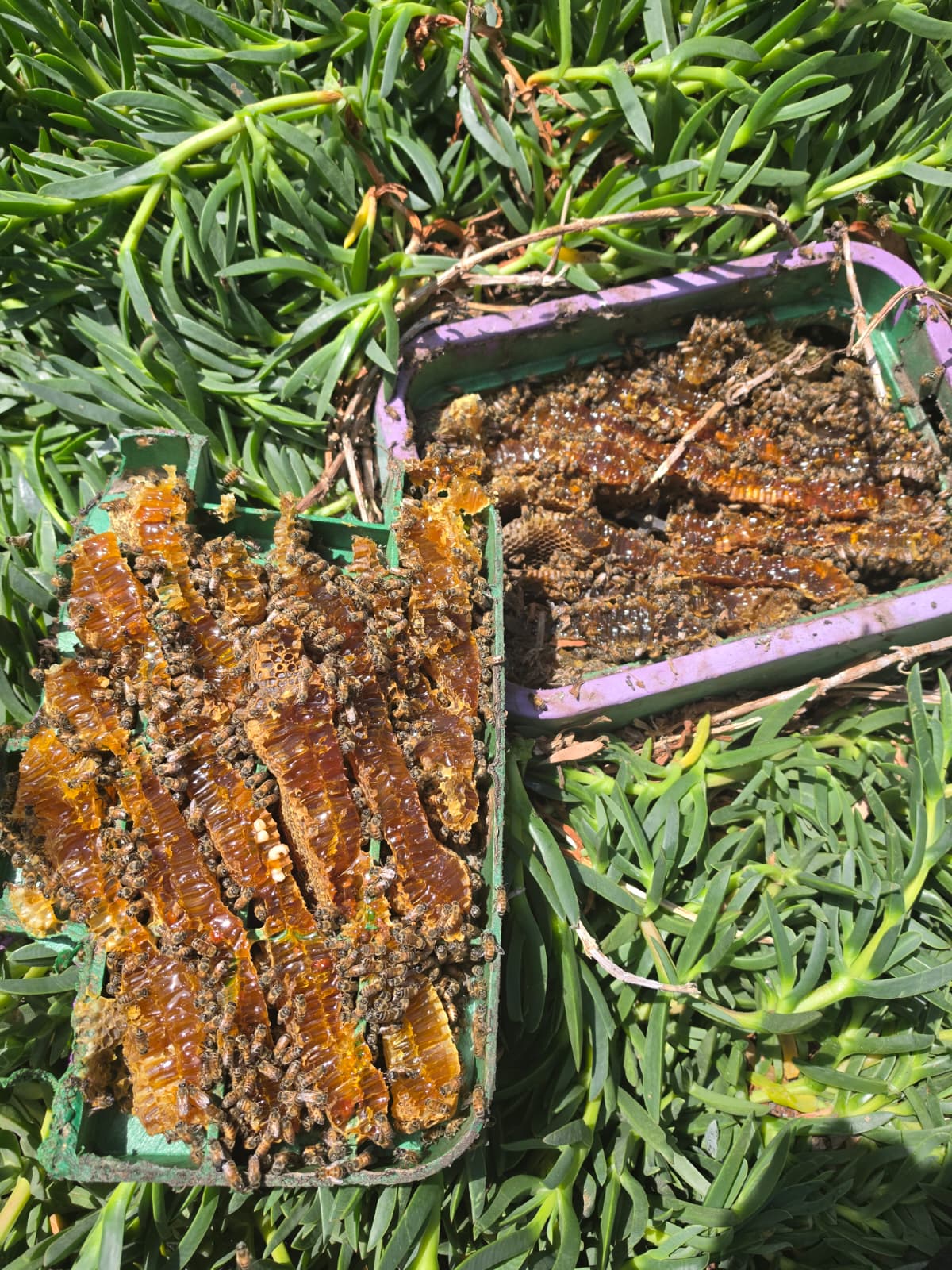
In Los Angeles and throughout Southern California, we regularly remove established honeybee colonies from these underground boxes. Honeycomb can be attached directly to the underside of the lid, built along the interior walls, or wrapped around irrigation pipes and valves.
Honeybees choose water meter and irrigation boxes because they provide a sheltered, enclosed space where a colony can build honeycomb, raise young, and store honey. Even a relatively small box can accommodate a substantial colony if it's left undisturbed.
Why Are Water Meter and Irrigation Boxes Attractive to Bees?
When a honeybee colony swarms, scout bees search for a suitable cavity where the new colony can establish itself.
Water meter and irrigation boxes offer several advantages. They're protected from direct sunlight, wind, and rain, and the surrounding soil can help moderate temperature changes. Small gaps around lids and pipes provide convenient entrances.
Another important factor is how rarely these boxes are opened.
A homeowner might go months without checking an irrigation valve box, giving bees plenty of time to establish a colony without being disturbed.
Southern California's mild climate also allows honeybees to remain active through much of the year, although swarming is particularly common during warmer months.
Not every box will attract bees. Some are too small, too wet, or frequently disturbed. But a dry, sheltered enclosure with enough room for honeycomb can make an ideal nesting location.
How Can You Tell If There's an Established Colony Inside?
The most obvious sign is consistent bee traffic entering and exiting the same opening.
You may notice bees disappearing beneath the edge of a plastic irrigation cover, flying through a small gap around a concrete water meter lid, or gathering near an opening around the pipes.
A few bees investigating a box doesn't necessarily mean there's an established colony. Scout bees may inspect several potential nesting locations before a swarm settles.
However, when bees are regularly coming and going throughout the day, particularly over several days, an established colony becomes more likely.
Inside the box, honeycomb may contain developing brood, stored pollen, honey, and thousands of worker bees.
The number of bees visible outside isn't always a reliable indication of how large the colony is underneath. A small entrance can serve a surprisingly large hive.
If you suspect bees have moved into your water meter or irrigation box, avoid lifting the lid to investigate.
Why You Shouldn't Open a Box With Bees Inside
One of the biggest challenges with these removals is that honeycomb can be attached directly to the underside of the lid.
If someone lifts the cover without realizing what's underneath, the comb can tear apart, exposing brood and honey while disturbing the colony.
This can quickly trigger defensive behavior, particularly when the bees are protecting their brood or queen.
In Southern California, some honeybee colonies have Africanized ancestry and may be especially defensive. However, you cannot determine how defensive a colony will be simply by looking at the bees.
Water meter boxes are often located beside sidewalks, driveways, and front lawns, making an unexpected disturbance particularly concerning for nearby people and pets.
Never attempt to spray pesticides into the box, flood it with water, or block the entrance while bees are still inside.
These methods don't reliably remove an established colony and can create additional problems, including contamination concerns around utility equipment.
How Beecasso Removes Bees From Water Meter and Irrigation Boxes
At Beecasso Bee Removal, we assess each location before beginning work. The approach depends on the size of the colony, how the honeycomb is attached, and whether the box contains equipment that needs to remain undisturbed.
Water meter boxes may also belong to the local water utility, so permission or coordination may be required before accessing the enclosure.
Before lifting the cover, we check where the bees are entering and whether any honeycomb is attached beneath the lid. Opening the box too quickly can tear the comb apart and disturb the entire colony.
Using hand tools, we remove the comb section by section, including areas containing brood and stored honey. The live bees are collected and transferred into a suitable relocation box, and we work to preserve the queen whenever possible.
Removing the honeycomb is just as important as removing the bees.
Leaving wax, honey, and brood inside the enclosure can attract ants, other insects, and potentially another swarm of honeybees. Residual honey can also create a mess around irrigation components.
Once the colony has been removed, we clean accessible residue and check the cavity for remaining comb and bee activity.
Any additional treatment must be suitable for the location, particularly where water meters, irrigation components, or potential water-system exposure are involved.
When the colony can be successfully recovered, the bees are relocated to an appropriate managed location.
Are These Bee Removals Difficult?
Some water meter and irrigation box removals are relatively straightforward, particularly when a colony has recently moved in and built only a few sections of honeycomb.
Others require considerably more care.
A large colony may have built comb around pipes, irrigation valves, or other equipment that cannot be moved or damaged. The box itself may also be cracked, partially buried, or difficult to access.
In some cases, the colony may extend beyond the visible enclosure into an adjoining cavity.
These factors affect how the removal is performed and how long the job takes. We assess each location individually rather than treating every underground bee removal as the same job.
Will Bees Return After the Colony Is Removed?
It's possible for another swarm to investigate the same box, especially if the cavity remains accessible.
Thorough honeycomb removal and cleaning help reduce the odors and residue that can attract future colonies.
Damaged lids or unnecessary openings may also be repaired where practical. However, water meter and irrigation boxes must remain accessible for maintenance, drainage, and normal operation.
Sealing every opening isn't always possible or appropriate, particularly with utility-owned equipment.
In some cases, replacing a damaged cover or enclosure may be the best long-term option.
Even after a successful removal, another swarm could eventually discover the same location. The goal is to remove the existing colony completely and reduce the conditions that make the box attractive to bees.
Professional Water Meter and Irrigation Box Bee Removal in Los Angeles
At Beecasso Bee Removal, we regularly remove live honeybee colonies from water meter boxes, irrigation valve boxes, and other difficult-to-access locations throughout Los Angeles and surrounding Southern California communities.
Our work includes carefully collecting the live bees, removing the honeycomb, cleaning the accessible cavity, and relocating recoverable colonies whenever possible.
If you've noticed bees entering a water meter or irrigation box, leave the lid undisturbed and keep people and pets away from the area.
Contact Beecasso Bee Removal for a professional inspection and bee removal estimate. We'll assess the colony, explain the removal process, and recommend the most appropriate solution for your property.