Bees Around Your Swimming Pool? What Los Angeles Homeowners Need to Know
October 14, 2026 · 5 min read
Bees Around Your Swimming Pool? Here's What You Need to Know
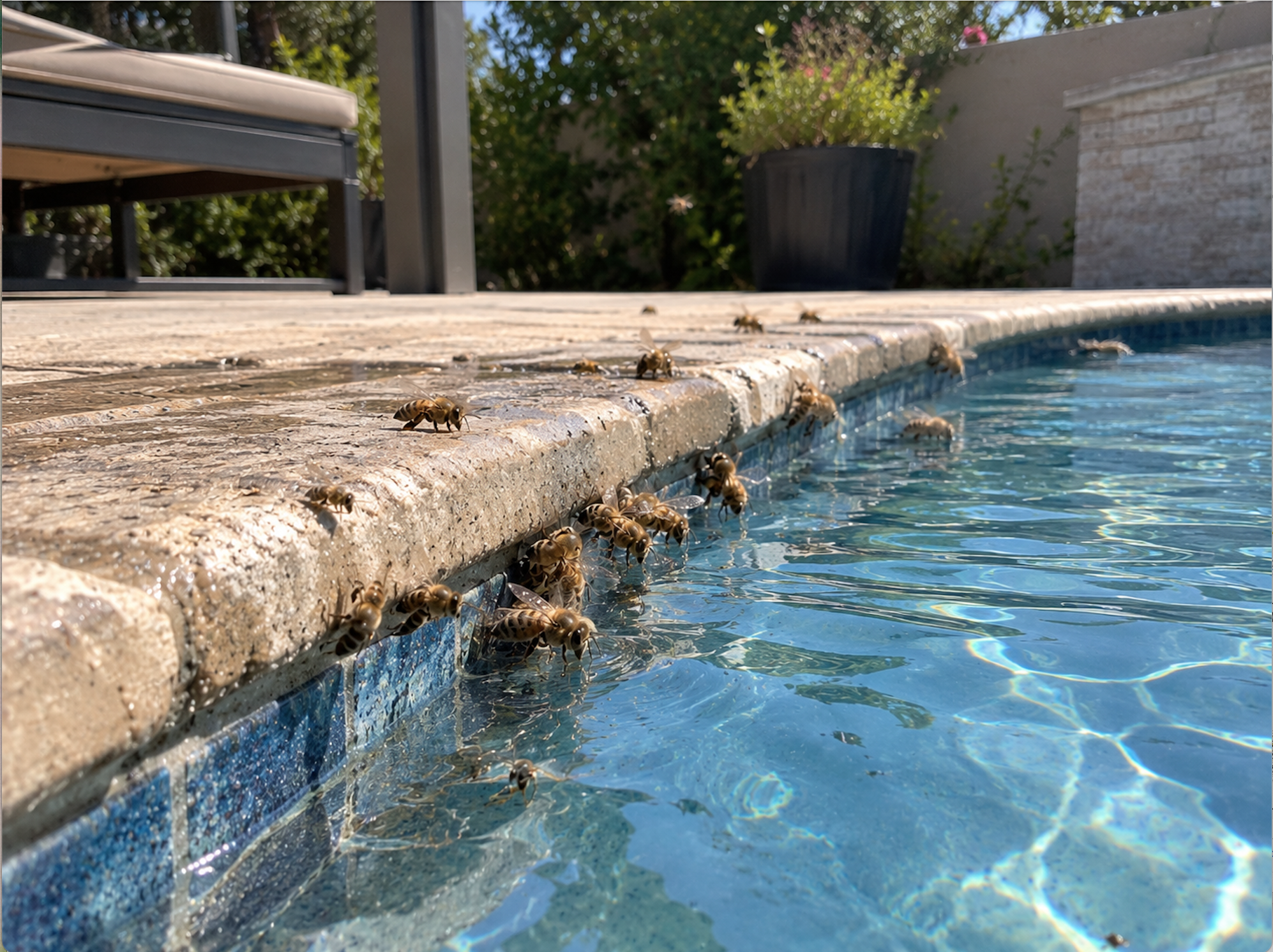
Honeybees gathering along your swimming pool's waterline every afternoon can make the area difficult to use, particularly when children are swimming or people are walking barefoot. The first question is whether they're collecting water or coming from an established colony on the property.
Bees visiting your pool don't automatically mean there's a hive nearby. Honeybees can travel several miles to collect water, so the colony could be in a neighboring yard, a hollow tree, or a structure several properties away.
Bees Gathering Along the Waterline Are Usually Collecting Water
Honeybees use water to cool their colony and dilute stored honey. During hot Southern California weather, a strong colony may send numerous workers out specifically to collect it.
Swimming pools provide a consistent supply, even during extended dry periods.
Bees prefer places where they can land without falling into deep water. Around residential pools, we commonly look for activity along tile edges, shallow steps, spillways, wet concrete, and skimmer openings.
Once workers establish a reliable water source, they tend to return. Other bees from the colony may begin using it as well, which explains why activity can increase from a handful of bees to dozens over several days.
Chlorine and saltwater systems don't necessarily discourage honeybees. Bees may continue collecting water from a properly maintained swimming pool even when other water sources are available.
Reducing Bee Activity Around Your Swimming Pool
There's no guaranteed way to keep honeybees away from an outdoor swimming pool, particularly once they've established it as a regular water source.
Check for smaller water sources near the pool. Leaking irrigation lines, dripping faucets, puddles beneath outdoor furniture, and wet planters can attract additional bees. Repair leaks and eliminate unnecessary standing water where practical.
Try providing an alternative water source. A shallow container filled with stones or gravel gives bees somewhere to land and drink. Position it well away from the swimming pool, patios, and children's play areas.
Give the alternative water source several days to see whether activity shifts away from the pool. If bees continue visiting both locations, moving the container farther away may not change their established behavior.
Keep the container clean, refresh the water regularly, and prevent mosquito breeding.
Pay attention to where bees are landing. If they're gathering around puddles on the decking or water collecting on a pool cover, removing those smaller sources may reduce activity. It won't necessarily stop bees drinking directly from the pool.
Avoid spraying pesticides, essential oils, or homemade repellents around the swimming area. These treatments have unreliable results and can introduce unnecessary chemicals near the pool.
Increasing chlorine levels isn't an appropriate bee-control strategy either. Maintain pool chemistry according to normal swimming safety requirements.
Bees Entering a Wall or Roofline May Indicate an Established Colony
If individual bees arrive at the pool, drink, and fly away, you're most likely seeing normal water-collection activity.
What concerns us more is concentrated bee traffic around a particular structural opening.
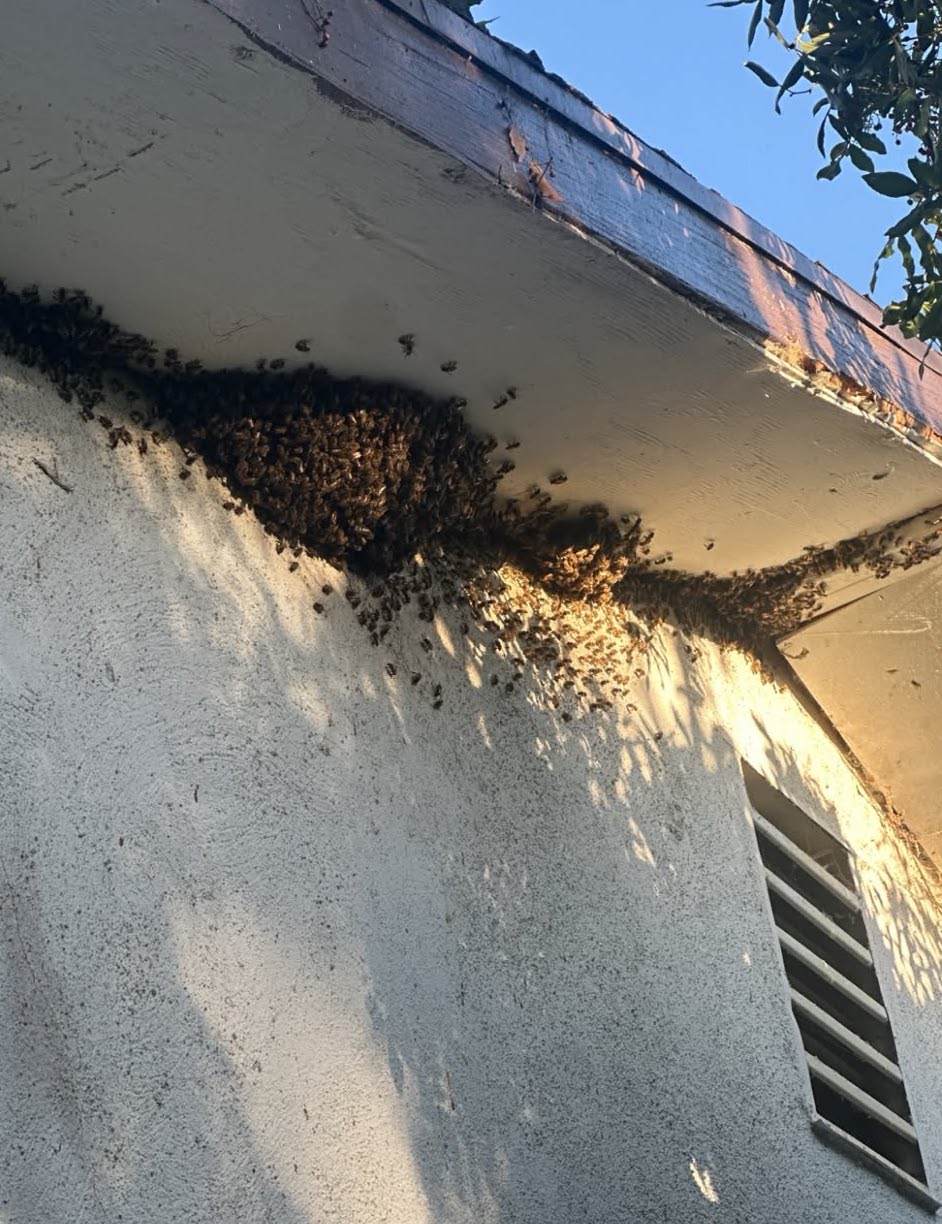
For example, bees repeatedly entering a small gap beneath a roof tile, disappearing behind a stucco column, or flying into an irrigation box may indicate an established colony.
During an inspection, we look for bees repeatedly using the same opening, particularly around stucco columns, roof eaves, and utility boxes. That concentrated traffic is a much stronger indication of an established colony than bees simply visiting a swimming pool.
Bees leaving the pool in the same general direction don't necessarily reveal where the colony is located. A more reliable sign is repeated traffic entering and exiting one specific opening in a structure.
You can sometimes identify suspicious activity by observing from a safe distance. However, don't block the opening or attempt to remove the bees yourself.
Sealing an active hive entrance can cause bees to search for another exit, potentially directing them into living spaces.
If the colony is inside a structure, the honeycomb and stored honey also need to be removed. Leaving those materials behind can attract pests and cause damage if honey leaks into surrounding materials.
Are Honeybees Around a Pool Dangerous?
Bees collecting water are generally less defensive than bees protecting their colony, but they can still sting.
Around swimming pools, accidental contact is the primary concern. Bees may be stepped on, trapped against skin, or caught in towels and pool equipment.
Southern California also has honeybee populations with Africanized ancestry. Defensive behavior varies between colonies, and you cannot reliably judge a colony's temperament by looking at individual bees.
If bees begin pursuing people, reacting defensively to normal activity, or gathering aggressively around a structure, move people and pets away and arrange a professional assessment.
When Professional Bee Removal Is Appropriate
If there's no established colony on the property, there may be nothing for a bee removal company to remove.
However, if an established hive is discovered inside a wall, roof, tree cavity, or another structure near the pool, professional removal may be appropriate.
At Beecasso Bee Removal, we specialize in live removal and relocation whenever practical.
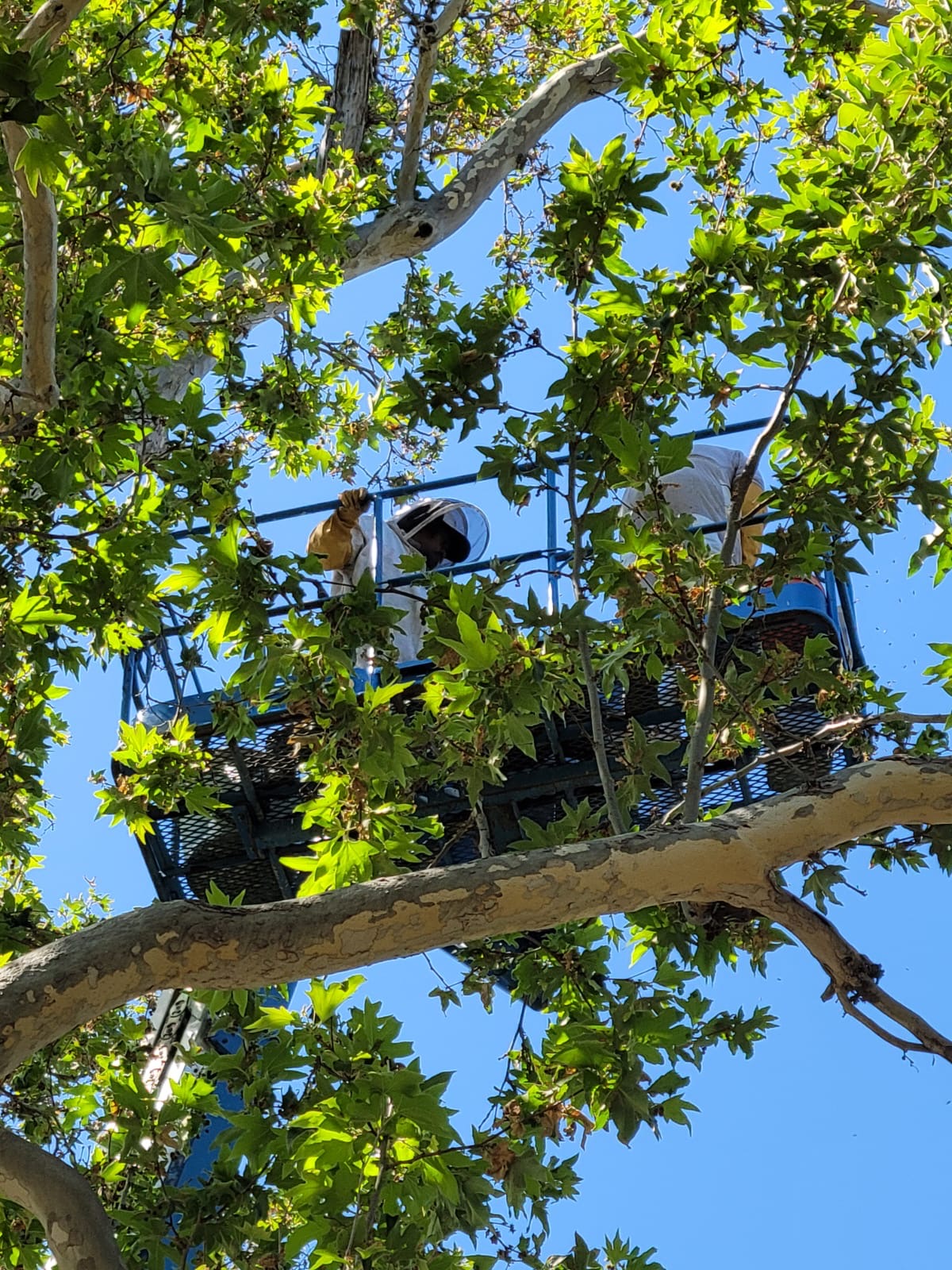
For structural colonies, this generally involves locating the occupied cavity, carefully opening the affected area, removing the bees and honeycomb, and transferring the colony into appropriate beekeeping equipment.
The cavity is cleaned, and repairs or sealing are completed where included in the agreed scope.
Many accessible removals can be completed within several hours, although larger colonies, difficult access, and structural repairs may require additional time. Some returning foragers may continue visiting the original hive location for several days afterward.
Removing a nearby colony doesn't guarantee your swimming pool will become completely bee-free. Other colonies in the neighborhood may still use the same water source.
Bee Removal Near Swimming Pools in Los Angeles
If bees are repeatedly entering a stucco wall, roofline, irrigation box, or tree cavity near your swimming pool, Beecasso Bee Removal can inspect the location and determine whether live colony removal is appropriate.
We provide professional live bee removal and relocation services throughout Los Angeles, Orange County, and surrounding Southern California communities.
Contact Beecasso Bee Removal to arrange an inspection if you suspect an established hive on your property.