Carpenter Bee
Large, shiny smooth black abdomen, drills wood

Individual
Swarm
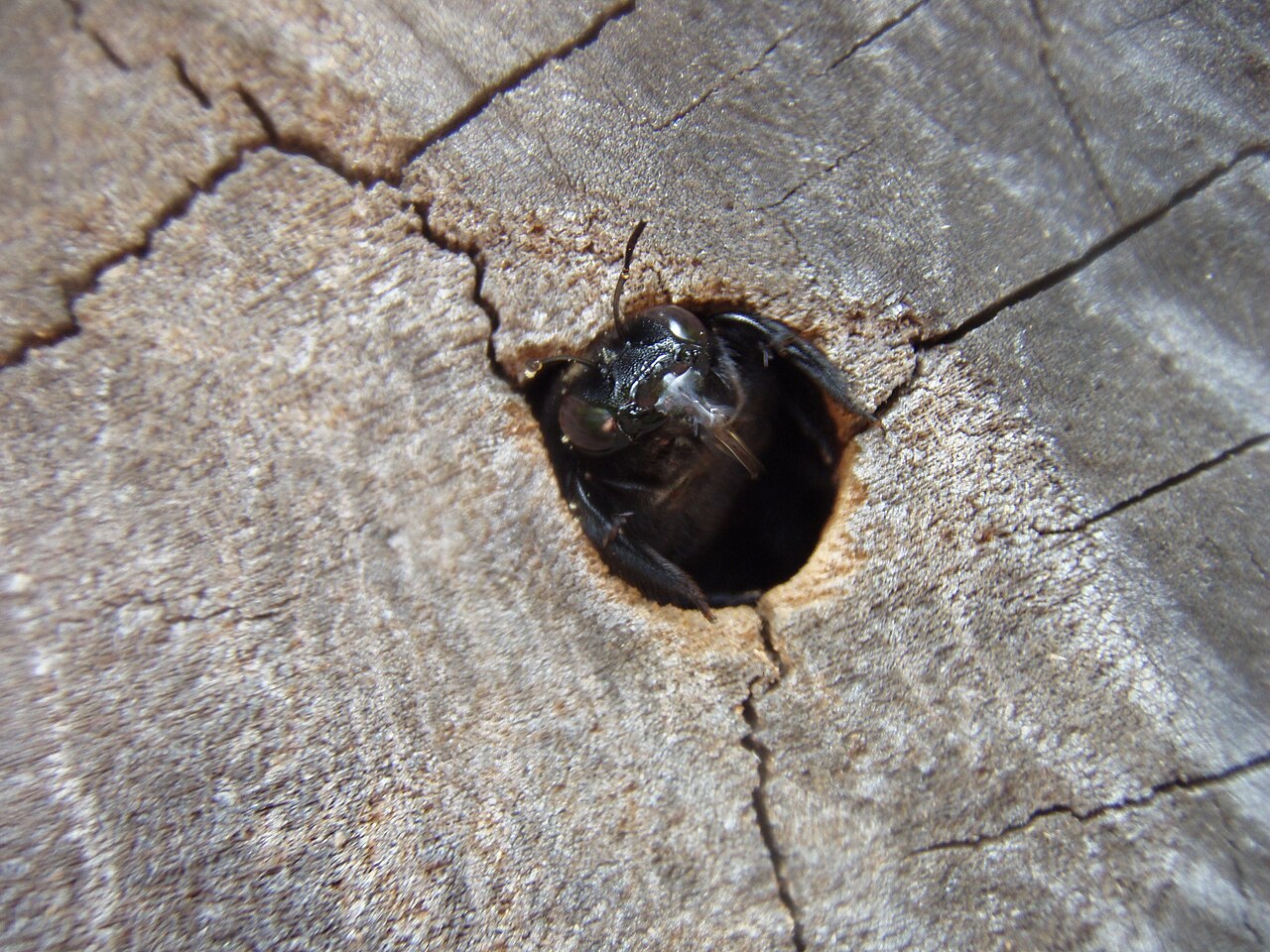
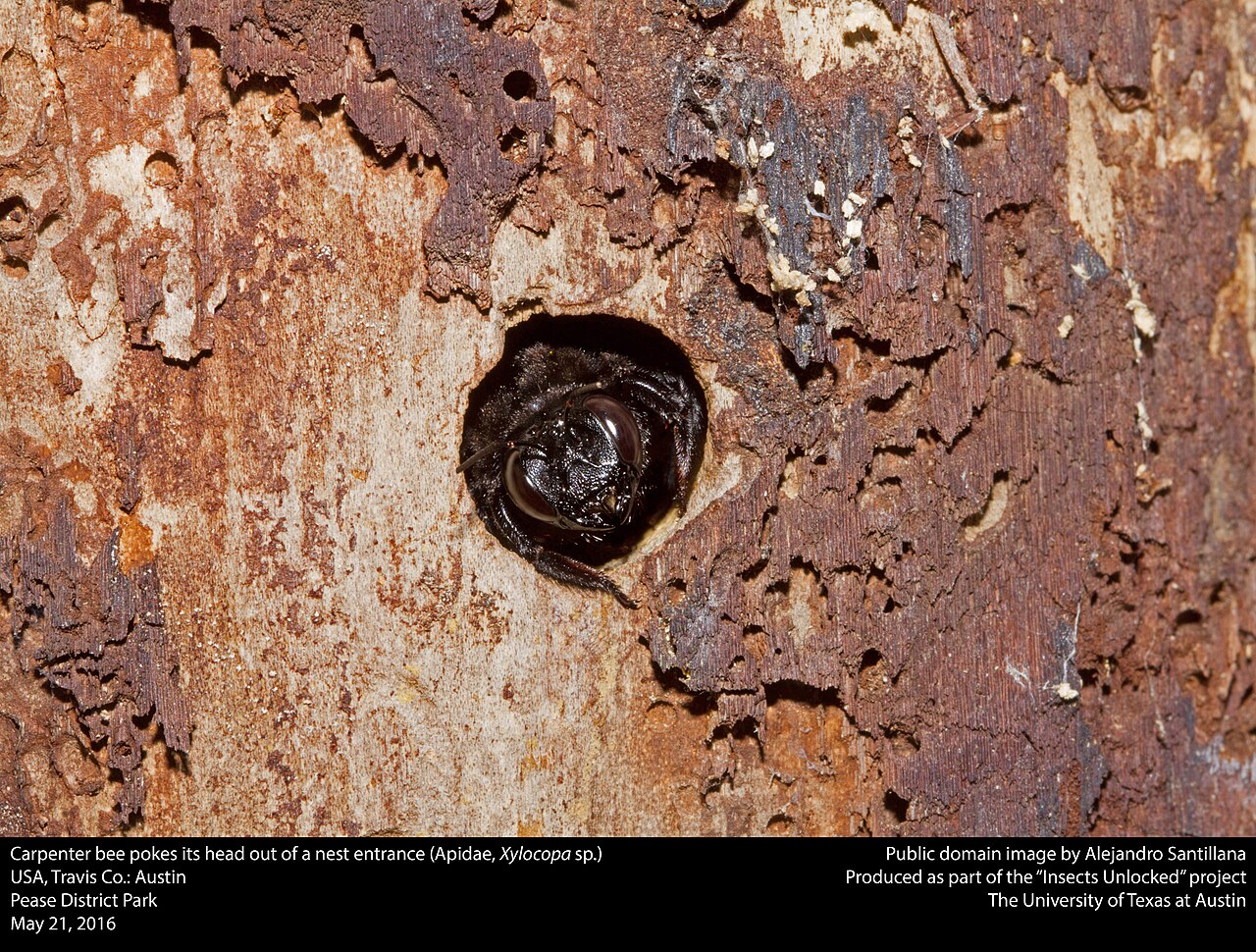
Nest / Hive
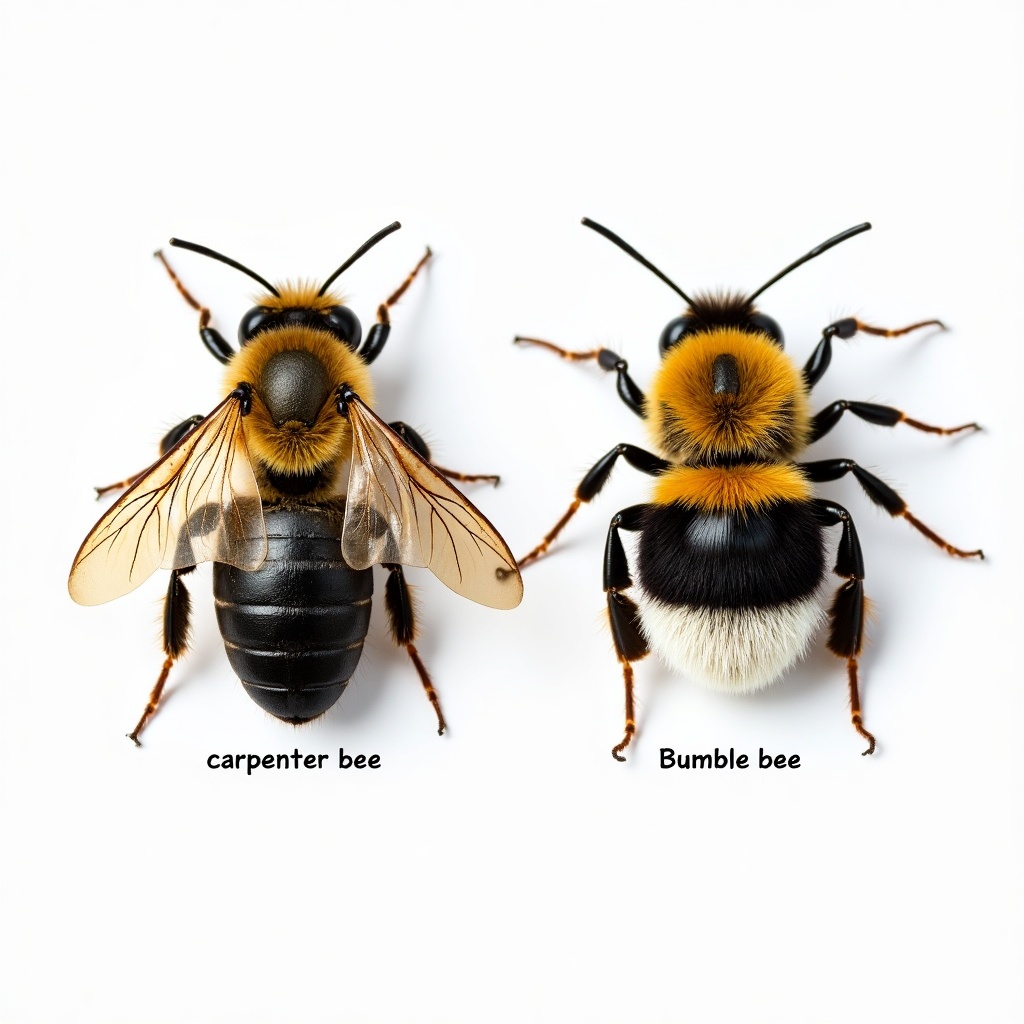
Wing / Body Pattern
What It Is
Carpenter bees are large solitary bees that drill nest tunnels in exposed, untreated wood. They are called carpenter bees because they excavate rather than find existing cavities. Carpenter bees are not colonial. Each female drills her own tunnel, lays eggs, and provisions them with pollen. There is no queen, no hive, no colony to remove. Size: 3/4 to 1 inch, similar to a bumblebee.
How to Identify
The clearest visual ID: the abdomen is smooth and shiny black. This is what separates a carpenter bee from a bumblebee at a glance. Bumblebee abdomens are fuzzy. Carpenter bee abdomens are not. The clearest nest ID: a perfectly round hole, approximately 1/2 inch in diameter, drilled cleanly into unpainted wood. Fascia boards, deck railings, fence posts, wooden eaves. The hole goes straight in for a short distance then turns 90 degrees to run with the wood grain. Sawdust may be visible below the hole. Males are often seen hovering near the hole entrance, a conspicuous territorial behavior directed at other males.
Behavior and Risk
Carpenter bee males are territorial and will hover, dart, and occasionally fly directly at people who approach the nest area. Males have no stinger. This behavior is dramatic but poses no physical risk. Females can sting but very rarely do. Stings typically occur only when a female is directly handled or trapped. The relevant risk for homeowners is property damage. Over time, repeated nesting in the same wood deepens existing tunnels and weakens the material. Water can penetrate the holes and accelerate rot.
How to Handle
Prevention: paint or stain all exposed wood. This is the single most effective measure. Carpenter bees strongly prefer untreated surfaces. Fill existing holes in fall using wood filler or wooden dowels, then paint the surface.
Smooth abdomen vs. fuzzy abdomen is the single reliable distinguisher between a carpenter bee and a bumblebee. If you see a large bee disappearing into a round hole in a wooden board, that is a carpenter bee. If you see large fuzzy bees near the ground or coming from a ground-level opening, that is likely a bumblebee.
Frequently Asked Questions
Will carpenter bees sting me?
The hovering male will not. Males have no stinger. The female can sting but is extremely reluctant to do so unless directly handled.
How do I stop carpenter bees from drilling into my deck?
Paint or stain all exposed wood surfaces. Carpenter bees avoid treated wood. Fill existing holes in fall using wood filler, then paint. Repeat annually on surfaces that get significant weathering.
Do carpenter bees cause structural damage?
Over time, yes. Repeated nesting seasons in the same wood deepen tunnels. Water infiltration through open holes accelerates rot. Addressing the surface treatment prevents the long-term accumulation.
Does Beecasso remove carpenter bees?
Carpenter bee activity is a different situation from honeybee hive removal. There is no colony to extract, no comb to remove. The appropriate response is filling the tunnels and treating the wood surface. This is typically within handyman or pest management territory. If you are unsure whether you have carpenter bees or a honeybee colony, send us a photo.
Is a carpenter bee the same as a bumblebee?
No. Both are large but easily distinguished by the abdomen. Bumblebee abdomens are fuzzy and hairy. Carpenter bee abdomens are smooth and shiny black. They also nest differently: bumblebees in the ground, carpenter bees in wood.