Bee Removal From Attics
Attic colonies grow undetected for months or years. In Southern California heat, wax and honey in an attic cavity create structural damage that extends past the bees themselves. Full extraction, complete comb removal, sealed entry before summer.
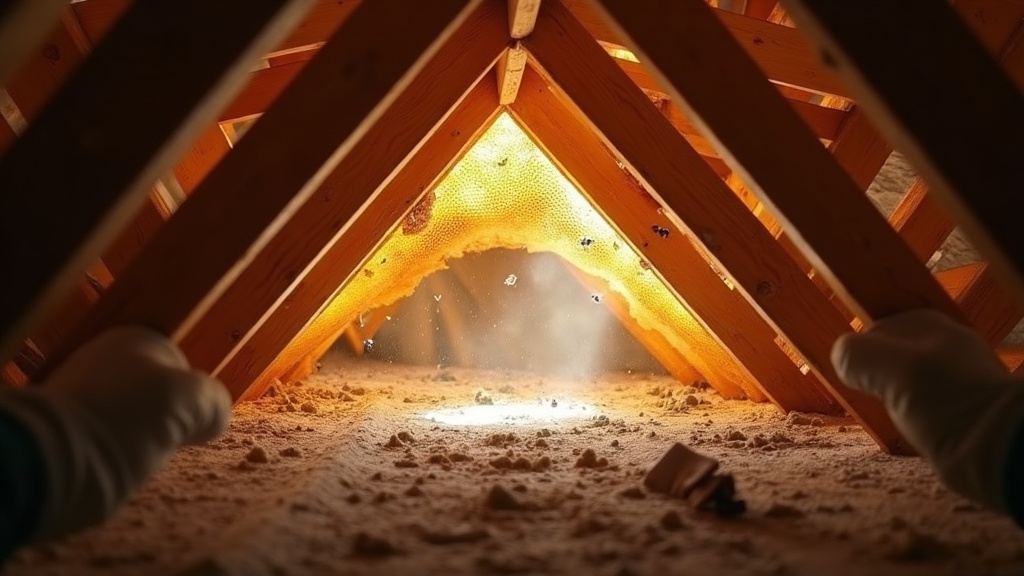
Common Attic Situations
Colony at the Roofline or Soffit Entry
The most common attic entry point. Bees enter through a gap at the roofline, under a ridge cap, through a damaged soffit panel, or around a vent. Traffic at a high exterior entry point with audible buzzing overhead is the typical homeowner signal.
Colony Nested Against Roof Decking
Colonies that establish against the underside of roof decking build comb directly on the structural wood. In summer, heat from the decking softens wax and the colony fans actively to thermoregulate. If the colony dies or is disturbed without comb removal, honey migrates downward into insulation and ceiling surfaces.
Large or Long-Established Colony
A colony that has occupied an attic space for 2 or more seasons can fill a significant portion of the available space with comb. These jobs involve more extraction time and a larger comb volume.
Post-Summer Discovery: Heat-Damaged Comb
Homeowners who notice honey stains on a ceiling or drywall in late summer or fall have typically had a colony in the attic for at least one warm season. The colony may still be active or may have collapsed. Either way, full comb removal and cavity cleanup is required.
Our Process
- 1
Attic Access and Colony Scope
We enter the attic and locate the colony precisely: extent of comb, distance from entry point, any structural proximity concerns. This scoping determines the extraction approach and time estimate.
- 2
Extract Colony and All Comb
We extract the live colony using a bee vacuum, then remove every frame of comb by hand. The goal is a clean cavity with no wax, no honey, and no residue.
- 3
Clean and Treat the Cavity
After comb extraction we clean the surface and apply enzyme treatment to neutralize pheromone residue. Any honey that has migrated into insulation is addressed.
- 4
Seal All Entry Points
Every gap the colony used to access the attic is sealed from the exterior. Soffit gaps, ridge cap seams, vent screens, and any secondary entry points identified during the job.
Frequently Asked Questions
How do I know bees are in my attic?
The main signals: steady bee traffic entering or exiting at the roofline, eave, or soffit; a persistent buzzing sound from the ceiling during warm weather; and honey or dark staining appearing on the interior ceiling surface. Bees near a roofline vent or soffit gap with two-way traffic is the earliest and clearest sign.
How large do attic colonies get?
Attic colonies can grow continuously for years if undisturbed. A colony in its first season has limited comb. A 2 or 3 season colony in a large attic space can produce tens of thousands of bees and fill a substantial section of the attic with comb. Late summer is when colony size is at its annual peak.
Will the job damage my attic?
We work through the attic space itself in most cases. Drywall-side access to the ceiling below is occasionally necessary for colonies that have settled close to the ceiling surface rather than higher in the attic. We identify access requirements during scoping and discuss them before work begins.
Will summer heat kill the colony without removal?
No. An established colony in an attic actively manages its temperature by fanning and clustering. The bees handle the heat. What summer heat does is accelerate wax softening and honey migration if the colony is disturbed, reduced, or dies. The structural damage from delayed removal gets worse in summer, not better.
Is attic removal more expensive than wall removal?
Often yes, primarily because of colony size and comb volume. Attic colonies that have been established for multiple seasons involve significantly more extraction and cleanup work. See our pricing page for ranges by job type. See full pricing.