Bee Specialist vs General Pest Control: Who Should Remove Bees From Your Home?
July 2, 2026 · 4 min read
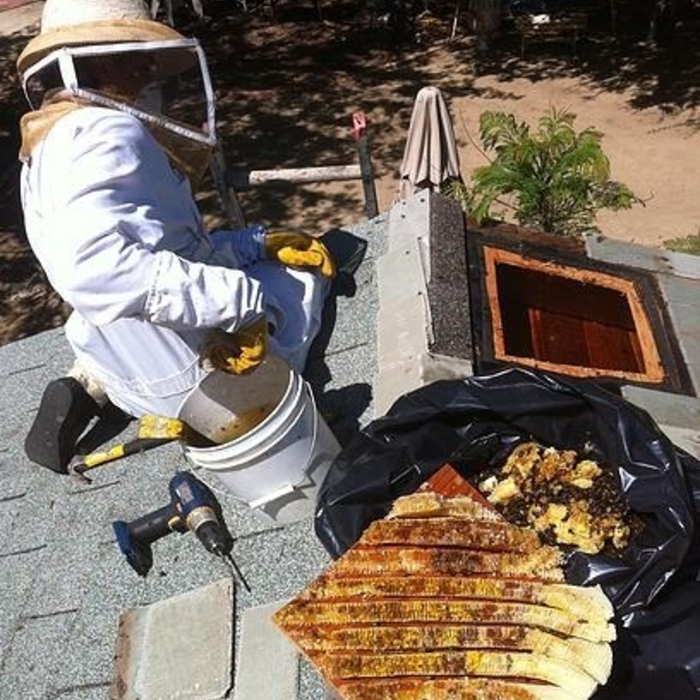
A bee specialist removes the whole colony alive, takes out the comb, and repairs what was opened, while a general pest company often sprays and leaves the comb behind, which can create staining, pest issues, and make the cavity more attractive to future swarms.
When bees move into your house, your first call decides how well the problem actually gets solved. Both a bee specialist and a general pest company can show up. They do very different work. Here is how to choose the right one. (If you are weighing whether to handle it yourself instead, our guide on why DIY bee removal fails covers that side.)
What a bee specialist does differently
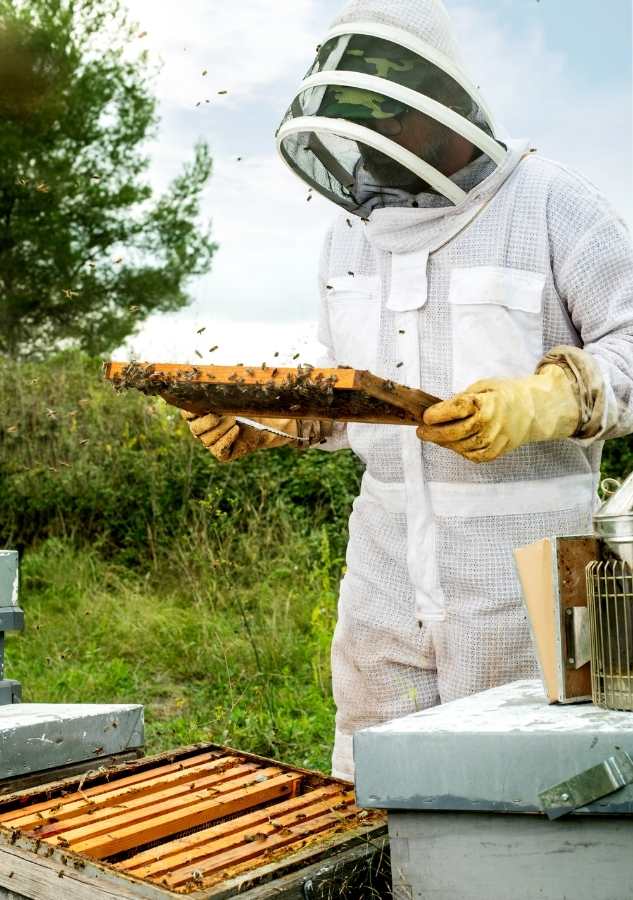
A specialist treats the colony as something to remove completely and keep alive. For an established colony inside a structure, that means opening the cavity, removing the full colony alive, taking out all the comb, cleaning the cavity so nothing is left to attract a new colony, relocating the honey bees to a managed apiary or local beekeeper, and repairing the opening that was made. It is a complete fix: bees out, comb out, surface restored.
What general pest control usually does with bees
This is not a knock on pest companies; it is just how the work differs. A general pest company commonly treats bees the way it treats any other pest, with a contact spray. Many will not open the wall, which means the comb and honey often stay right where they were. The bees may die, but the nest itself is still inside your home.
Why leaving the comb behind backfires
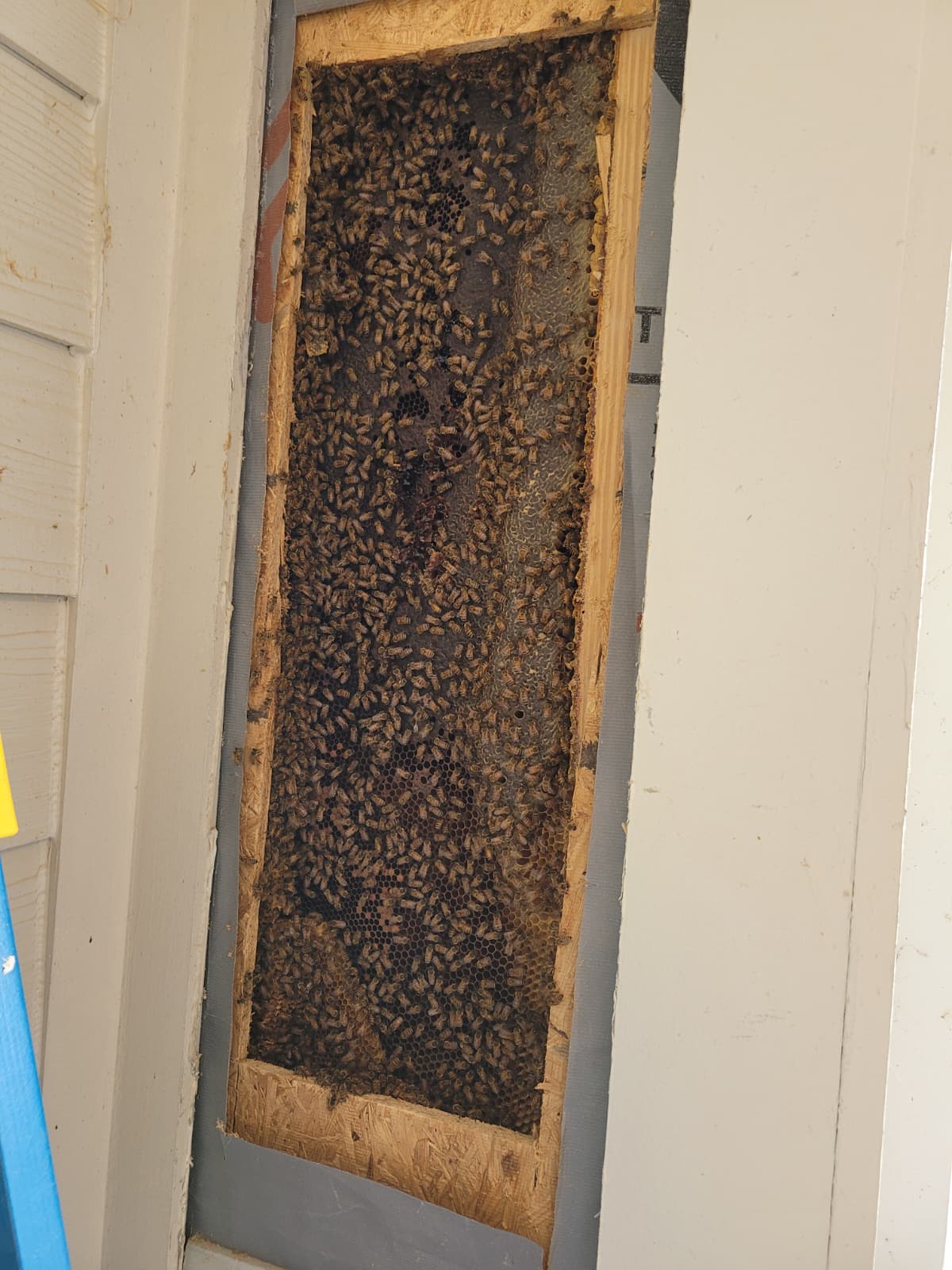
Here is the problem with spray-and-leave. Once the bees that were maintaining the nest are gone, the comb and honey are left sitting in the cavity. In summer heat the honey thins and seeps, which can stain and damage the surrounding structure, and the lingering scent of old comb and honey is an open invitation to the next swarm looking for a home. So a job that felt finished can turn into water-stained drywall, a sticky mess inside the wall, and another colony moving into the same spot. (Worth clearing up a common myth: beeswax has a much higher melting point than honey and stays solid in ordinary attic heat, but the honey absolutely thins and seeps when it is warm.)
The repair difference: what gets opened gets closed
This is one of the biggest practical differences. Beecasso repairs the structure it opens as part of completing the removal, so the surface that was opened to reach the bees gets closed back up. Many companies, if they open anything at all, only seal the small entry point the bees were using and leave the rest. For bees in a wall or attic bee removal, that repair step is what turns a removal into a finished job.
When a general pest company is fine, and when it is not
To be fair about it: for wasps or hornets, either a general pest company or a bee specialist can handle the job, since those are removed and controlled rather than relocated. The line to remember is this. For an established honey bee colony living inside your home, with comb built in the wall or attic, use a specialist who will remove the comb and repair the opening. That is the case where a quick spray creates more problems than it solves.
Questions to ask before you hire
Three questions sort it out fast:
- Do you remove the comb, or just the bees?
- Do you repair what you open?
- Do you relocate honey bees alive?
If the answers are yes, yes, and yes, you are talking to the right kind of company. Browse our full list of Tennessee services, check the bee removal cost page for how pricing works, or contact us to get started.
Frequently Asked Questions
Should I call a beekeeper or an exterminator for bees in my wall? For an established honey bee colony, use a bee specialist who removes the comb and repairs the opening, not a general exterminator who may only spray.
Why is leaving the comb behind a problem? Comb and honey soften and seep in summer heat, damage the structure, and the lingering scent draws new swarms.
Does a bee specialist repair the wall? Beecasso repairs what it opens as part of completing the removal.
Can a general pest company remove honey bees? They may treat or kill the colony, but many do not remove the comb and honey from inside the structure. That leftover material can create staining, pest attraction, odor, and future bee-attraction problems.