Bee Removal Isn’t Just About the Bees — It’s About What They Leave Behind
September 9, 2026 · 5 min read
Bee Removal Isn't Just About the Bees --- It's About What They Leave Behind
A homeowner will often call us with a simple question: "If we get the bees out, is that the end of the problem?"
If it's a temporary swarm sitting on a tree branch, it may be. But when honeybees have established a colony inside a wall, roof, chimney, stucco column or other part of a structure, getting the adult bees out is only part of the job.
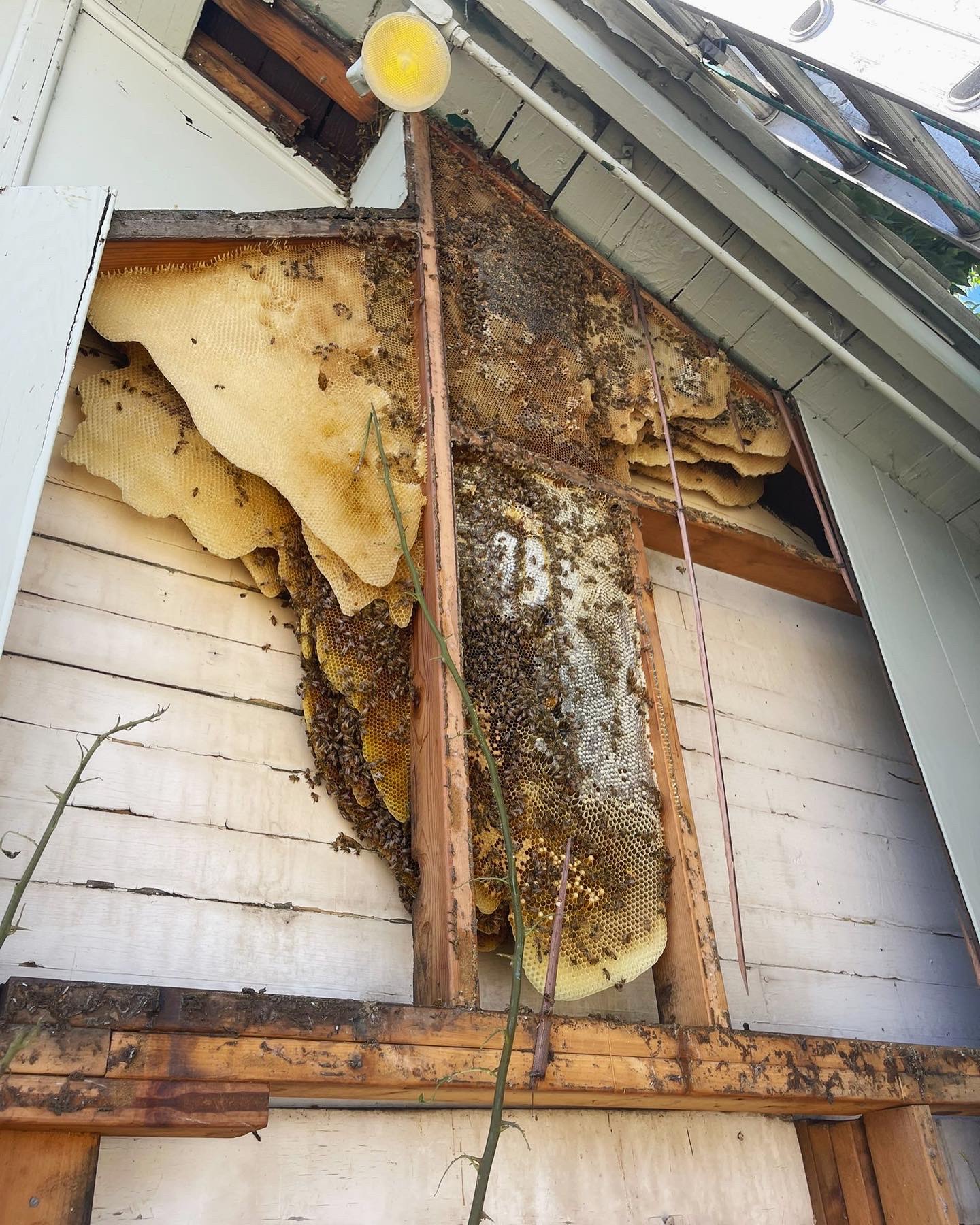
We've opened Los Angeles stucco walls where bees were using an entrance barely wider than a finger, only to find sheets of comb extending through a much larger section of the wall cavity. From outside, there is often no way to tell exactly how much is behind that small entrance.
Once a colony is established, it can leave behind honeycomb, stored honey, brood, pollen, wax, propolis and hive scent. If that material remains inside the structure, it can create problems even after the flying bees are gone.
A small entrance can hide a large colony
One of the first things we ask homeowners is how long they've noticed the bees.
That matters because a colony that moved in recently is very different from one that has been established for months or years. The longer the bees have occupied the cavity, the more likely we are to find substantial comb and stored honey.
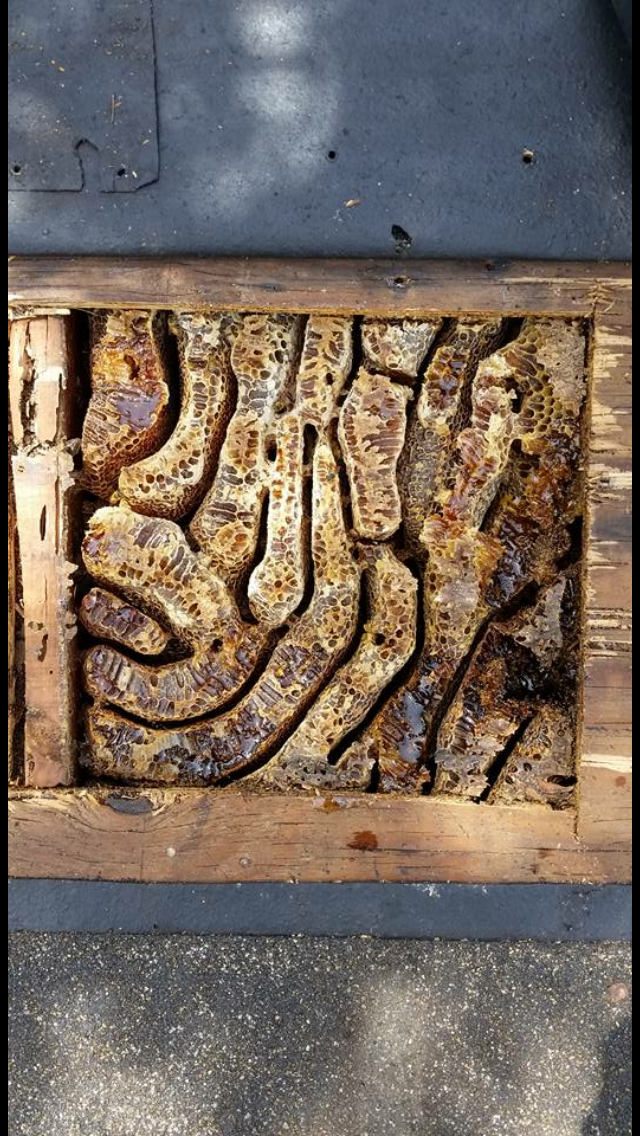
We commonly find comb built between wall studs, behind stucco, beneath roof materials, inside fascia areas and in other protected cavities. Sometimes the location of the entrance can be misleading too. Bees may be entering at one point and traveling inside the structure before building their colony somewhere else.
That's why outside activity gives us clues, but it doesn't always tell us the full size or exact location of the hive.
What happens to the honey after the bees are gone?
This is one of the biggest reasons we don't like to leave an established hive inside a structure when it can reasonably be removed.
A living colony maintains its hive. Once the colony is gone, nobody is maintaining that comb.
That becomes particularly important during hot Southern California
weather. Wax can soften, and honey stored inside abandoned comb can leak
into insulation, drywall, wood and other building materials.
 When we open a cavity, we sometimes find insulation directly against the
hive material. If that insulation has become contaminated with honey,
wax or hive debris, simply closing the wall back up isn't always the
right solution. The affected material may need to be removed and
replaced before the structure is repaired.
When we open a cavity, we sometimes find insulation directly against the
hive material. If that insulation has become contaminated with honey,
wax or hive debris, simply closing the wall back up isn't always the
right solution. The affected material may need to be removed and
replaced before the structure is repaired.
Abandoned hive material can also attract ants, wax moths and other pests.
That doesn't mean every abandoned hive will cause honey to pour through someone's ceiling. The risk depends on the size of the colony, how much honey is stored, the location of the comb and conditions inside the cavity. But leaving a substantial amount of comb and honey behind is a risk homeowners should understand.
An old hive can make the same location attractive again
Another issue is what remains even after the physical comb is removed.
Bees use wax and propolis throughout a colony, and the cavity develops a very recognizable hive odor. A protected space that has successfully housed bees before may remain attractive to future swarms, particularly if the original entrance was never properly sealed.
We regularly hear some version of: "We had the bees treated before, but now they're back."
That doesn't automatically mean the original treatment failed. There may be surviving bees from the original colony, or a completely new swarm may have moved into the same cavity.
Either way, simply treating the visible bees without addressing the hive and the way they entered can leave the homeowner dealing with the same area again.
What we actually do once the wall is opened
When a colony is established inside a structure, the first challenge is determining where it is and how to reach it with the least practical amount of damage.
Depending on the property, that might require removing a section of stucco, siding, fascia or roofing material. We don't know the exact size of the colony until we can see inside, so the access opening sometimes has to be adjusted as the removal progresses.
Once exposed, we work through the colony section by section.
The bees are collected for relocation. Usable brood comb can be carefully cut out and secured into frames so developing bees can remain with the relocated colony. We also look for the queen during the removal, although in a large structural colony finding her isn't always guaranteed.
Then we remove the comb itself.
Honeycomb, loose wax, honey and hive debris are taken out of the cavity as thoroughly as practical. If insulation is contaminated, that may need to come out as well.
Opening the structure also lets us see something we couldn't see during the exterior inspection: what is actually happening inside the cavity. We can determine how far the colony extends, where the bees have been traveling and which openings may allow future access.
Once the hive material has been removed and the cavity cleaned, the area can be prepared for closure. Depending on the construction and the scope of the job, insulation may be replaced and the access area repaired.
Just as importantly, the bee entry points need to be addressed. Removing a colony but leaving an obvious route back into the same protected cavity doesn't fully solve the structural problem.
Not every bee call needs a wall opened
There are important exceptions.
A temporary swarm, for example, has not necessarily established a hive at all. A newly arrived colony may have produced very little comb. And there are situations where opening a particular structure would cause disproportionate damage or simply isn't practical.
We don't recommend cutting into a house just because bees are present.
The decision should depend on where the bees are located, how long they've likely been there, whether they are actively building inside the structure and what approach gives the homeowner the best chance of actually resolving the problem.
Live relocation is an important part of what we do, but with an established structural colony, getting rid of the flying bees is not the same thing as removing the hive.
If comb and honey are left inside and the entry point remains accessible, the homeowner may still be left with the conditions that caused the call in the first place.