How Big Can a Honeybee Colony Get Inside a Stucco Wall? (A Pasadena Removal Case Study)
August 4, 2026 · 5 min read
How Big Can a Honeybee Colony Get Inside a Stucco Wall? (A Pasadena Removal Case Study)
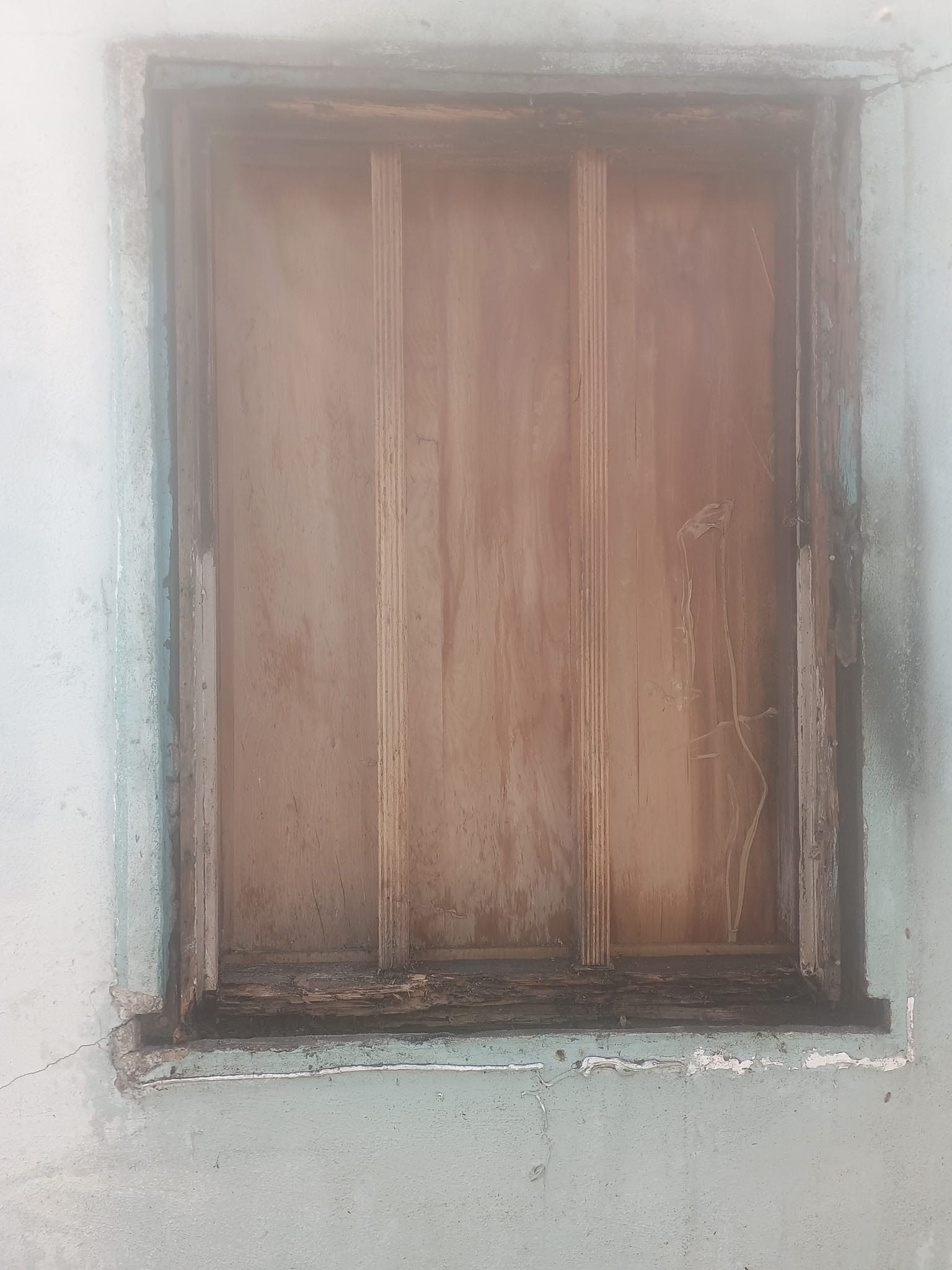
The homeowner called us because they had noticed honeybees entering a small opening in the stucco on the side of their Pasadena home. From the ground, it didn't appear to be a major issue. There was a steady stream of bees coming and going, but nothing that suggested what was hidden behind the wall.
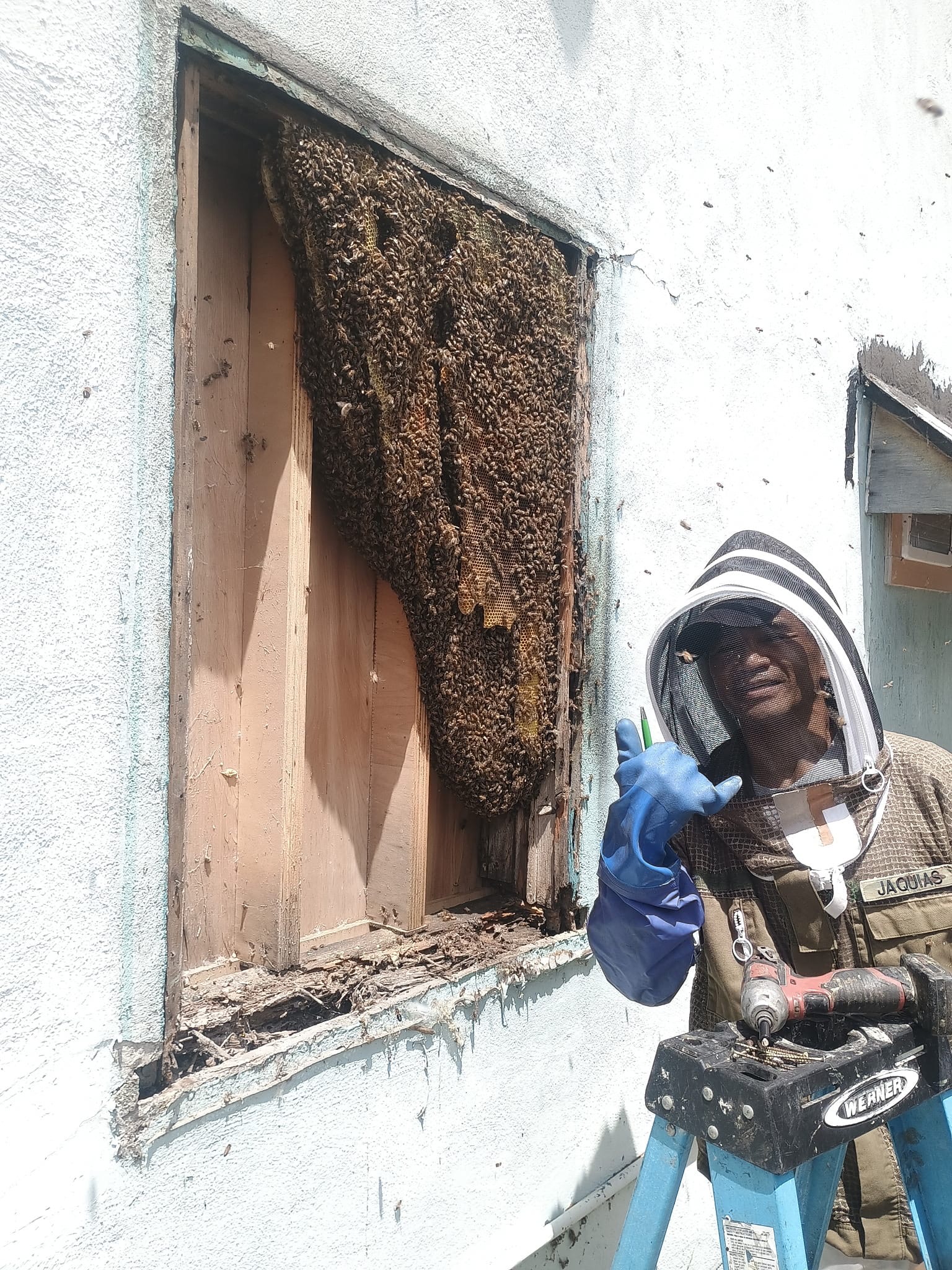
Once we carefully opened the stucco, we discovered a large, established honeybee colony occupying nearly the entire wall cavity.
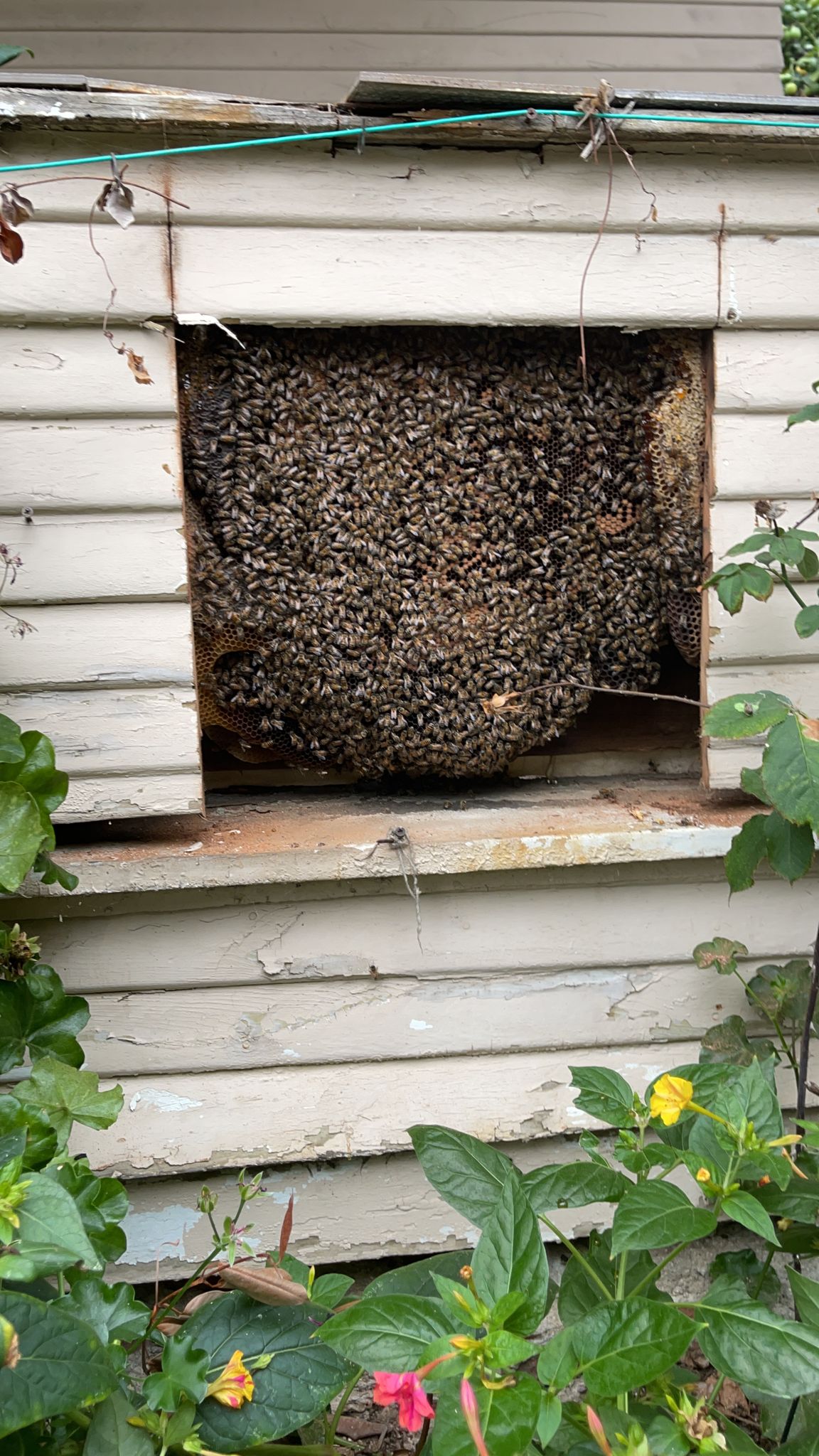
Large sheets of comb extended from the top plate almost to the bottom of the opening. The center of the colony was filled with dark brood comb where new bees were developing, while newer white wax along the outer edges showed the colony was still actively expanding. Several comb sections were heavy with honey and had to be carefully supported by hand while being cut free to prevent them from breaking apart.
This wasn't a recently arrived swarm. It was a mature colony that had likely been living inside the wall for many months.
Why do honeybees choose stucco walls?
This is one of the most common structural bee removals we perform throughout Pasadena, Altadena, San Marino, South Pasadena, and the surrounding communities.
Many of Pasadena's older stucco homes have enclosed wall cavities with small gaps that develop around aging stucco, plumbing penetrations, roof flashing, vents, or utility lines. Those protected spaces provide nearly everything a honeybee colony needs:
- Protection from rain and wind
- Stable temperatures year-round
- Darkness
- Protection from predators
- Enough space for the colony to continue expanding
Honeybees only need an opening about 3/8 of an inch wide for scout bees to investigate a cavity. Once a swarm accepts the location, thousands of bees can move in within a matter of hours and begin building comb almost immediately.
If the colony survives its first season, it often continues using the same comb year after year, expanding deeper into the wall until the available space is filled.
What we found inside this wall
Once the stucco was opened, we found:
- Several large sheets of attached honeycomb
- Tens of thousands of live honeybees
- Extensive brood comb containing developing bees
- Stored honey and pollen
- Fresh white wax showing continued colony growth
One of the first things we look at during a removal is the color of the comb.
Fresh comb is nearly white. As generation after generation of bees emerge from the same brood cells, the wax gradually darkens. This colony contained both old dark brood comb and newly constructed white wax, confirming that it had occupied the wall for a considerable period of time and was still growing.
A colony of this size commonly contains 30,000 to 60,000 bees, and during Southern California's spring nectar flow, strong colonies may grow even larger.
Why spraying bees inside a wall usually makes the problem worse
One of the most common calls we receive starts with, "We already had someone spray them."
Unfortunately, killing the bees doesn't remove the colony.
Everything they built remains inside the wall:
- Honey
- Wax comb
- Brood comb
- Pollen
- Thousands of dead bees
During Pasadena's hot summers, stored honey can soften and seep into wall cavities, sometimes staining drywall or attracting ants. The remaining wax attracts wax moths and other insects, while the lingering scent of the colony can attract another swarm looking for an established nesting site.
We've removed many wall colonies where pesticides had been applied months earlier, yet every piece of comb still had to be physically removed before the structure could be considered clean.
How this Pasadena colony was removed
On this removal, we carefully opened only the section of stucco necessary to expose the entire colony.
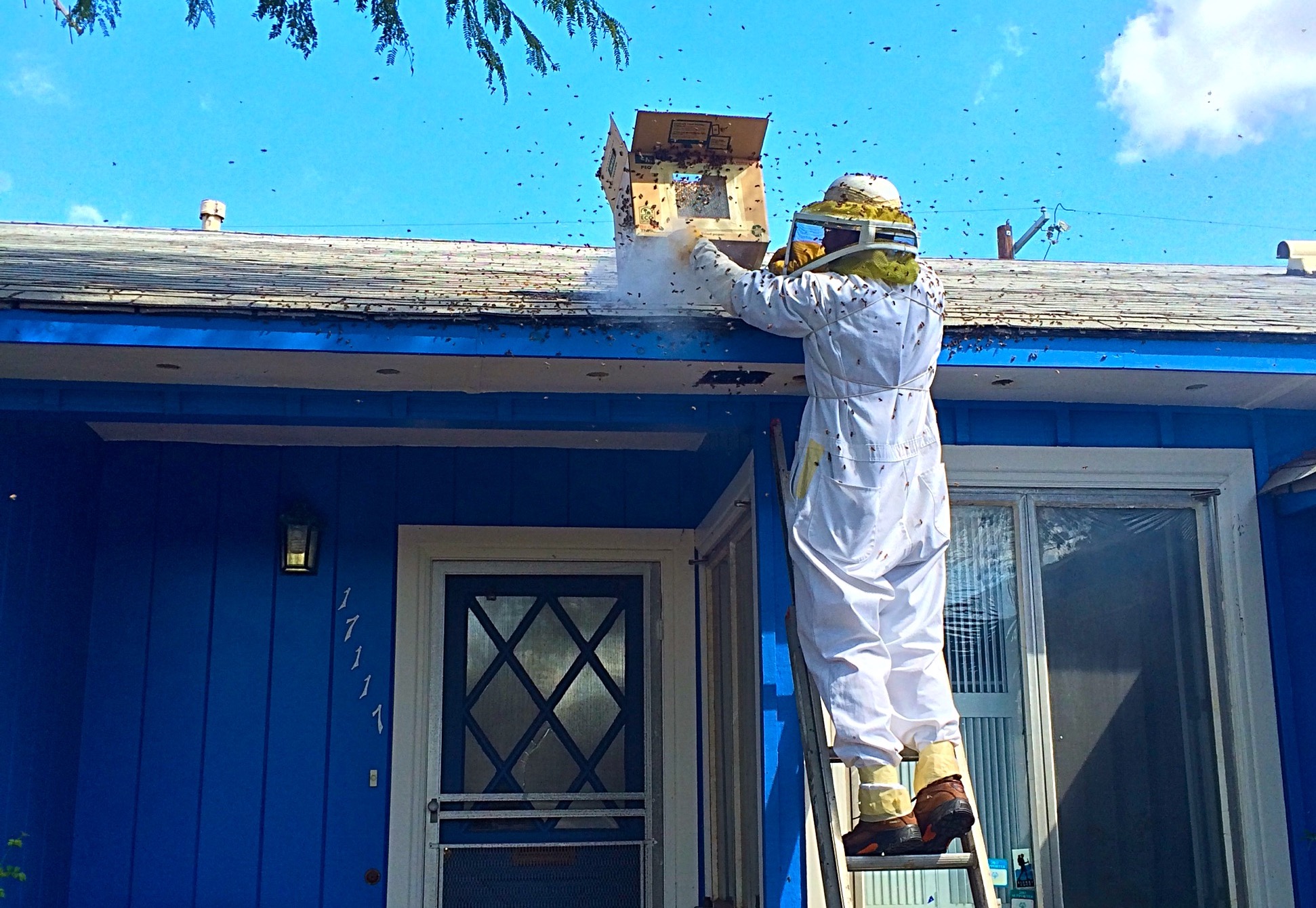
The live bees were safely collected into transfer boxes for relocation while each section of brood comb, honeycomb, pollen stores, wax, and propolis was carefully removed from the wall cavity. Some comb sections were firmly attached to the wall framing and required slow, careful removal to prevent them from collapsing under the weight of the stored honey.
Once all of the comb had been removed, the wall cavity was thoroughly cleaned, treated where appropriate to discourage reinfestation, and the original bee entry point was sealed before repairs were completed.
Removing every piece of comb is one of the most important parts of a structural bee removal. Even small amounts of wax or honey left behind can lead to future pest problems.
Can you tell how big a colony is from outside?
Usually not.
Some of the largest colonies we've removed showed surprisingly little bee activity from outside the home.
On the other hand, we've inspected homes with hundreds of visible bees that turned out to contain relatively small, newly established colonies.
The amount of bee traffic at the entrance tells us very little about what's happening inside the wall. The only reliable way to determine the size of a colony is by locating the entry point and exposing the cavity.
This Pasadena removal is a perfect example. What looked like a relatively minor bee problem from the outside turned out to be a mature colony occupying nearly the entire wall space behind the stucco.
The sooner it's removed, the simpler the job usually is
Honeybee colonies don't stop growing because the wall feels full. As long as space remains available, the colony continues raising brood, storing honey, and building new comb until it eventually runs out of room or produces swarms to establish new colonies elsewhere.
The longer an established colony remains inside a wall, the more honey, wax, brood, and cleanup will eventually be required. Addressing the problem early is usually less invasive, less expensive, and results in less structural damage.
At Beecasso Bee Removal, we specialize in humane live honeybee removal throughout Pasadena, Altadena, San Marino, South Pasadena, Sierra Madre, Arcadia, and surrounding communities. Every structural removal includes complete live bee removal, full comb removal, cavity cleaning, treatment when appropriate, and sealing of the original bee entry point to help prevent future infestations.
If you've noticed honeybees consistently entering a stucco wall or other
part of your home, it's worth having the colony inspected before it has
another season to grow. Early removal protects your home while allowing
the bees to be safely relocated whenever conditions allow.