The Honeybee Lifecycle: Why It Makes Live Relocation the Right Call
January 29, 2025 · 4 min read
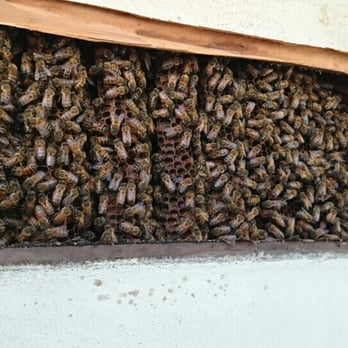
The case for live relocation starts with understanding what you are actually dealing with when a bee colony takes up residence in your wall. A hive is not a static nuisance. It is a living system with a structure that determines how removal should be done and whether the colony survives it.
Egg: the beginning
A honeybee queen lays each egg individually in a wax cell. At peak season she can lay upward of 1,500 eggs per day, a rate documented in USDA and university extension research on honeybee colony dynamics. Eggs are laid standing upright in the cell and hatch after three days into larvae. The type of bee that emerges, whether worker, drone, or queen, is determined by what happens in the next stage, not by the egg itself.
Larva: the feeding stage
All larvae receive royal jelly for the first three days after hatching. Royal jelly is a glandular secretion produced by young worker bees; it triggers rapid growth and development in all larvae alike. After the first three days, the developmental paths diverge: larvae destined to become workers and drones transition to a diet of pollen and nectar. A larva that continues on royal jelly exclusively develops into a queen. Nutrition during this larval window, not genetics alone, determines caste, a finding supported by research into epigenetic regulation of gene expression in honeybees. The larval stage lasts approximately five to six days before the cell is sealed.
Pupa: development inside the capped cell
Inside the sealed wax cell, the larva undergoes complete metamorphosis, taking approximately 12 days for a worker bee. Wings, compound eyes, antennae, legs, and the internal structures specific to the bee's adult role all develop during this stage. When development is complete, the adult bee chews through the wax cap and emerges.
Adult: three roles, one colony
Workers, infertile females, make up the majority of every colony. A peak-season colony can contain 30,000 to 60,000 workers. They progress through roles over their lifetime: nursing larvae and maintaining the hive in early weeks, then building comb, guarding the entrance, and finally foraging for nectar and pollen. A summer worker bee lives approximately six weeks.
Drones, males, exist to mate with a new queen from another colony. They do not forage, build, or defend. In fall, workers drive unmated drones from the hive as resources tighten.
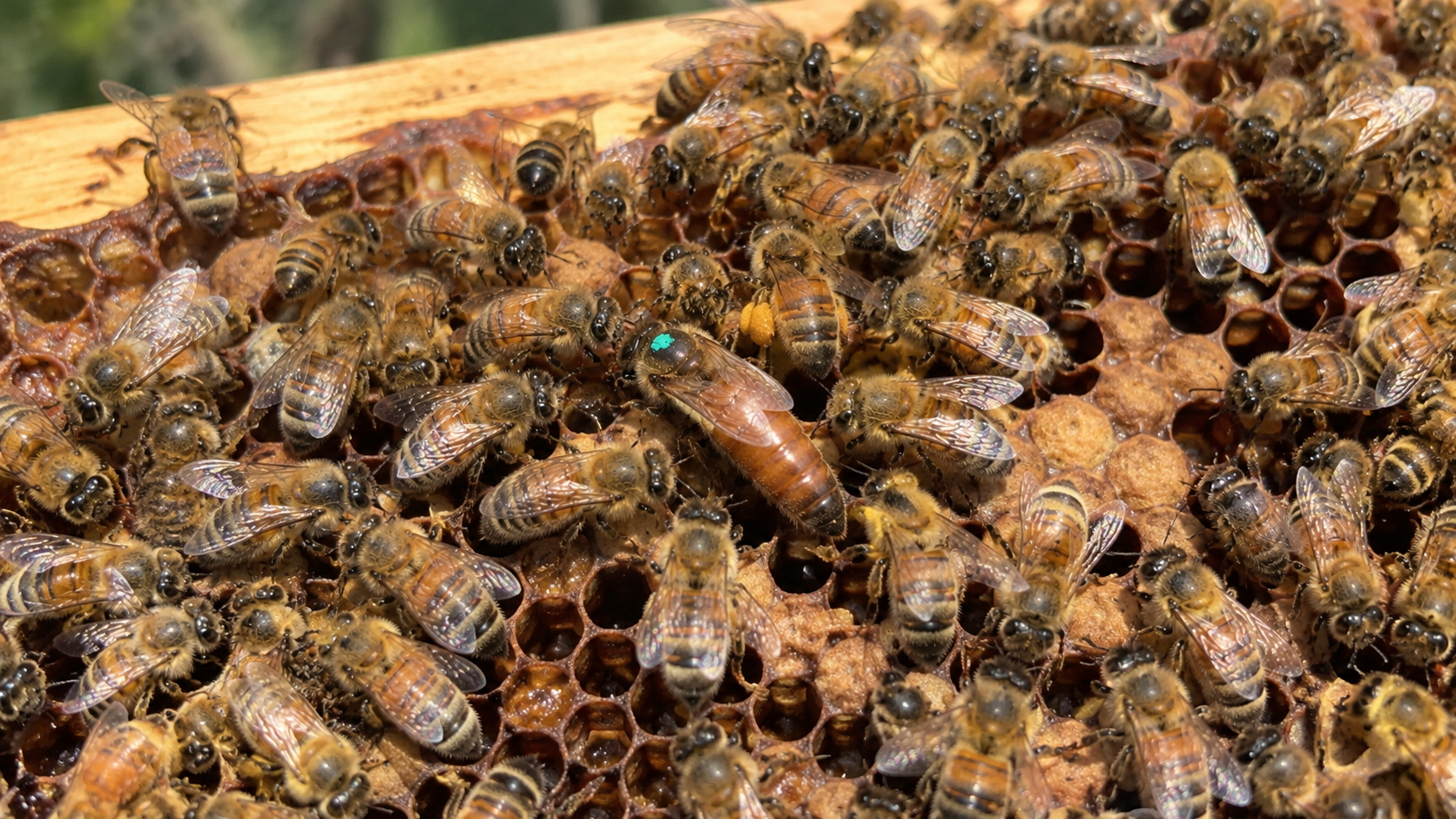
The queen is the colony's reproductive core. A mated queen can live for several years and is the source of nearly all eggs that sustain the colony's population. This is the biological fact that makes queen-centered live removal work: the colony follows the queen. When the queen is successfully captured and placed in a hive box at a new location, the workers follow her.
Why complete removal matters
When a colony is exterminated in place without comb removal, the biological problem is not solved; it is deferred. Honey left in comb inside a wall, whether the colony survives or not, runs in summer heat, drains into the wall structure, ferments, and broadcasts a pheromone profile to passing scout bees that registers as "established hive here." That scent can draw new colonies to the same wall cavity for years. Complete removal, including colony, comb, and brood, is what closes the loop.
What live relocation actually means
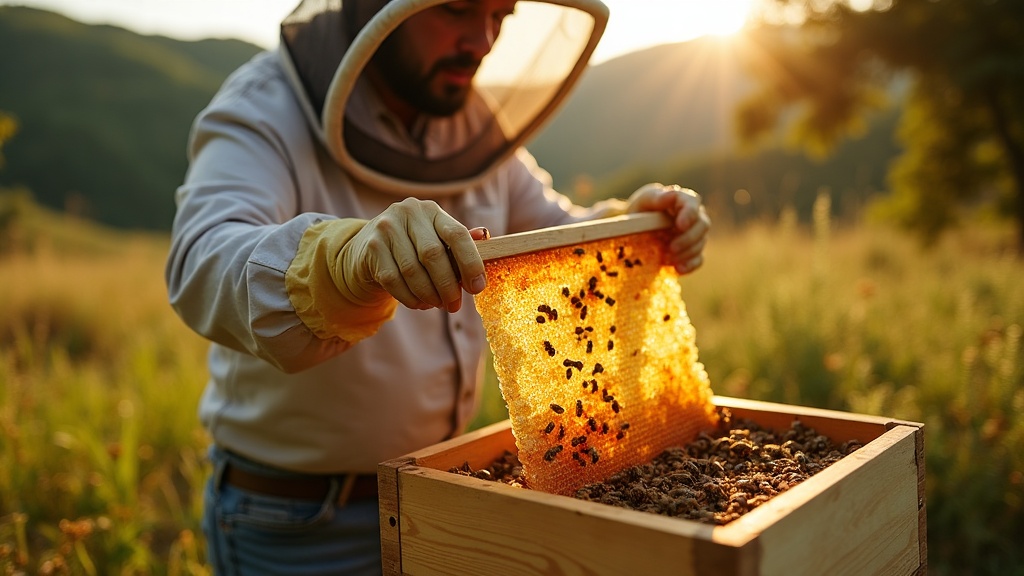
Live relocation is queen capture plus colony transfer. When successful, the queen and her workers are transferred intact to an apiary or sanctuary partner where the colony can resume building and foraging. The colony that was inside your Torrance soffit continues its contribution to local pollination in a managed setting.
Not every extraction results in a colony that establishes successfully at a new location. Colony health, how much of the comb and brood transfers, the completeness of queen capture, and conditions at the receiving site all affect outcomes. What live removal offers is the colony's best chance, not a guaranteed outcome, but a meaningful one.
Beecasso performs live extraction by default and relocates viable colonies to apiary and sanctuary partners in the Los Angeles area. Complete comb removal on every job, regardless of outcome for the colony.
Serving Los Angeles County and Orange County. Free assessments.
Provided by Beecasso. Last updated June 2026.
Frequently Asked Questions
What determines whether a bee becomes a worker or a queen?
Nutrition during the larval stage, not genetics. All fertilized eggs are capable of producing either caste. Larvae fed exclusively on royal jelly develop into queens; larvae that transition to a pollen-and-nectar diet at around day three develop into workers. The queen cell is built larger to accommodate her development, and royal jelly feeding continues throughout her larval stage. Research into epigenetic regulation in bees has established that this nutritional difference activates different gene expression patterns.
Can a relocated colony survive in a new location?
When the queen is captured intact and the colony transfers with a viable brood population, colonies can and do establish in managed apiary settings. Success depends on colony health, transfer completeness, and conditions at the receiving location. Beecasso relocates viable colonies to partner apiaries and sanctuaries in the LA area. Live extraction gives the colony a real chance; we do not promise 100% survival.