Wasp Nest or Bee Hive? How to Tell What You Have, and Who to Call
July 9, 2026 · 5 min read
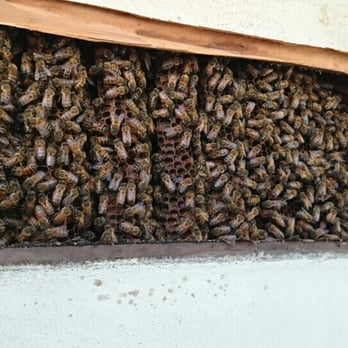
The fastest way to tell what you have: look at the nest material and the insect's body shape. Honey bee hives are made of golden wax comb, usually hidden inside a wall, soffit, or tree cavity. Wasp and hornet nests are made of grey or tan papery material. If you see insects going into a gap in your siding with no visible nest, you likely have bees or yellow jackets, both of which nest inside enclosed voids. Identifying the type matters because the removal approach is different for each.
Why It Matters Which Type You Have
Honey bees, paper wasps, yellow jackets, and hornets have different nesting behaviors, different levels of aggression, and different removal requirements. The correct approach for a honey bee hive inside a wall is not the same as the correct approach for a yellow jacket nest underground. Getting the identification right determines what needs to happen next.
One note before you look any closer: if you suspect a nest, do not disturb the area to get a better look. Identify from a safe distance using the cues below, or call for a professional assessment.
How to Tell by Insect Behavior (Without Getting Close)
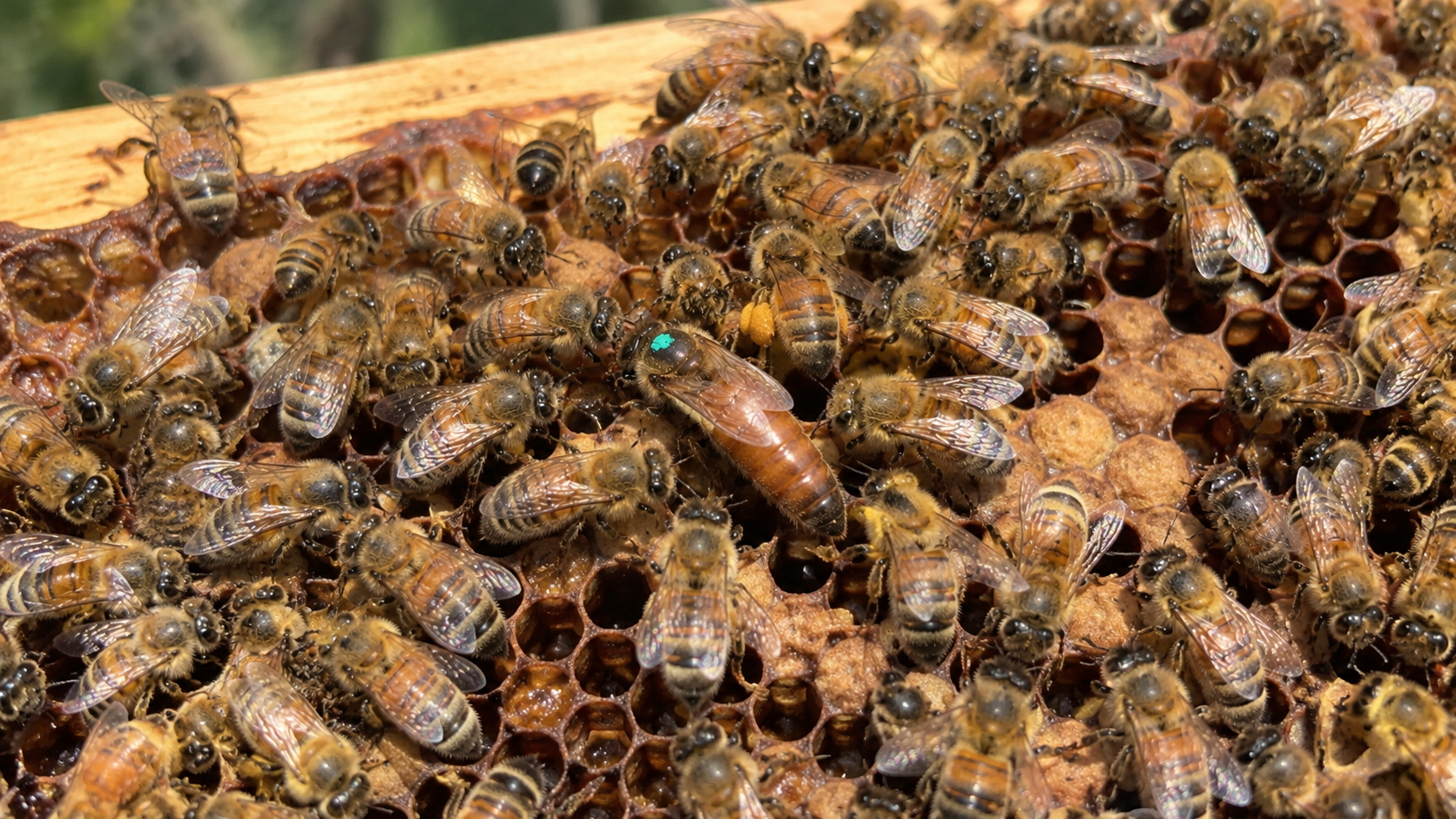
Honey bees are fuzzy, round-bodied, and slow-moving relative to wasps. They often return to the hive carrying visible pollen, bright yellow or orange, on their hind legs. They enter and exit a cavity in a steady, unhurried pattern and are not aggressive unless the hive is directly threatened.
Paper wasps, yellow jackets, and hornets have smooth, shiny bodies with a visibly narrow pinched waist and no pollen on their legs. They move faster and with more urgency. Yellow jackets are especially territorial and will pursue perceived threats away from the nest. If insects near the entry point move toward you when you approach, or seem agitated by nearby activity, you are almost certainly looking at wasps, yellow jackets, or hornets.
How to Tell by Nest Type
Honey bee hive: Honey bees build with beeswax. The comb is golden-yellow or amber, hexagonal, and visible only if the cavity is open or the hive is exposed. In most structural situations, the hive is inside a wall, soffit, or eave and you cannot see the comb directly. The visible indicator is bees entering and exiting a small gap consistently throughout the day.
Paper wasp nest: Small, open, and umbrella-shaped, typically 3 to 10 inches across. Made of grey paper-like material (chewed wood fiber). The individual cells are open and visible from below. Usually found under eaves, porch ceilings, door frames, or window ledges.
Yellow jacket nest: Enclosed and papery. Yellow jackets frequently nest underground, inside wall voids, or beneath steps and decking. Underground nests have a small entrance hole in the soil with heavy, fast insect traffic. Wall void nests look similar to a honey bee entry point from the outside, but with faster and more aggressive insect movement.
Bald-faced hornet nest: Large, grey, and papery, roughly football-shaped or globe-shaped. Usually elevated: high in a tree, attached under a roof overhang, or on a structure above head height. A mature nest can reach up to 14 inches in diameter and up to 2 feet in length, and is often described as roughly basketball-sized or larger.
Location Clues: Where Each Type Builds
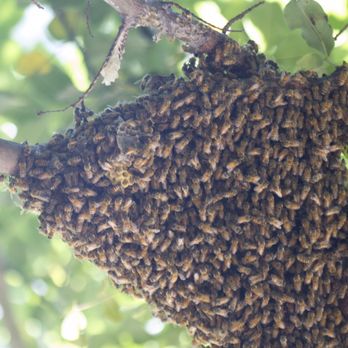
Honey bees strongly prefer enclosed cavities with a small, defendable entrance. Wall voids, soffits, attic spaces, tree hollows, and chimneys are common locations.
Paper wasps build open, exposed nests in sheltered spots: under eaves, porch ceilings, door frames, and utility boxes. They prefer areas protected from direct rain.
Yellow jackets are highly flexible nesters. They build underground in old rodent burrows, inside wall voids, under decks, and in crawl spaces. By late summer, underground yellow jacket nests typically contain several hundred to several thousand workers.
Hornets prefer elevated aerial locations: high tree branches, roof overhangs, and upper eaves. Bald-faced hornets build the large grey football-shaped nests most people recognize.
What to Do for Each, and Who Handles It
Honey bees in a structure: Do not spray. Pesticide application kills the bees but leaves the comb inside the wall. Without live bees regulating the cavity temperature, the comb melts in summer heat and releases honey that causes staining, moisture damage, and secondary pest activity. Call Beecasso for live removal with full comb extraction.
Paper wasps: A small, inactive paper wasp nest in fall or winter (when wasps have died off) can be knocked down safely. An active nest during the warm season, or any nest in a high-traffic area, warrants professional removal. Beecasso handles paper wasp nests.
Yellow jackets: Do not disturb an active yellow jacket nest. Yellow jackets are aggressively territorial, and underground nests in particular have no single containable exit point. Call Beecasso for professional removal.
Bald-faced hornets: Do not approach an active hornet nest. Call Beecasso for professional removal.
If you are not certain what you have, call for an assessment. Beecasso handles bees, wasps, hornets, and yellow jackets across Los Angeles and Orange County.
Frequently Asked Questions
Can you tell from outside what's nesting inside a wall? Not with certainty. You can often distinguish honey bees from yellow jackets by the behavior at the entry point: bees are slower and frequently carry pollen; yellow jackets are faster and more aggressive near the entrance. Confirming the species and the size of the infestation inside the wall requires a professional inspection.
Do bees and wasps ever share space? Very rarely. Honey bees and wasps are territorial and typically avoid the same cavity. Yellow jackets may prey on weakened bee colonies, but co-habitation of the same nest space is not a normal situation.
Is it safe to wait and see what happens? For a small paper wasp nest on an infrequently-used eave in late season: sometimes, since the colony naturally dies off in fall. For yellow jackets in a wall void, underground near foot traffic, or in any high-use area: no. For honey bees inside a structure: no, the colony grows and the comb situation becomes harder to resolve over time.
What if I spray them myself? For a small, inactive paper wasp nest in cool weather: commercially available aerosol sprays can work if applied carefully. For yellow jackets in a wall void or underground nest: spraying is dangerous and rarely fully effective. For honey bees in a structure: spraying creates the comb-melt problem described above and typically results in a worse situation than before. In most active-colony situations, professional removal is the correct approach.
Whether it is honey bees, wasps, hornets, or yellow jackets, Beecasso handles all stinging insect removal across Los Angeles and Orange County. If you are not sure what you have, call and describe what you are seeing.