Signs You Need Professional Bee Removal Services
October 9, 2025 · 4 min read
What to do now: Do not spray the bees. Do not block the entry point. Keep people and pets away. Take a photo or short video from a safe distance if possible. Call Beecasso for an assessment before the bees move deeper into the structure.
Most people who call a bee removal company waited longer than they should have. The signs were there, they just were not sure whether what they were seeing was serious. Here is how to read what you are looking at, in order of urgency.
The signs that mean call now
Bees are entering through a gap in your structure. The most important sign. If you can watch bees landing at a specific point, a gap in siding, a weep hole, a soffit seam, an opening around a pipe, and see them disappearing inside and then emerging again, there is a colony inside your wall, ceiling, or soffit void. They are not visiting. They live there. The longer you wait, the more comb builds and the more entrenched they become.
You can hear buzzing inside a wall. Put your ear against drywall or plaster in the area where you have been seeing activity. A low, persistent hum, especially in warm weather, is an established colony at work. Sometimes you can feel vibration through the wall surface.
Bees are appearing inside the house. Bees coming in through light fixtures, electrical outlets, or any interior surface is a sign that the colony has grown large enough that they are pushing into the living space, or that they have been in the wall long enough to find new paths inward. This is urgent: do not wait on this one.
Multiple entry points at the same location. One entry gap can support a small colony. When you see bees going in and out through two or three separate gaps in close proximity, the hive has expanded to fill the available space and is using multiple access routes. Larger colony, more comb, more complex removal.
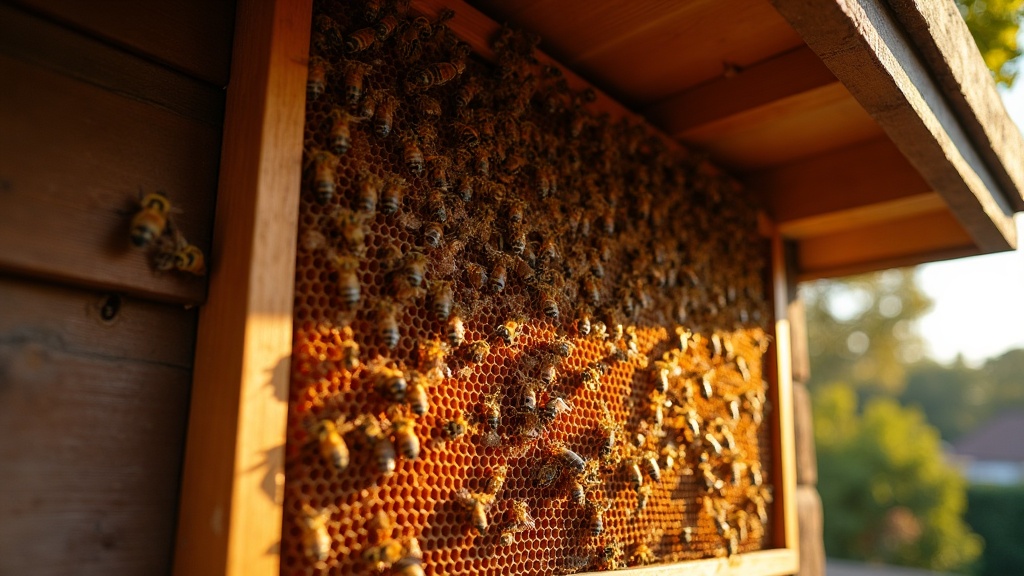
Visible comb on the exterior. Occasionally honeycomb becomes visible through gaps or broken materials. Seeing comb is confirmation of an established colony and a signal that the situation has been developing for a while.
A swarm has landed and been there for more than 24 hours. A swarm in transit, the temporary hanging cluster, typically moves on within a few hours to a day or two. If a swarm has been in place longer and the cluster seems to be growing or thinning from the sides (bees exploring nearby gaps), they may be transitioning from a temporary perch to an established location. At that point, extraction becomes more complicated.
When This Is Urgent
Call immediately if any of the following apply:
- Bees are entering or exiting a single structural gap
- You can hear buzzing inside walls or ceiling
- Bees are appearing inside the living space
- Visible comb is present
- Anyone in the household has a known bee allergy
- Bees are active near children or pets
- You have experienced aggressive behavior or multiple stings
A photo or short video from a safe distance helps us assess the situation before the visit, and we can often tell the species and access point before we arrive.
Signs that are serious but not necessarily emergency
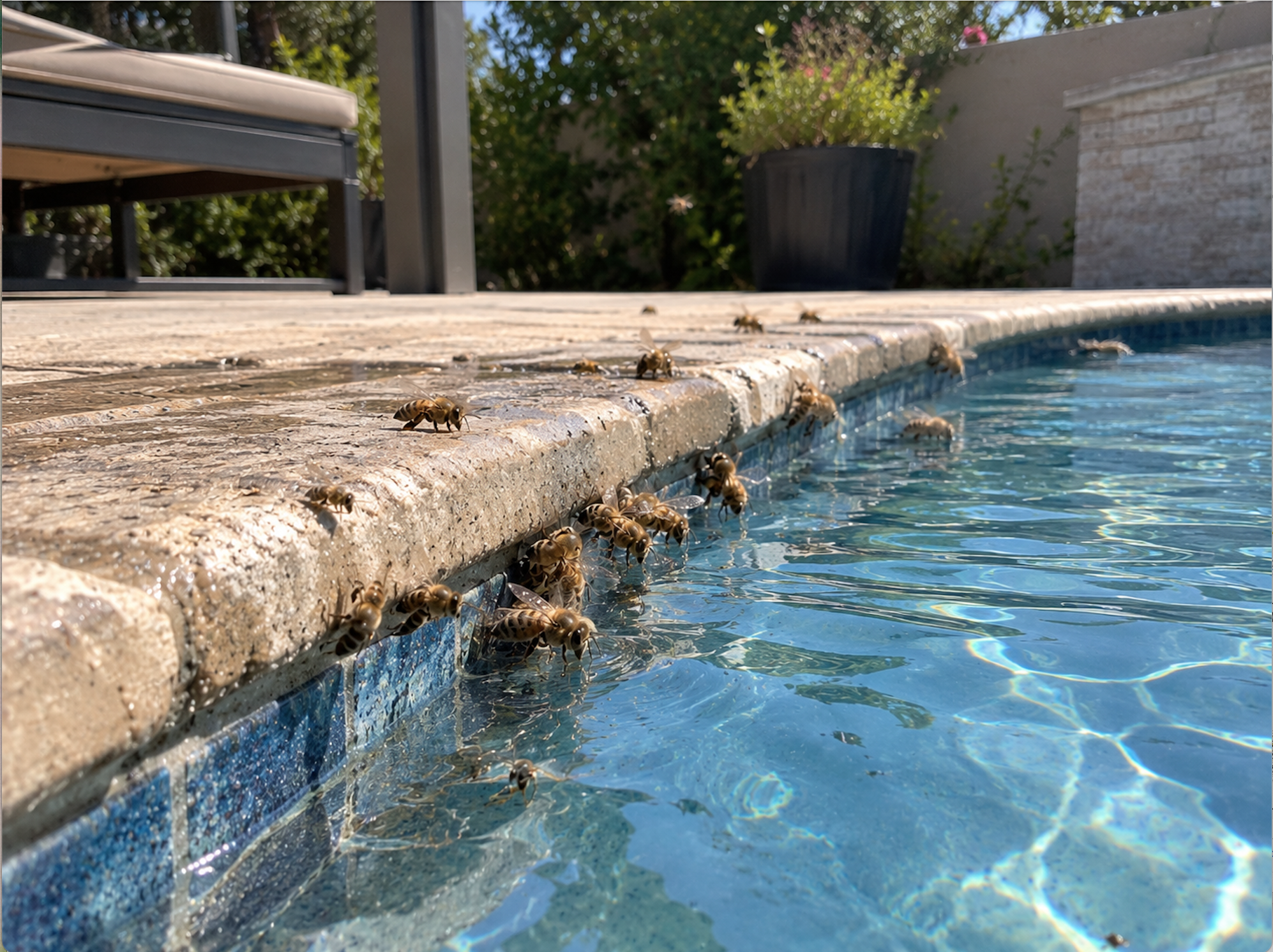
Increased activity around a known gap, but no confirmed interior access. Watch for 20 minutes. If you see bees consistently returning to the same spot, even if you cannot confirm they are going inside, it is worth a professional assessment. They can confirm whether there is an established hive or whether the activity is foraging bees attracted to a scent or material.
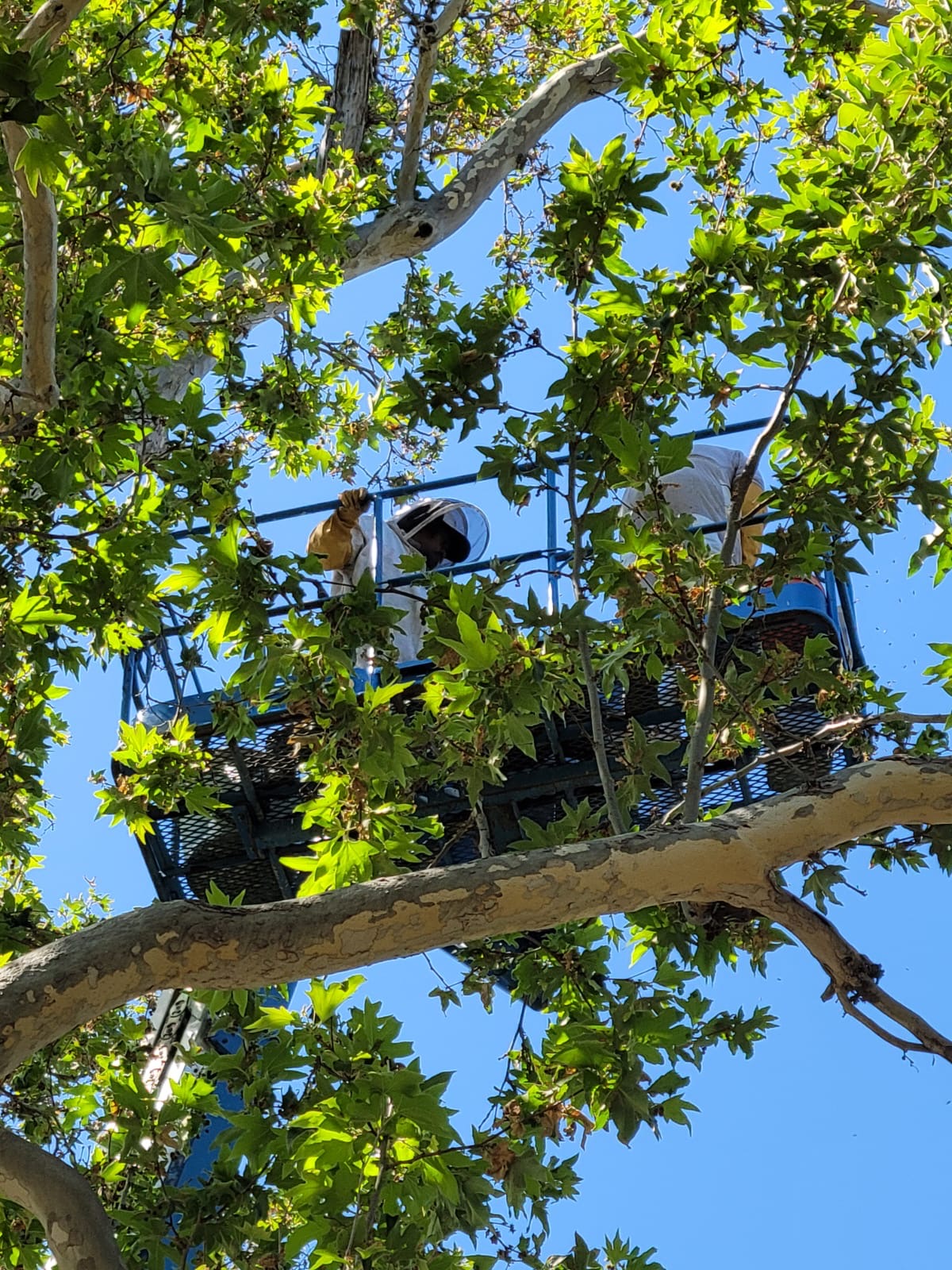
A hive in a tree or exterior structure, not touching the building. A freestanding hive in a tree hollow or wood pile is not an immediate structural risk, but it is a stinging risk to anyone in the area and it will grow. This is a lower urgency situation than a structural intrusion, but it is not one to ignore indefinitely, especially if children or pets use the area.
The signs where you may have time, but not forever
A small visible swarm on an accessible exterior surface. If a fresh swarm has landed on a fence rail or low branch, and it has been there less than 24 hours, you have a window. Swarms at this stage have not established comb. This is the easiest possible bee removal scenario, and it closes quickly once they find a cavity.
A note on urgency vs. waiting
Almost every structural bee problem gets worse with time, not better. In Southern California, summer heat accelerates the problem significantly. Honey inside the comb liquefies and the wax softens. Wall cavities routinely exceed 100 degrees in summer, well into the range where comb collapses and honey drains through the wall structure. Abandoned or disrupted comb can liquefy, staining ceilings, attracting rodents and ants, and permanently saturating insulation.
A complete bee removal is not just removing bees. It means locating the colony, safely collecting the bees, removing the comb, cleaning the cavity, sealing the entry points, and relocating the viable colony whenever possible. Comb left behind liquefies in Southern California summer heat, damages the wall structure, and its pheromone signature attracts new swarms to the same spot year after year.
If you are genuinely uncertain whether what you are seeing warrants a call, Beecasso assesses for free. Describe what you are seeing and where you are located, and they will tell you honestly whether it needs to be addressed urgently.
Serving Los Angeles County and Orange County, including Glendale. Free assessments.
Provided by Beecasso. Last updated June 2026.