Why Do Bees Keep Coming Back to the Same Spot After Removal?
July 16, 2026 · 4 min read
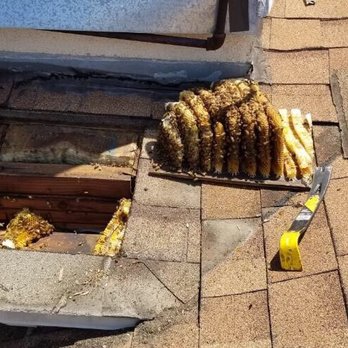
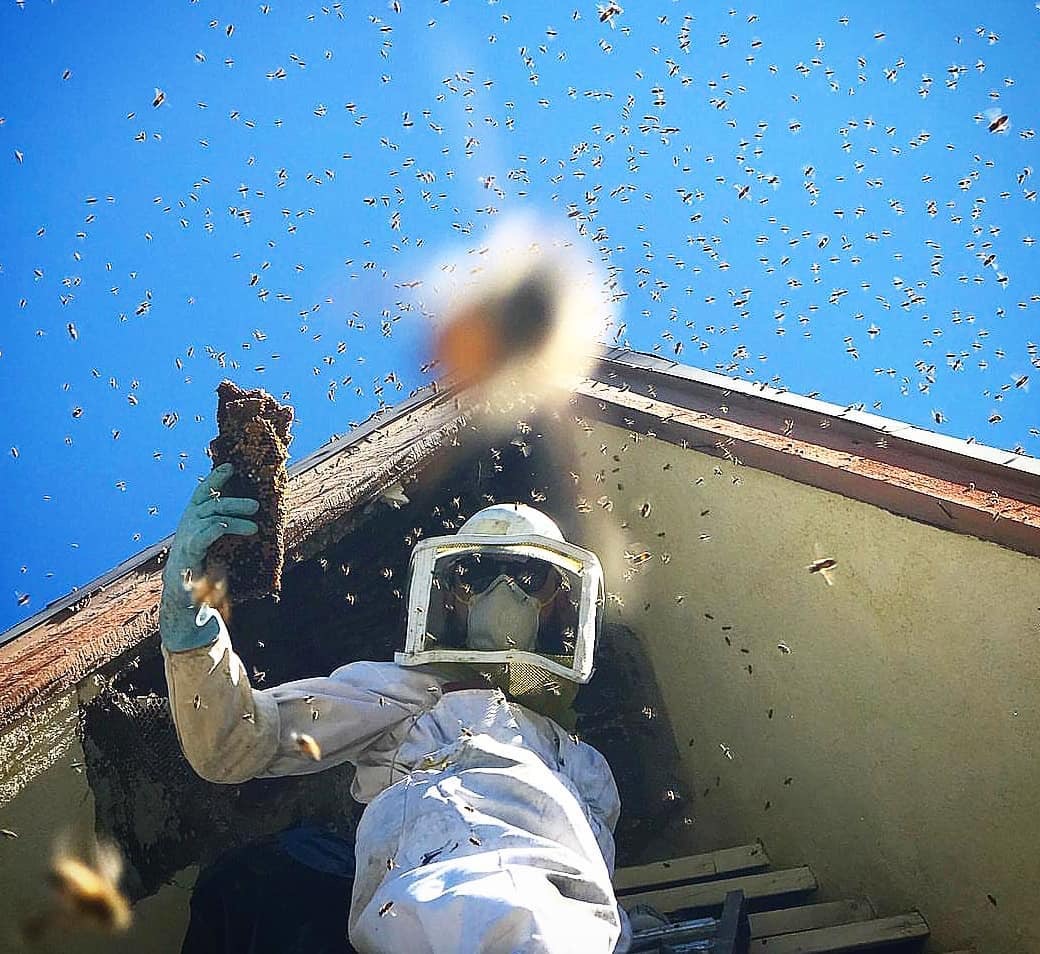
Bees return to the same spot because the location still smells like a successful colony. Old wax, propolis, and honey residue persist in Los Angeles and Orange County wall cavities, wood framing, and insulation for months to years after a colony is removed or exterminated, continuing to emit chemical signals that attract new swarms. Scout bees from new colonies detect these signals and identify the location as a proven nesting site. Until the comb and its residue are fully removed, the return cycle continues.
The Short Answer: Your Home Still Smells Like a Beehive
Honey bee colonies produce chemical signals that saturate the materials around their hive: the wax comb, propolis used to seal gaps, and honey residue all carry these signals. When a colony is removed or exterminated but the comb is left in place, these materials remain and continue broadcasting. They do not simply evaporate.
The result: when new swarms become active in spring and begin scouting for nesting sites, scout bees from new colonies can detect that residual signal from outside your home. To a scout bee, the scent communicates that this location once supported a healthy colony, making it far more appealing than an unoccupied cavity without that history.
How Scout Bees Find Nesting Sites (and Why Old Ones Are Irresistible)
When a honey bee colony outgrows its hive, it swarms. A swarm sends out scout bees to evaluate potential new homes. Scouts assess cavity size, entrance orientation, sun exposure, and, critically, scent. A location that already contains the odor of old comb scores very highly in that evaluation.
Research on the hierarchy of attractants for honey bee swarms confirms that swarms preferentially choose cavities with old comb over those with only general hive odors, and those over completely unscented cavities. The Nasonov pheromone, which worker bees release at the hive entrance to recruit nestmates and guide swarms to a site, compounds this effect when a living colony is present. In an abandoned cavity, it is primarily the old comb that does the long-term work: wax, propolis, and honey residue retain their chemical signature for a year or more.
What Incomplete Removal Leaves Behind
Two common scenarios produce the "bees came back" outcome.
Kill-only or spray-only treatment. The bees die, but the comb, wax, and propolis residue remain inside the cavity. No extraction, no sealing. The location continues to broadcast a return signal to every new swarm that passes.
Sealed without extraction. The entry point is caulked or covered, but the comb inside is not removed. This traps the attractant source inside the wall. Seals degrade over time (caulk shrinks, trim shifts, weather opens small gaps), and when a new entry point appears, the cavity is still fully loaded with attractant.
In both cases, the location is closed, but it is not cleaned.
What a Complete Removal Does to Break the Cycle
Full live removal with comb extraction removes the primary sources of the return signal: the live colony, the honeycomb, and the wax and propolis residue that hold the attractant. The cavity is left clean. The entry point is sealed.
This does not guarantee zero future swarm interest for the lifetime of the structure. Old comb odors can penetrate deeply into wood framing. But removing the comb removes the strongest attractant by a significant margin, and a properly sealed entry point eliminates the access path.
Beecasso's live removal process includes extraction of the comb as part of the service. In the LA area, we handle full comb-out for Glendale and Pasadena homes so the colony does not return.
Can This Happen More Than Once at the Same Entry Point?
Yes. Without full extraction and sealing, it can happen indefinitely. A location that keeps advertising vacancy to scouting swarms will keep attracting them. Extraction breaks the advertisement. Proper sealing removes the access path.
Both steps are necessary. Extraction without sealing leaves an open invitation. Sealing without extraction leaves the scent source inside.
Frequently Asked Questions
Will bees still return if the full hive is removed? Full extraction and sealing substantially reduce future swarm interest at the same location, though they cannot guarantee zero interest permanently. Removing the comb removes the primary attractant. Sealing the entry point removes access. Scout bees have far less reason to target the location without those signals present.
How long before the bee smell goes away on its own? It depends on the material and airflow. In a well-ventilated exterior location, scent may fade within several months. In a closed wall cavity with low airflow, it can persist for a year or more. Extraction speeds this dramatically, since the primary scent source (the comb itself) is physically removed rather than left to slowly dissipate.
Can I clean bee pheromones myself? The area around the entry point on the exterior can be cleaned with soap and water or a diluted bleach solution after removal, which removes some surface residue. The attractants embedded in wall framing deep inside the cavity require comb extraction to address. There is no realistic way to clean inside the wall without opening it.
What if new bees move in after a chemical spray treatment? This is the expected outcome when comb is left in the cavity. The extermination stops the current colony but leaves the attractant signal fully intact for the next swarm season. Full live removal with extraction and sealing is required to interrupt the return cycle.
Does the same bee colony return, or is it a new one? Almost always a new colony. A swarm from a different nearby hive detects the residual attractant signal, sends scouts to investigate, and decides the location is suitable. It is not the original colony reassembling. It is a new colony responding to the same signal the original colony left behind.
Bees come back when the comb stays behind. Beecasso's live removal across Los Angeles and Orange County includes full comb extraction to break the return cycle. Call to get it resolved correctly.