What Happens If You Leave Bees in Your Walls?
June 25, 2026 · 5 min read
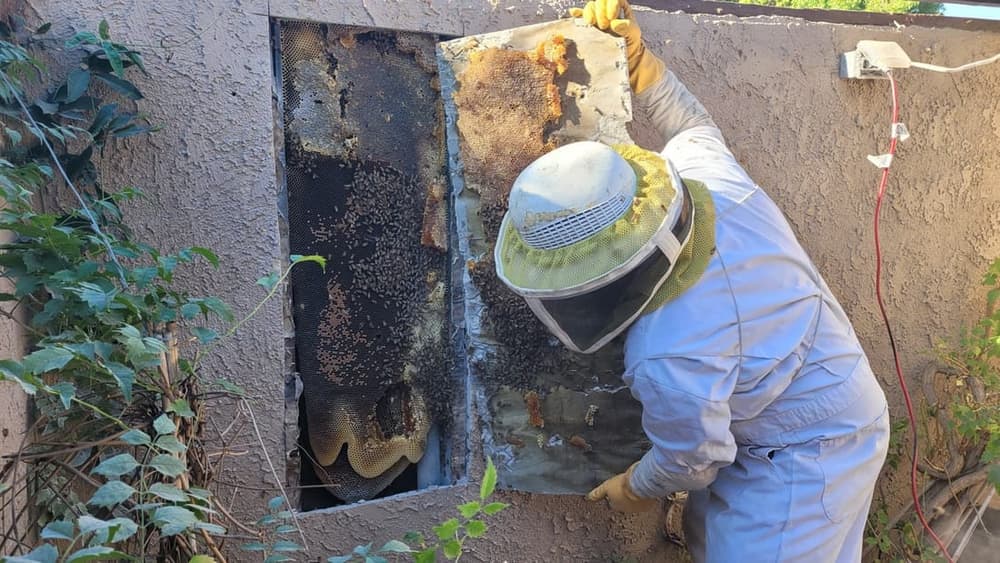
If you leave honey bees in your walls in Los Angeles or Orange County, the colony will grow and build honeycomb. Over time, that comb can weigh 50 pounds or more. In Southern California summer heat, wax softens and can collapse, releasing liquid honey that saturates drywall and insulation. If the colony dies or is exterminated without extraction, the damage accelerates and the cleanup becomes significantly more involved.
Waiting does not make a wall bee situation safer. It makes it more expensive to resolve.
What Honey Bees Build Inside a Wall Cavity
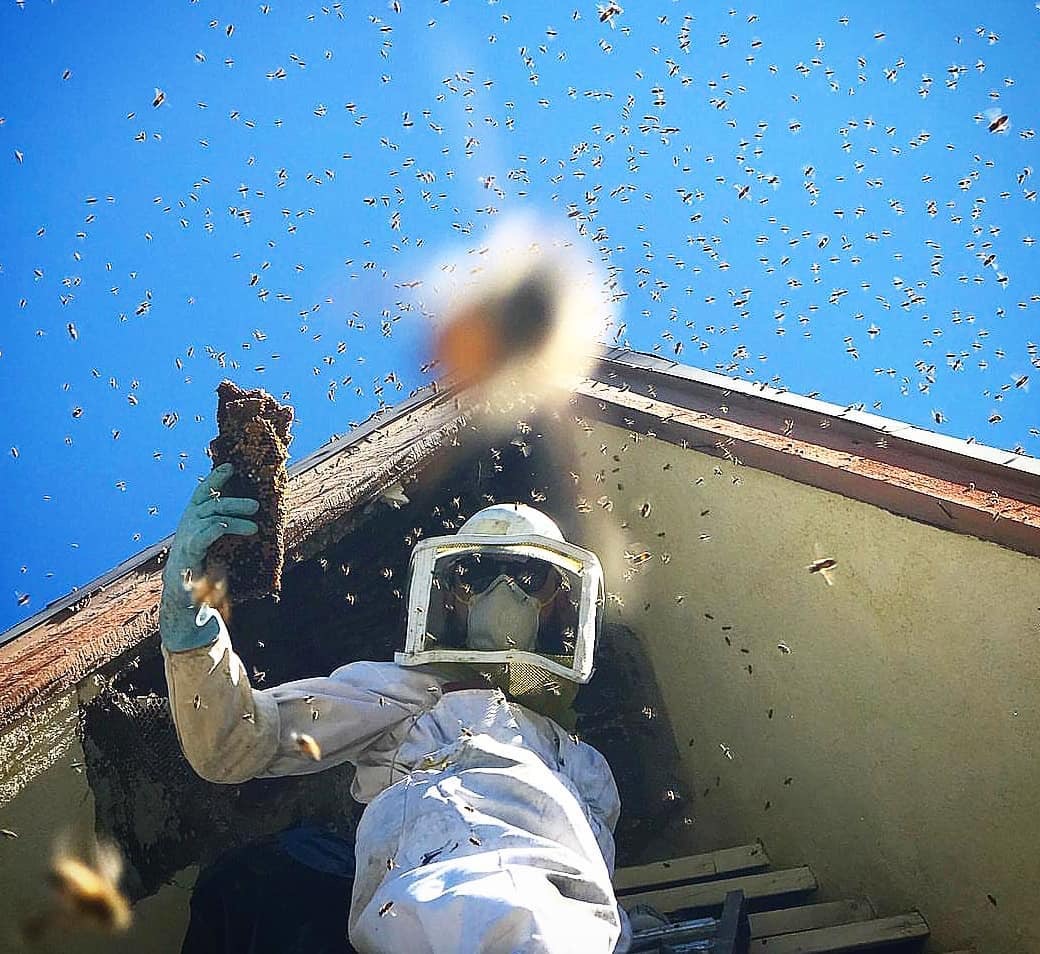
Once a swarm moves into a wall void, the colony begins building comb immediately. Bees use beeswax to construct hexagonal cells for storing honey, pollen, and developing brood. In a wall cavity with access to a consistent food source, a colony can expand rapidly over a single season.
The comb anchors to wall studs, drywall backing, or insulation. As the colony grows, the weight of honey-filled comb increases substantially. A mature colony can produce and store many pounds of honey, all of it inside your wall.
Unlike an exposed outdoor hive, a wall-based colony is insulated, protected from weather, and largely undisturbed, which means it can grow larger and persist longer than most outdoor hives would.
The Three Stages of Wall Damage
Stage 1: 0 to 6 months
In the first season, the colony is establishing. Structural risk is low, but comb construction and honey storage have begun. There are no visible signs inside the home yet. Removal at this stage typically requires extraction only. No structural repair is needed.
Stage 2: 6 to 18 months
By the second season, the colony is established and the comb is substantial. Honey-filled cells add significant weight to the cavity. Beeswax begins to soften at approximately 104 degrees Fahrenheit (40 degrees Celsius). Softened comb under load can press against drywall, causing faint bubbling or staining. If the cavity runs behind a sun-exposed wall with high Southern California summer heat, honey may begin to seep through, creating visible stains and moisture intrusion. Insulation in the cavity may be saturated and compromised.
Stage 3: Colony death or abandonment
This is the most damaging scenario. If the colony dies from pesticide application, disease, or natural causes without any extraction being done, the comb remains inside the wall with no live bees to regulate temperature. Without bees fanning the cavity, wax heats past its softening point and eventually liquefies. Liquid honey seeps through any gap in the drywall, causes permanent staining, attracts secondary pests (wax moths, rodents, ants), and creates a persistent odor that is very difficult to fully remediate. Drywall may need to be opened, insulation replaced, and the cavity cleaned before any repair work can proceed.
Why Killing the Bees Without Removing the Hive Makes Things Worse
Exterminating a wall colony without extracting the comb is a common mistake. The bees die, but the problem inside the wall does not.
Without live bees fanning the interior, the comb melts faster. Honey seeps out. Wax moth larvae, which thrive on abandoned comb, move in. The decomposing honey and wax create a persistent attractant: residual hive odors in the wood and remaining comb signal future swarms that this spot once supported a healthy colony. New swarms scout the same entry point and move in, often within the same season.
Extermination without extraction trades one active colony for a melt event followed by a new colony.
What Full Extraction Prevents
Full live removal with comb extraction removes the colony, the honeycomb, and the primary pheromone load from the cavity. The entry point is sealed.
This matters for several reasons. There is no comb left to melt. The signal that draws new swarms back is substantially reduced. The cavity is left clean, which prevents secondary pest activity and eliminates the moisture and staining risk from honey seep.
Beecasso's live removal process includes extraction of the comb as part of the service.
How Long Can You Wait?
The consequences of waiting are not the same at two months as at eighteen months. Early removal, before the colony is fully established, typically requires extraction only. The cavity is intact, the drywall is undamaged, and remediation is minimal.
By the time a colony has overwintered once or twice, the scope of work expands. The cavity may need to be opened, insulation replaced, and the drywall repaired after the removal is complete, which adds to the total cost of resolution.
Established colonies do not abandon a suitable wall cavity voluntarily. The longer the colony is in the wall, the more remediation follows the removal.
Frequently Asked Questions
Can bees actually damage the structure of my house? Directly, no. Honey bees do not chew wood or compromise load-bearing components. The damage comes from what they leave behind: honey seep, moisture intrusion, insulation saturation, and secondary pest activity. The structural framing is usually intact. The drywall, insulation, and finishes may not be.
Will bees leave on their own if I ignore them? Established colonies do not voluntarily abandon a suitable cavity. A new swarm that has just landed on the exterior may move on within a day or two if it has not yet chosen the location, but once comb is built and the colony is established, they are staying until removed.
What if I spray them with wasp killer? Spraying kills the bees but does not remove the hive. The comb remains in the wall and will melt in summer heat, releasing honey that causes staining, moisture damage, and secondary pest activity. Residual pheromones in the remaining comb also attract new swarms to the same entry point. This approach typically creates more downstream damage than doing nothing.
How do I know if there's honeycomb inside my wall? Common signs include: a low humming or buzzing sound inside the wall (especially on warm days), faint dark staining or soft spots on drywall, a sweet or fermented smell inside a room, or consistently heavy bee activity around a specific gap or crack on the exterior. If you see bees regularly entering and exiting a gap in your siding, soffit, or trim, there is almost certainly comb building inside.
Honey bees in your walls get worse the longer you wait. Beecasso provides live removal with full comb extraction across Los Angeles and Orange County. Call to schedule an assessment.