Why Are Bees Coming Into My House?
September 2, 2026 · 6 min read
Why Are Bees Coming Into My House?
If bees keep appearing inside your Los Angeles home, there may be a honeybee colony living inside a wall, roof, chimney, eave, or other structural cavity, with some of the bees finding a secondary route into your living space.
One stray bee coming through an open door or window usually isn't a reason for concern. But if you're finding several bees a day, bees repeatedly appearing in the same room, or bees gathering against an interior window, it's worth investigating where they're coming from.
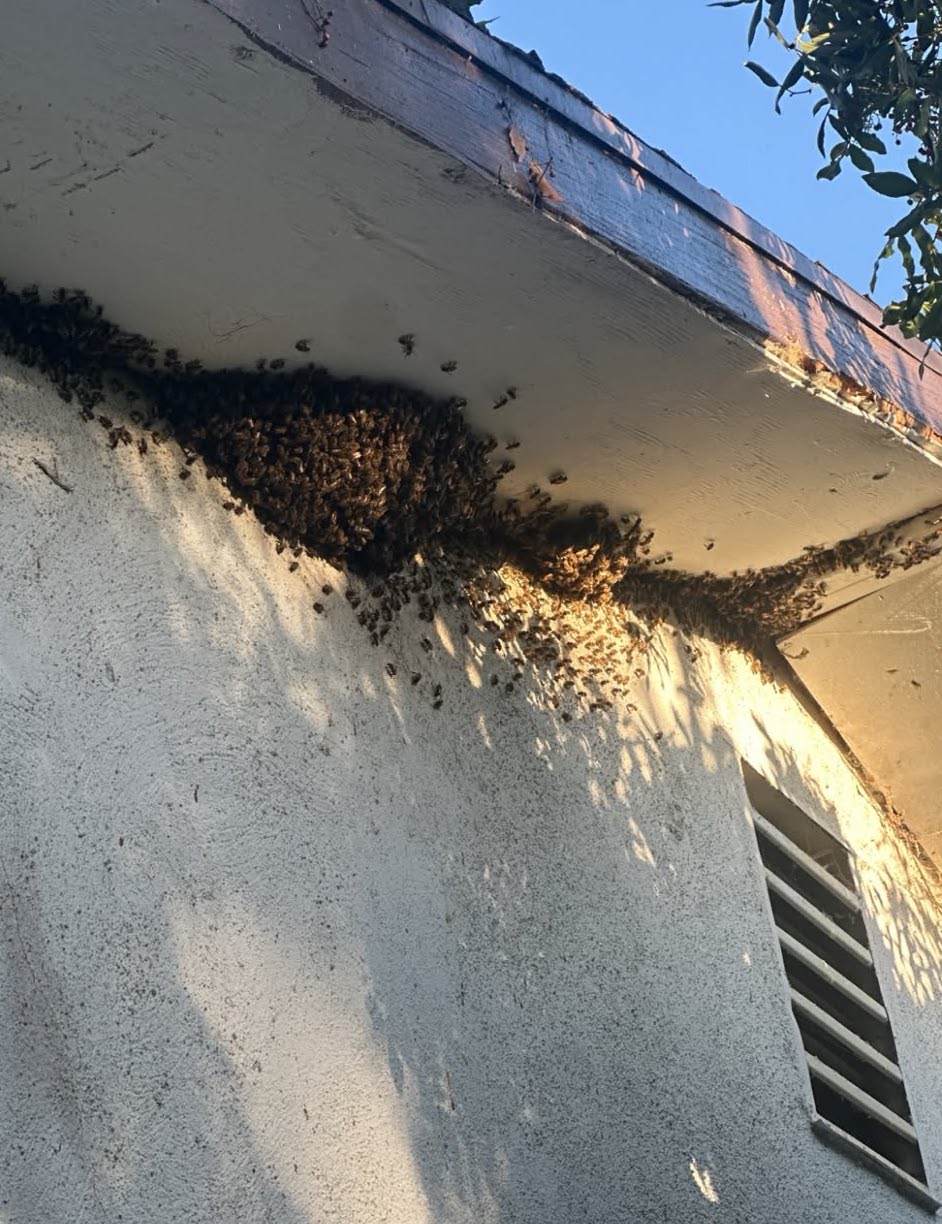
In Los Angeles homes, we commonly find established colonies entering through gaps between stucco and fascia, beneath roofing materials, around chimney flashing, through vents, and through small openings where pipes, electrical lines, or other utilities penetrate exterior walls. The opening the bees use can be surprisingly small compared with the size of the colony hidden behind it.
Why Bees From a Hive End Up Inside the House
An established honeybee colony normally has a primary exterior entrance. Worker bees leave during the day to forage and return through that same opening.
When bees start appearing inside the house, we generally look for a few possible causes.
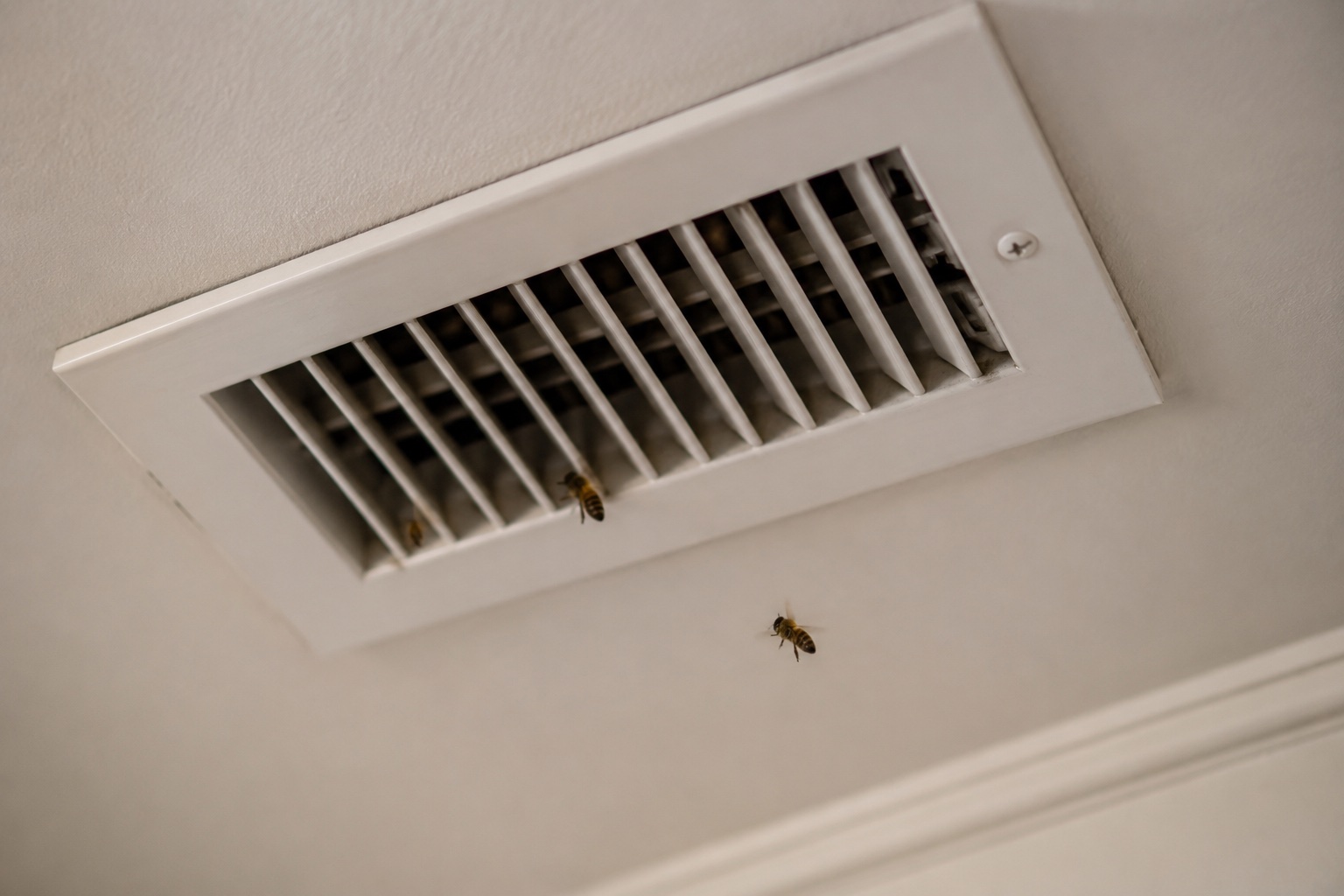
The colony is inside a wall or roof cavity. There may be another small opening connecting that cavity to the home's interior. We see this around recessed lighting, electrical outlets, plumbing penetrations, attic openings, vents, and unfinished gaps in construction.
Someone has sealed the exterior entrance. This is one of the most common preventable problems we encounter. A homeowner, painter, roofer, handyman, or pest-control company sees bees entering a hole and seals it without removing the colony.
The bees don't simply disappear. If thousands of bees and an established hive remain inside the structure, they will look for another way out. Sometimes that route leads directly into the house.
For this reason, we don't recommend sealing an active honeybee entrance until the colony has been properly addressed.
Bees that get inside head toward light. Once bees enter the living space, they often end up at windows or other bright areas. You might therefore find ten bees at a window even though the actual colony is several feet away inside a wall or ceiling.
There may not be a colony at all. An occasional bee indoors isn't proof of a hive. What concerns us more is recurring indoor activity combined with consistent bee traffic somewhere on the exterior.
Signs There May Be a Colony Inside Your House
Start by looking at the exterior of the home from a safe distance. Watch the roofline, eaves, stucco, vents, chimneys, fascia boards, utility penetrations, and joints between different building materials.
An established colony will often produce repeated traffic through one specific opening. You may see bees entering and exiting the same small gap every few seconds.
Other signs we look for during an inspection include:
- Persistent buzzing from a wall or ceiling
- Bees repeatedly appearing in the same room
- Multiple bees collecting at an interior window
- Honey staining or discoloration on a wall or ceiling
- A sweet or unusual odor coming from a cavity
- Consistent activity around a roof edge, stucco crack, chimney, vent, or fascia
- Dead or exhausted bees regularly appearing indoors
One important point: the size of the entrance doesn't tell you the size of the hive. Bees can pass through a very small opening and build a substantial amount of comb inside the larger cavity behind it.
How We Locate a Hidden Bee Colony
Finding the exterior entrance is only the beginning. We need to determine where the colony itself is actually established.
We watch the bees' flight pattern and inspect how that particular part of the house is constructed. A colony may be behind stucco, inside a framed wall, underneath roofing, behind fascia, inside a chimney chase, or in another enclosed void.
The entrance isn't necessarily directly beside the comb. Bees can enter through one opening and travel farther through the cavity before establishing their hive.
Once we've determined the likely location, we work out the safest and least destructive way to access it.
Structural bee removal may require opening a section of stucco, drywall, siding, fascia, or roofing. The goal is to expose enough of the cavity to properly remove the colony and hive material without unnecessarily opening a larger section of the home.
A newer colony may contain relatively little comb, while a colony that has occupied a wall or roof for months or years can contain a substantial amount of wax, honey, and brood. The age and size of the colony, its location, and the type of construction all affect how involved the removal will be.
Why the Honeycomb Needs to Come Out Too
Getting rid of the flying bees doesn't solve an established hive problem.
Inside the cavity there may be wax comb, stored honey, pollen, brood, and other colony material. Depending on how long the hive has been there, there can be a considerable amount of it.
Leaving that material behind can create additional problems. Honey can leak and stain building materials. Wax, honey, and dead hive material can attract ants and other pests. Residual hive odor can also make the cavity attractive to future swarms.
For an established structural colony, our typical process is to access the hive, remove the live honeybees for relocation when conditions allow, remove accessible comb and hive material, clean the cavity, address the entry point, and repair the opened area.
Don't Seal an Active Bee Entrance
If you've found the exact hole the bees are using, don't seal that opening while the colony is still active.
Sealing gaps is an important part of preventing bees from entering a structure, but the order matters.
If you seal the entrance first, you can trap the colony inside and force bees to search through the structure for another exit. After the bees and hive material have been removed, the original entry point and other appropriate gaps around the serviced area can be sealed to help prevent another colony from moving into the same cavity.
Is It an Emergency If Bees Are Coming Inside?
A few bees indoors doesn't automatically mean you're in immediate danger, but repeated indoor activity shouldn't be ignored.
If bees are actively entering a bedroom, children's room, or another occupied part of the house, keep children and pets away from that area and avoid disturbing the suspected hive location.
If anyone in the household has a known severe bee-sting allergy, indoor bee activity should be treated more urgently.
Don't start hitting the wall, spraying products into openings, or trying to dismantle the area yourself. Disturbing an established colony can rapidly change the bees' behavior.
What to Do If Bees Keep Coming Into Your Los Angeles Home
If it's one stray bee, safely get it outside and monitor the situation.
If bees continue appearing, look outside from a safe distance for concentrated activity. If possible, take a short video showing the bees entering and exiting the structure. The flight pattern and surrounding construction can tell an experienced bee-removal operator a surprising amount about what may be happening inside.
If bees are repeatedly getting inside, dealing with the individual bees won't solve the problem if an established colony is still living inside the structure.
If an established colony is inside the structure, the goal is to locate the colony, remove the bees and accessible hive material, and address the entry point that allowed them into the structure.
At Beecasso Bee Removal, we specialize in live honeybee removal from Los Angeles homes, including colonies established inside stucco walls, roofs, chimneys, eaves, fascia, and other structural cavities. When access to the structure is required, we can remove the bees and comb, clean the cavity, address the entry point, and repair the serviced area.