Honeybees in Brick Walls: How They Get Inside and What Nashville Homeowners Should Know
November 13, 2026 · 5 min read
Honeybees in Brick Walls: How They Get Inside and What Nashville Homeowners Should Know
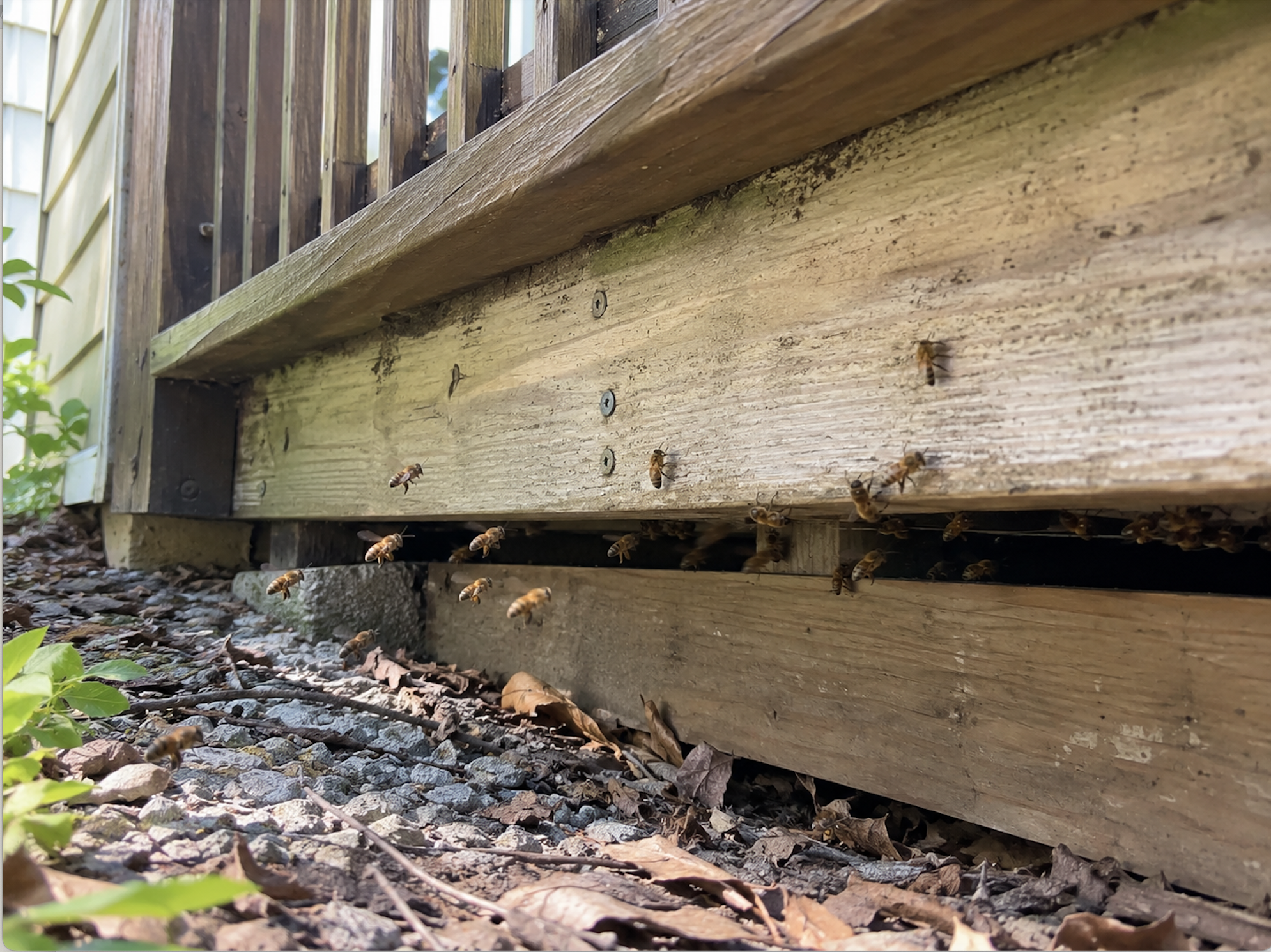
Seeing honeybees disappearing into a small hole in your brickwork? They may be nesting behind the brick veneer or inside a wall cavity. This is a problem we handle in Nashville-area homes, where bees can enter through weep holes, damaged mortar joints, or gaps around exterior fixtures.
Honeybees don't tunnel through solid brick. They use existing openings to reach sheltered cavities where they can build honeycomb, raise brood, and store honey. A small opening in the mortar can lead to a colony containing thousands of bees, even when nothing is visible from outside.
The challenge isn't just removing the bees. It's finding the honeycomb and determining how to reach it without unnecessarily damaging the brickwork or surrounding structure.
How Do Honeybees Get Behind Brick Walls?
Many homes throughout Nashville, Hendersonville, Brentwood, and surrounding Middle Tennessee communities have brick veneer exteriors. Unlike solid masonry construction, brick veneer is an exterior layer with a drainage cavity between the brick and the home's sheathing.
Along the bottom of these walls, you'll often find small openings called weep holes. They're designed to allow moisture to drain and help the wall dry properly.
These openings can also provide access for honeybees.
Other entry points include damaged mortar joints, gaps around utility pipes, exterior light fixtures, window frames, and areas where brickwork meets siding or soffits.
The entrance isn't necessarily where the colony is located.
Bees may enter through a weep hole near the foundation and travel through the drainage cavity before reaching a larger opening in the wall structure. Sometimes they establish themselves within an accessible section of the cavity.
Finding the entrance is only the beginning of locating the colony.
How Can You Tell If Bees Have Established a Colony?
The clearest sign is consistent bee traffic entering and exiting the same opening.
You may see bees disappearing into a mortar joint, flying toward a gap near a window, or gathering around a weep hole.
A few bees investigating an opening doesn't necessarily mean there's a hive inside. Scout bees often examine several possible nesting locations before a swarm settles.
If bees are regularly coming and going over several days, particularly during warm daylight hours, an established colony becomes more likely.
Other signs include buzzing from inside the wall or occasional bees appearing indoors near windows and light fixtures.
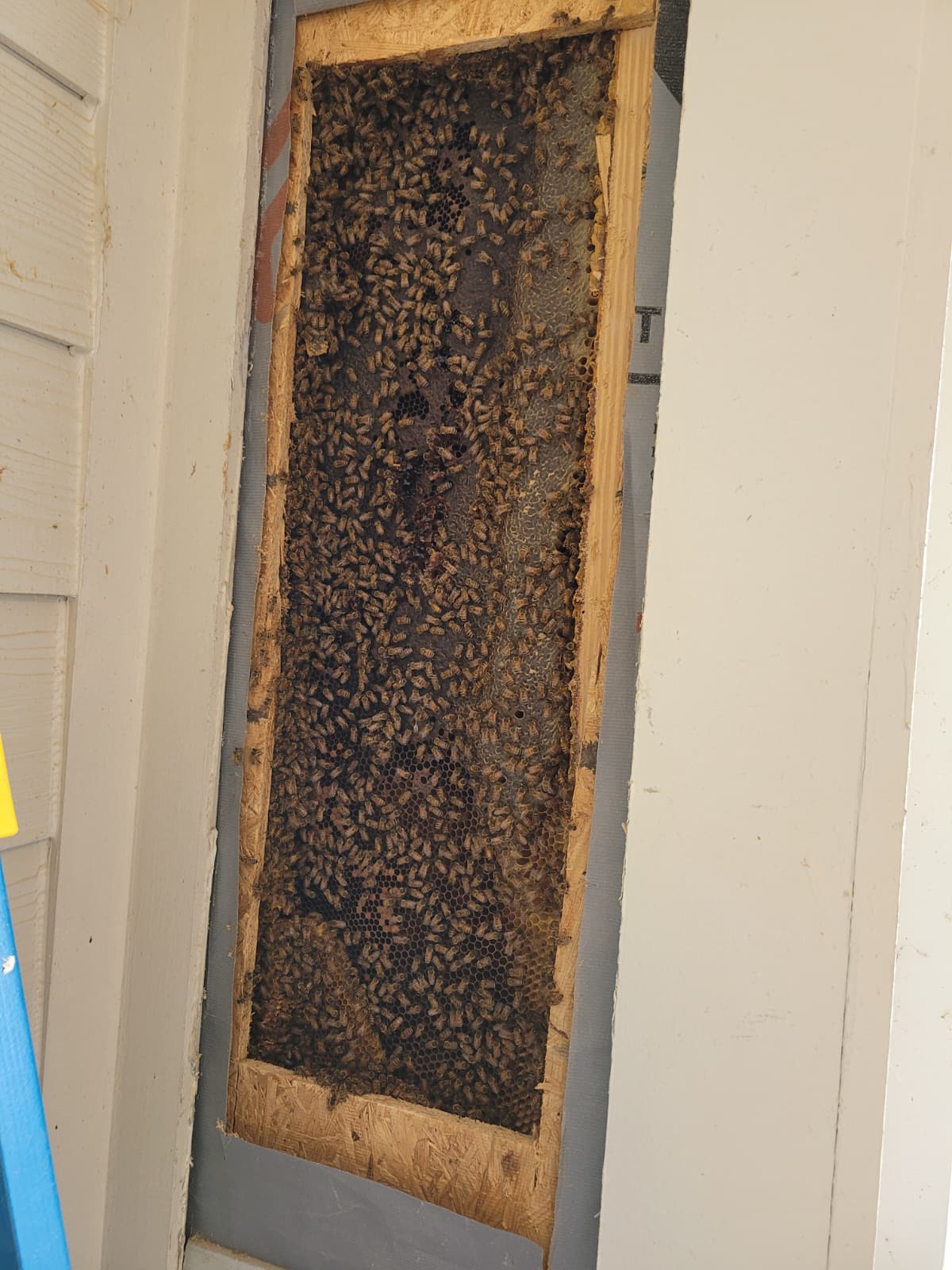
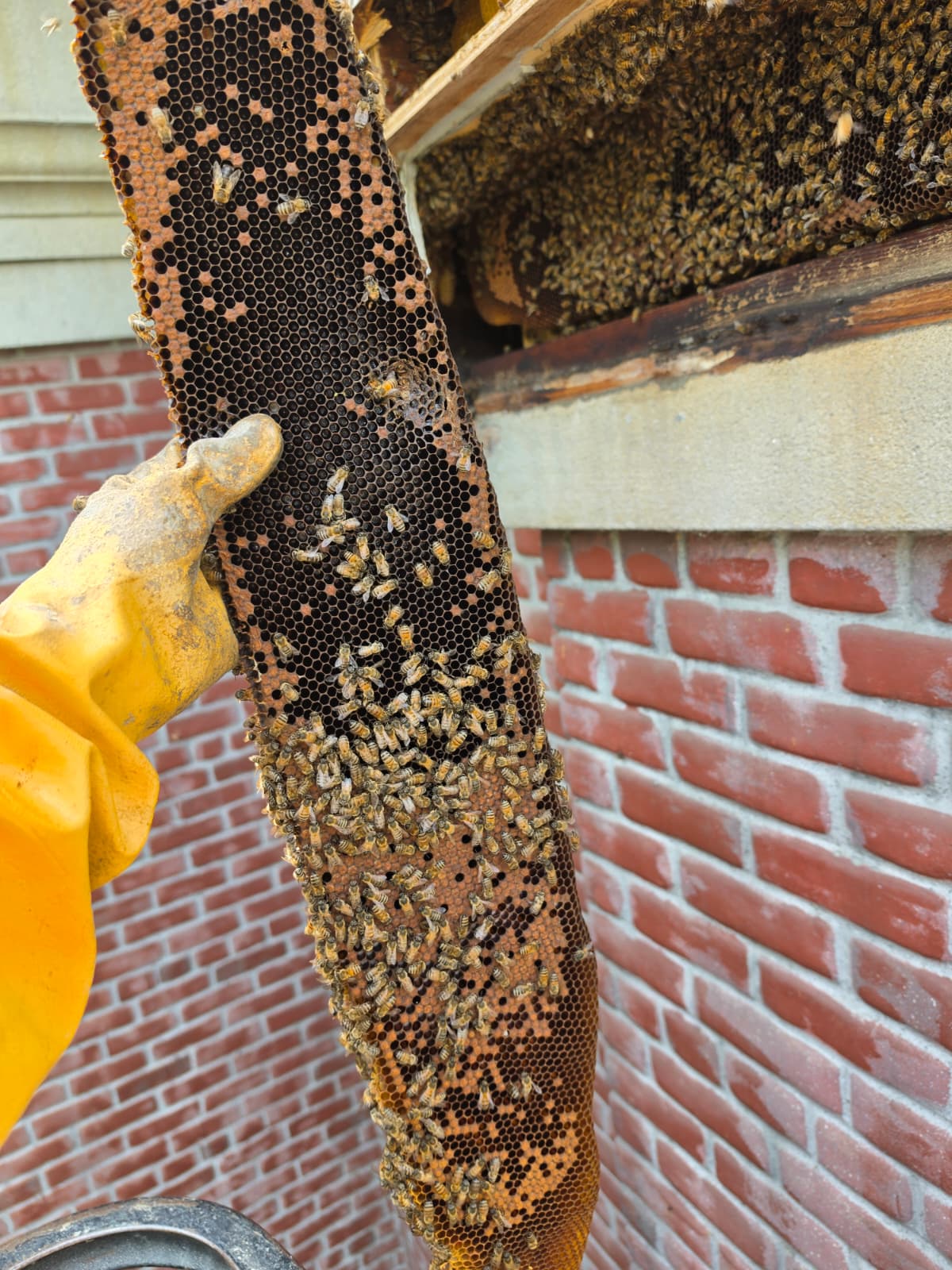
A colony established for several weeks or months may contain multiple sections of honeycomb filled with brood, pollen, and honey.
The amount of activity outside doesn't always indicate how large the colony is inside. A small entrance can serve thousands of bees.
Can Honeybees Damage Brickwork or the Walls Behind It?
Honeybees generally don't damage brick or mortar by chewing through it. They occupy existing spaces.
The bigger concern is the honeycomb they build inside the structure.
An established colony can store considerable amounts of honey. If the bees die or are eliminated without removing the comb, the remaining wax, brood, and honey can create problems.
Honey may leak into insulation, drywall, or other building materials, particularly during hot weather. Leftover comb can also attract ants, beetles, and other pests.
Middle Tennessee's warm, humid summers can complicate cleanup when honey and other organic material remain trapped inside a wall.
Not every colony causes structural damage. Some can be removed with relatively limited disruption, while others require additional cleaning or repairs.
The condition of the surrounding materials can be assessed once the colony is accessible.
Why You Shouldn't Seal the Opening
One mistake homeowners make is filling the hole where bees are entering with caulk, expanding foam, or mortar.
It may stop bees from using that entrance, but it doesn't remove the colony.
Bees trapped inside may search for another exit, potentially finding their way through openings around electrical outlets, plumbing, or interior walls.
Spraying pesticides into the opening creates another problem. Even if the bees are killed, the honeycomb and stored honey remain behind.
There's also an important construction issue with brick veneer walls.
Weep holes are part of the wall's drainage system and should not simply be sealed. Blocking them can trap moisture behind the brickwork and contribute to deterioration of surrounding materials.
If honeybees are actively entering your brick wall, leave the opening undisturbed until the colony can be assessed.
How Beecasso Removes Honeybees From Brick Walls
At Beecasso Bee Removal, we begin by checking where the bees are entering, following their flight activity, and examining the surrounding construction.
Before opening the wall, we assess where the honeycomb is likely located and whether the colony can be reached through interior drywall or whether exterior brickwork needs to be opened.
Removing exterior bricks isn't always necessary.
In some situations, accessing the colony through interior drywall is less disruptive and easier to repair, provided the honeycomb can be reached safely from that side.
Other removals require carefully opening a section of exterior brickwork or an adjoining surface.
The location of the colony, the wall's construction, and the available working space determine the approach.
Once the colony is exposed, we use protective bee-removal equipment and hand tools to remove the honeycomb section by section.
We collect the live bees for relocation whenever practical and work to preserve the queen when possible.
Removing the honeycomb is essential. Leaving wax, honey, and brood inside the cavity can attract pests and cause problems long after the visible bee activity has stopped.
After removal, we clean accessible residue, inspect for remaining comb, and assess whether insulation or other materials have been affected.
Any necessary repairs must also preserve the brick veneer's drainage system, flashing, and weather-resistant barriers.
How Long Does Brick Wall Bee Removal Take?
Some brick wall removals can be completed in a single visit, while larger colonies or those requiring masonry access and repairs take longer.
The amount of honeycomb, location of the colony, and construction of the wall determine the scope of work.
We explain the likely access and repair requirements before beginning removal.
Will Bees Return to the Same Brick Wall?
Another swarm may investigate the same cavity if suitable openings remain.
After the colony and honeycomb have been removed, damaged mortar joints and unnecessary gaps can be repaired.
Legitimate weep holes must remain functional. Where appropriate, purpose-made weep-hole guards or suitable exclusion materials may help prevent bees from entering while allowing moisture to drain.
The objective is to close unintended access points without compromising the wall's construction.
Although no property can be made completely bee-proof, thorough removal and appropriate repairs can reduce the likelihood of another colony occupying the same space.
Professional Brick Wall Bee Removal in Nashville, Tennessee
If you're seeing honeybees repeatedly entering your brickwork, avoid sealing the opening or attempting to spray the colony.
At Beecasso Bee Removal, we provide live honeybee removal and relocation services throughout Nashville, Hendersonville, Brentwood, Franklin, Gallatin, and surrounding Middle Tennessee communities.
We locate the colony before deciding where to open the wall. Our goal is to remove the live bees and honeycomb while keeping access openings and repairs as limited as the job allows.
Contact Beecasso Bee Removal for a professional inspection and brick wall bee removal estimate. We'll assess the colony, explain the available removal options, and discuss any access or repair requirements before work begins.