Honeybees Under Your Deck or Porch? What Middle Tennessee Homeowners Should Do
October 14, 2026 · 4 min read
Honeybees Under Your Deck or Porch? What Middle Tennessee Homeowners Should Do
If honeybees keep disappearing beneath your deck or porch, they may be using an opening you can't easily see. The question is whether they're simply passing through or have established a colony inside the structure.
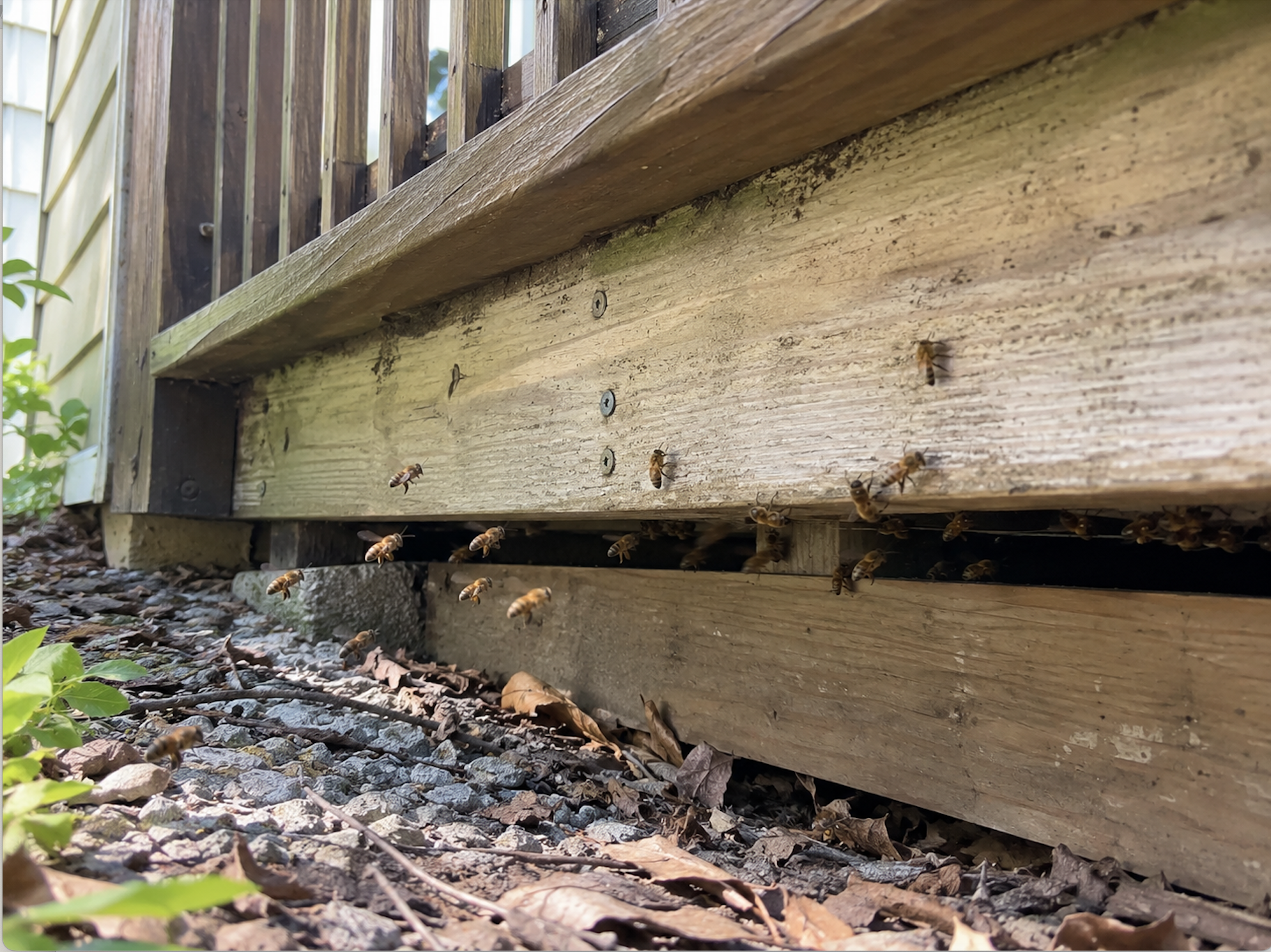
Bees visiting flowers around your deck aren't a concern. What deserves a closer look is steady traffic into a particular gap beneath the boards, behind the skirting, or where the deck meets the house.
If you suspect honeybees are nesting under your deck or porch, avoid using the area directly above or beside their entrance until you know what you're dealing with. Don't pull up boards or crawl underneath to investigate.
Where Honeybees Can Nest Beneath a Deck
In Nashville, Hendersonville, Gallatin, and surrounding Middle Tennessee communities, raised decks and porches can provide sheltered spaces that are difficult to inspect from the outside.
Honeybees prefer enclosed cavities that offer protection from rain, wind, and temperature changes. Around decks and porches, potential nesting locations include:
- Enclosed spaces beneath stairs or landings.
- Voids behind fascia boards or decorative skirting.
- Gaps where a deck attaches to the house.
- Hollow structural cavities accessible through damaged siding.
- Enclosed porch ceilings and soffits.
Honeybees usually prefer protected cavities, although exposed colonies can occasionally establish themselves beneath sheltered structures.
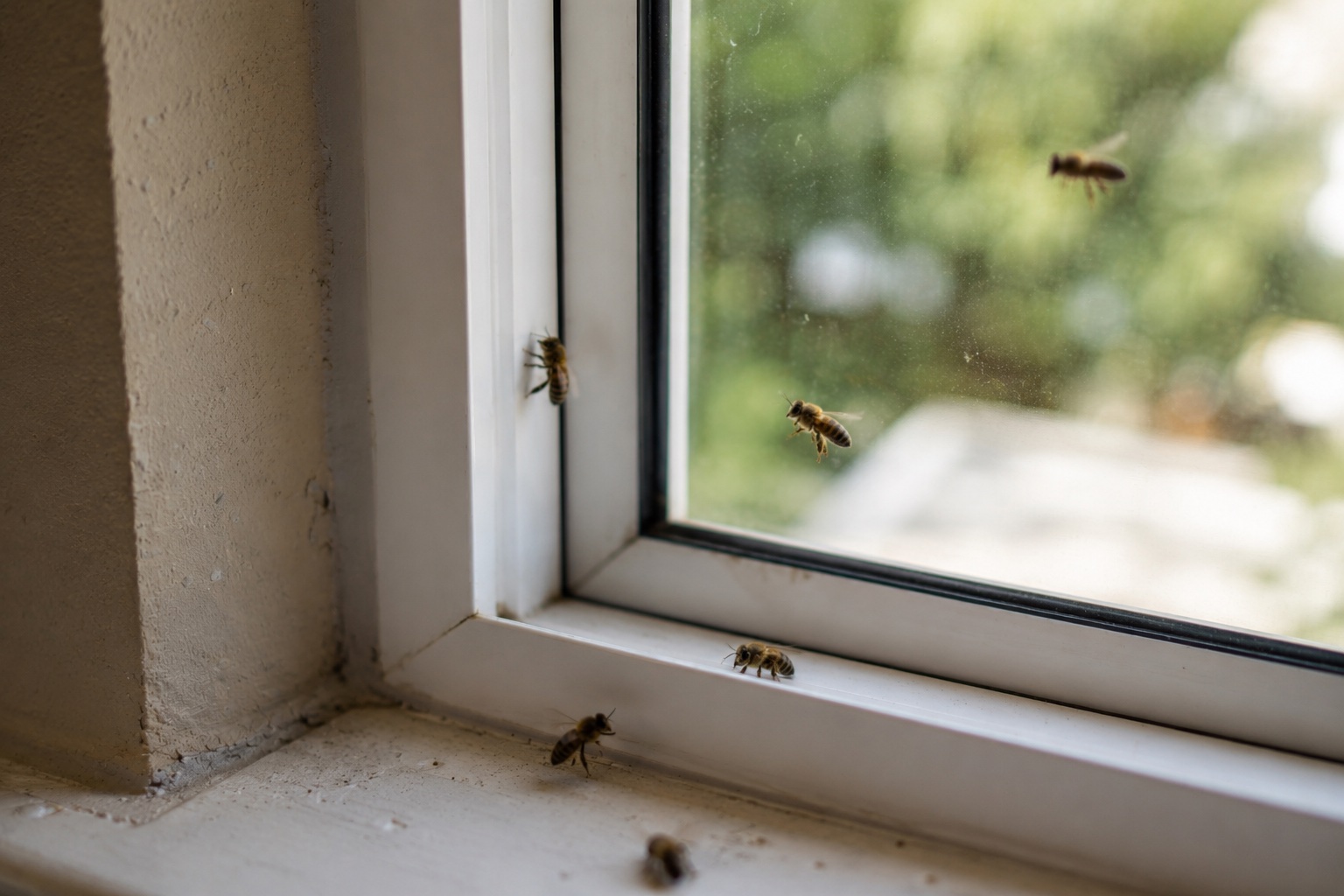
Bees flying underneath a deck aren't necessarily nesting directly beneath it. They may be entering a wall cavity, a nearby hollow tree, or another concealed opening.
We see plenty of raised decks around Middle Tennessee, especially on sloping lots. One side might have enough clearance to work underneath, while the other is almost against the ground. In those situations, reaching the colony may mean lifting boards from above.
How to Tell Whether There's an Established Hive
You don't need to see honeycomb to suspect a colony.
From a safe distance, watch whether bees repeatedly travel to one particular opening. You may see workers arriving with yellow or orange pollen on their hind legs, while others leave the same entrance.
Pollen being carried into a cavity can indicate that bees are feeding developing brood inside.
You might also hear buzzing near an enclosed section, although sound alone isn't enough to confirm a hive.
Activity often becomes more noticeable during warm, sunny weather when workers are flying. In cooler conditions, the same colony may appear much quieter.
One important exception is a temporary swarm. A large cluster hanging openly from a railing, post, or nearby branch may be resting while scout bees search for a permanent nesting site. If there's no established comb, collecting that swarm is generally much simpler than removing a colony that's already moved into a structure.
Should You Keep Using the Deck?
If the entrance is directly beneath a frequently used seating area, stairway, or children's play space, the risk of accidental contact is higher.
Walking across the deck doesn't automatically provoke a colony. However, vibration from construction work, moving heavy furniture, or disturbing boards near the nest can cause a defensive response.
Avoid mowing, trimming vegetation, pressure-washing, or carrying out repairs immediately around the suspected entrance until it's been assessed.
Keep children and pets away from the affected section. Don't attempt to block the opening with caulk, expanding foam, or wood.
Sealing an occupied cavity before removing the colony can force bees to seek another exit, potentially through gaps connecting to the house.
What Professional Removal Involves
Removing honeybees from beneath a deck can be straightforward when the colony is exposed and accessible. It becomes more complicated when the bees are inside an enclosed cavity or behind finished materials.
At Beecasso Bee Removal, the first step is identifying where the colony is actually established, rather than assuming the visible entrance marks the exact location of the honeycomb.
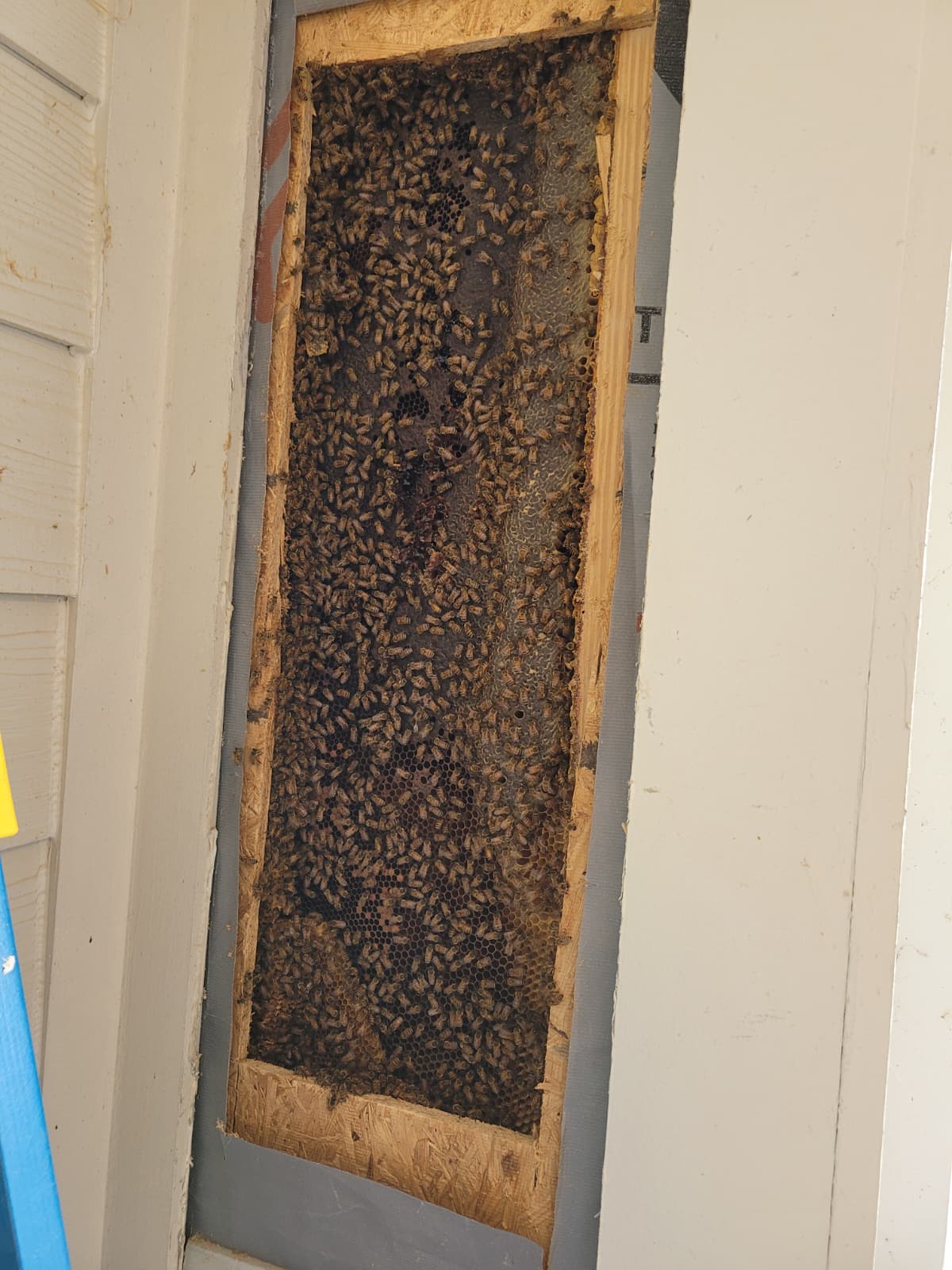
During an inspection, we check where the bees are entering, whether the colony extends into the house, and what needs to be opened to reach the comb. Depending on access, removal may involve lifting selected deck boards, removing skirting, and using a bee vacuum to collect the bees for relocation.
Removing the bees is only part of the job. The honeycomb, brood, and stored honey need to be removed as well. Otherwise, leftover wax and honey can attract pests or leak into surrounding materials during Tennessee's warmer months.
Once the colony and accessible hive material have been removed, the cavity can be cleaned and entry points addressed.
Before work begins, confirm whether the estimate includes reinstalling removed boards, replacing damaged materials, and sealing the original entry points. These are separate considerations from collecting the bees and removing the comb.
How Long Does Deck or Porch Bee Removal Take?
An accessible colony may be removed in a few hours. A hive concealed behind multiple layers of decking, skirting, or siding can take considerably longer.
The main factors are the colony's size, the amount of comb, how safely the work area can be reached, and whether any materials must be dismantled.
Limited crawlspace clearance, unstable decking, electrical equipment, and difficult access can also change the removal plan.
Some returning foragers may appear around the original entrance for several days afterward. This doesn't automatically mean the removal failed, although continued concentrated activity should be reported to the removal company.
Bee Removal for Decks and Porches in Middle Tennessee
If bees are repeatedly entering beneath your deck or porch, take a short video from a safe distance showing the entrance and surrounding structure. This can help establish what needs to be inspected.
Beecasso Bee Removal provides professional live honeybee removal services in Nashville, Hendersonville, Gallatin, and surrounding Middle Tennessee communities.
Contact Beecasso Bee Removal to arrange an assessment if you suspect an established honeybee colony beneath your deck, porch, or adjoining structure. We'll help determine where the bees are nesting, what access may be required, and whether live removal is practical.