Will Bees Leave My Wall When It Gets Cold in Tennessee?
September 17, 2026 · 5 min read
Will Bees Leave My Wall When It Gets Cold in Tennessee?
If you have honey bees living inside a wall, soffit or roofline of your Nashville-area home, don't count on cold weather making them leave.
An established honey bee colony can survive through a Tennessee winter. When temperatures drop, the bees reduce their outside activity and cluster together inside the cavity, using stored honey for energy and generating heat.
That means a wall that appears quiet in December may still contain a live colony.
Fewer bees outside doesn't mean the colony is gone
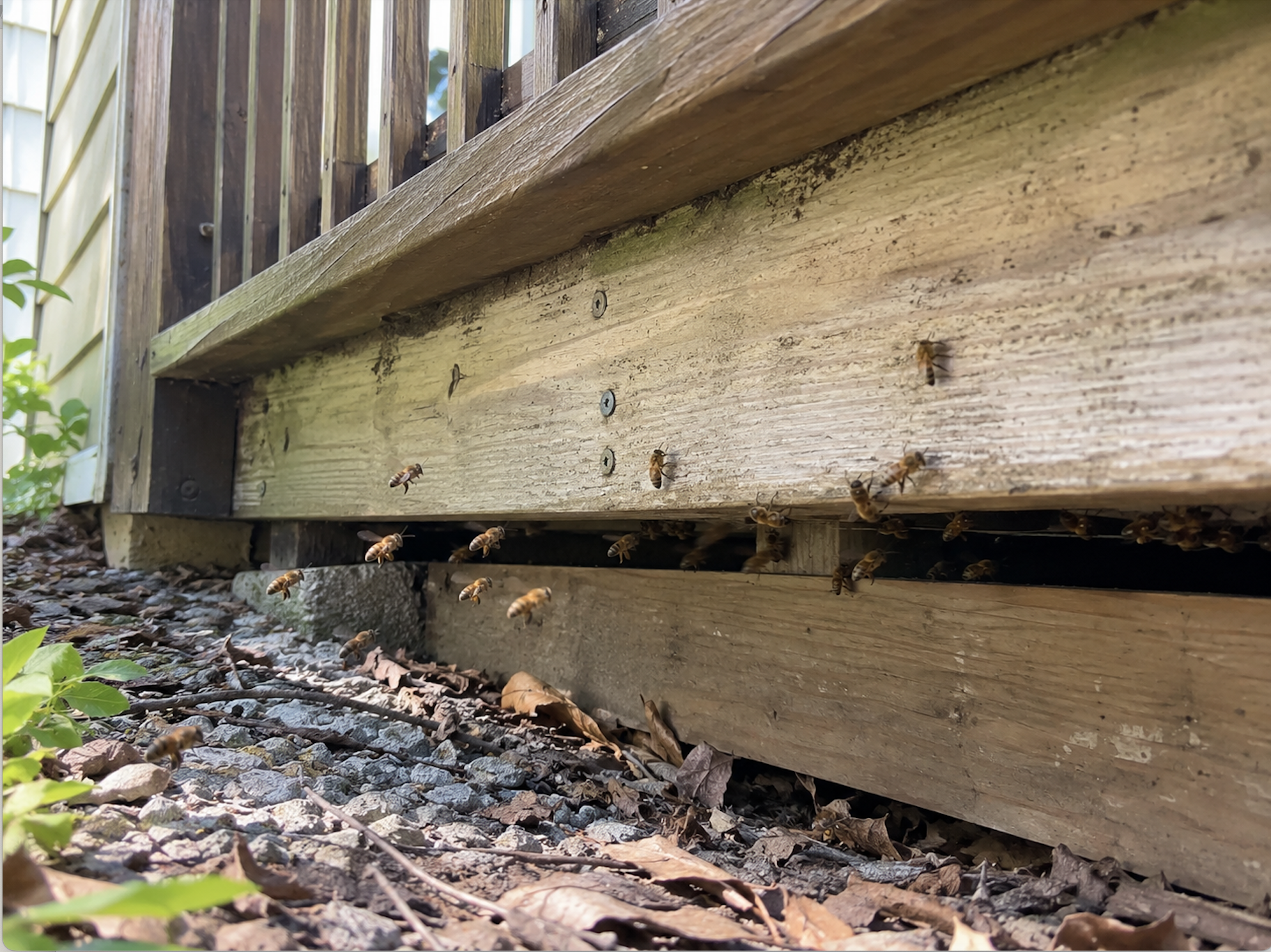
During warm weather, an established colony may have obvious traffic at its entrance. You'll see bees leaving and returning throughout the day.
As temperatures fall, that traffic can decrease dramatically. On a cold Tennessee day, you may see little or no activity outside while the colony remains clustered inside around its food stores.
Then Nashville gets a warmer winter afternoon and bees suddenly appear at the entrance again.
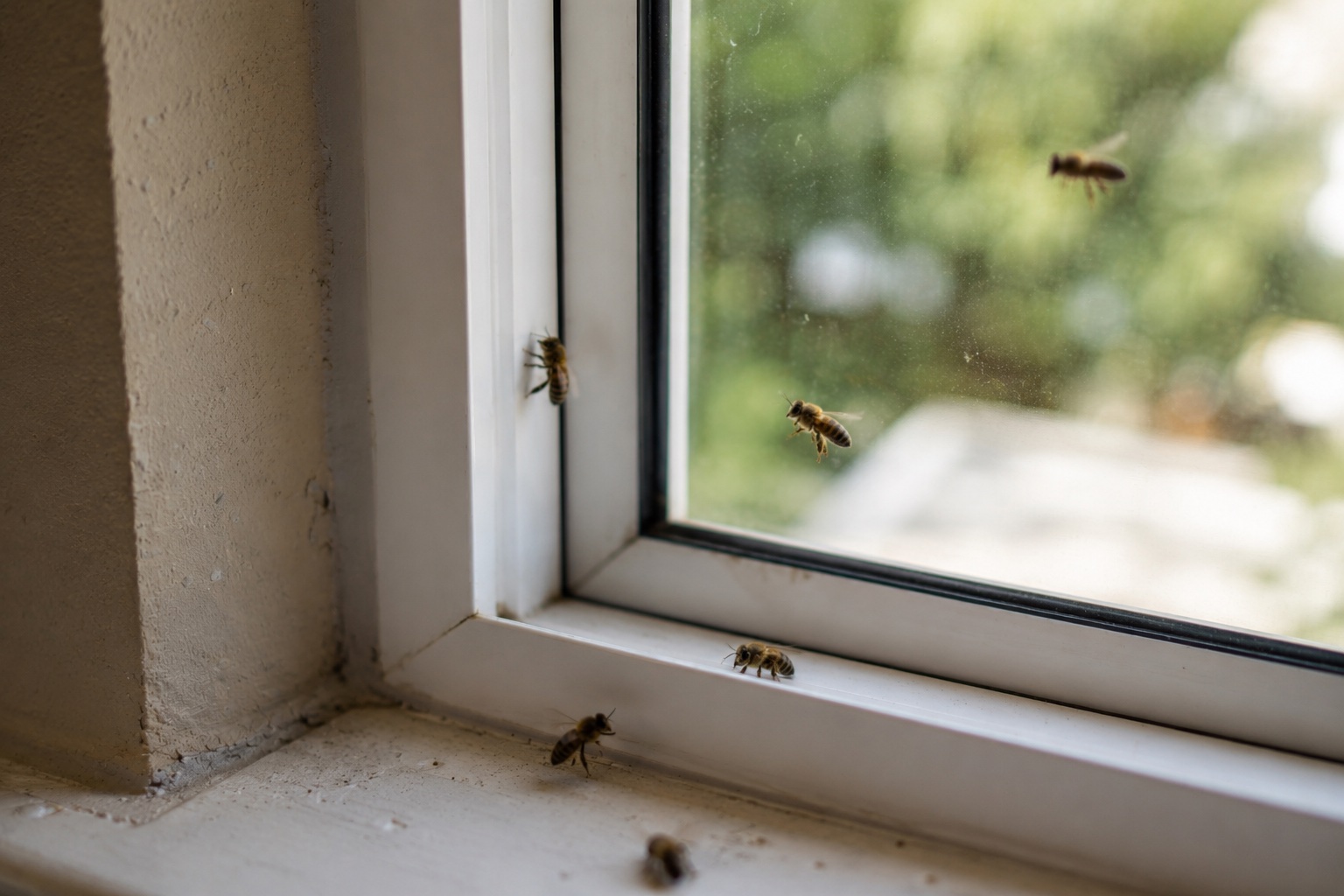
If you've been watching bees consistently enter the same hole in your siding, brick, soffit or roofline, don't assume several quiet cold days mean they've left.
Honey bees and yellowjackets behave differently in winter
In fall, we also get calls about yellowjackets being mistaken for honey bees, and the difference matters if you're waiting for cold weather.
Honey bee colonies can persist from year to year and overwinter as a colony. Yellowjackets have a different seasonal cycle. Their colonies typically die as cold weather arrives, while new queens survive separately and establish new colonies later.
From the ground, insects rapidly entering a small hole can be difficult to identify.
A clear photo can help, but a short video is often more useful to us because it shows both the insect and the flight pattern. Don't climb a ladder or approach an active entrance just to get a better picture.
The bees may be deeper inside the wall than the entrance suggests
One of the mistakes we see with structural colonies is assuming the hive must be directly behind the hole where the bees enter.
That's not necessarily the case.
An entrance at the edge of a soffit, for example, may lead into a larger protected cavity. Bees entering through siding or a gap around brickwork may travel within the structure before reaching the area where they're building comb.
When assessing a structural removal, we're looking at the entrance location, flight activity, construction of the house and where the cavity is likely to extend.
If access is required, the aim is to open the appropriate area rather than removing more building material than necessary.
Don't seal the entrance because winter is coming
If you've confirmed an active honey bee colony, sealing its entrance while the bees are still inside can create another problem.
You've blocked the doorway, not removed the colony.
If the original entrance is blocked, bees can start searching through the structure for another way out. Depending on the wall or roof cavity, that can sometimes bring them into the house.
We also want to know whether someone has already sprayed, foamed or sealed an entrance before we arrive. That information can change what we're dealing with and where we look for activity.
Even a colony that dies doesn't simply disappear
If the colony dies during winter, the bees may be gone, but the hive material isn't.
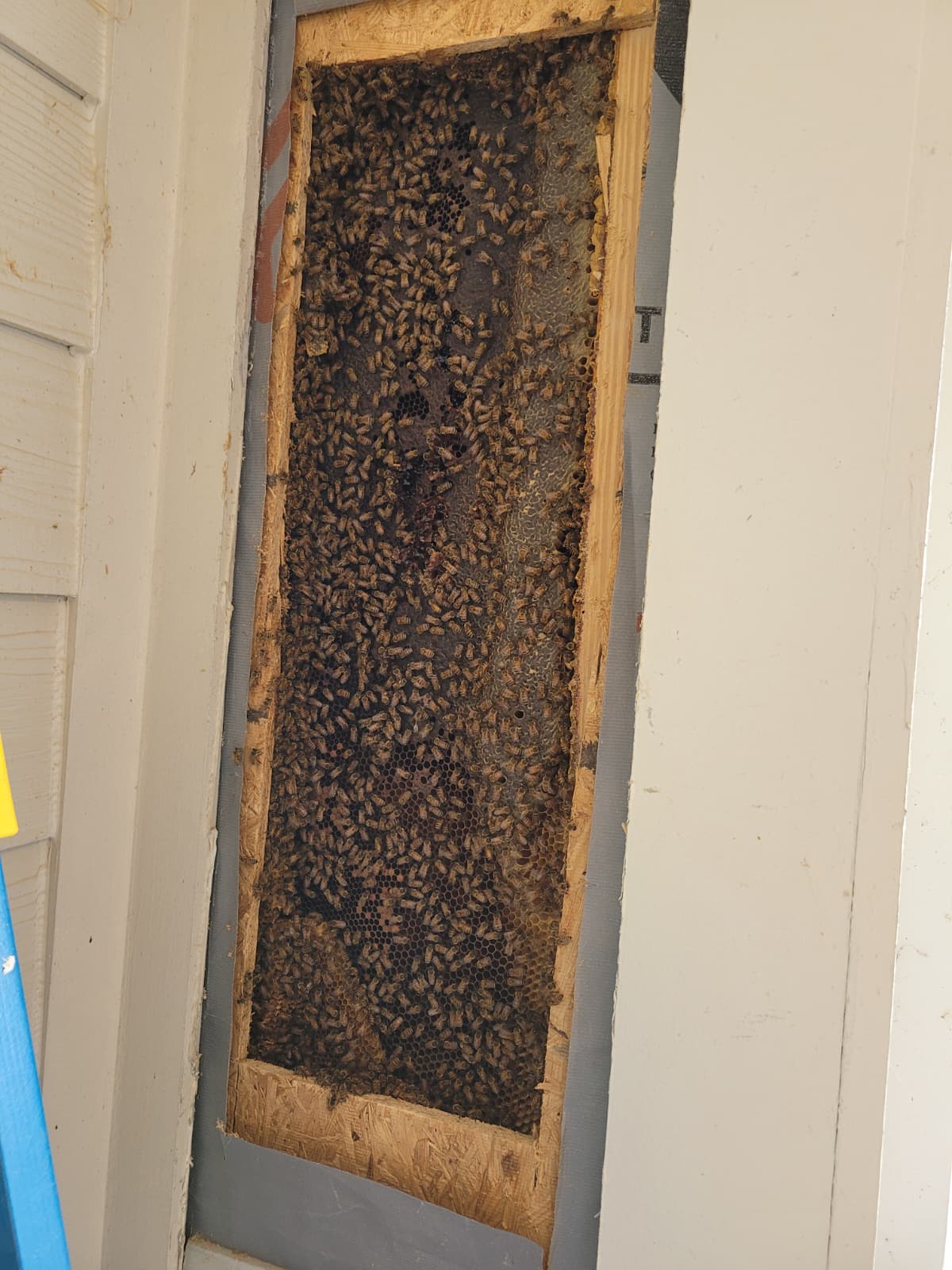
Comb, wax and stored honey can remain inside the wall. Depending on the age and size of the colony, there can be considerably more material inside the cavity than the small exterior entrance would suggest.
An older structural colony may contain multiple sections of comb, brood areas and substantial honey stores.
That material can cause problems later. Honey can leak when comb is no longer being maintained, and old comb can attract ants and other insects. A cavity containing old comb and hive odor can also be attractive to another honey bee swarm looking for a home in a future season.
So even if a colony doesn't survive winter, that isn't the same thing as having the hive properly removed.
What we actually remove from inside the structure
With an established colony, our objective isn't simply to stop bees flying through the entrance.
We first determine where they're entering and where the colony is likely positioned. Depending on the house, access might involve siding, soffit, fascia, a wall cavity or another part of the structure.
Once we expose the colony, we remove the bees and work through the cavity to remove the comb rather than just clearing what is visible at the entrance. With an older colony, that can mean removing multiple sections of brood comb and honey stores before the cavity can be cleaned and closed.
Where appropriate, live honey bees can be captured for relocation rather than simply killed.
The cavity then needs to be cleaned and the access points properly sealed before the structure is closed and repaired. Depending on the location, repair may involve replacing siding or soffit material, closing gaps or repairing the area that had to be opened to reach the colony.
A recently established colony behind accessible siding is not the same job as a large, older colony extending through a difficult roof or wall cavity.
Should you remove them now or wait until spring?
If you've confirmed honey bees inside the structure, winter isn't a dependable solution.
Timing can depend on where the colony is located, how accessible it is and the weather conditions needed to perform the work safely. And not every group of bees around a house represents a colony inside the structure.
But if bees have been consistently entering the same opening, it's worth determining what is actually living there rather than assuming cold weather will take care of it.
If you've been seeing bees use the same opening around your Nashville home, send us a photo of the area and a short video of the flight activity taken safely from the ground. We can often tell from that whether you're dealing with honey bees, where they're entering and what the next step should be.