DIY Bee Removal Risks: Why It Backfires in Los Angeles
November 4, 2024 · 4 min read
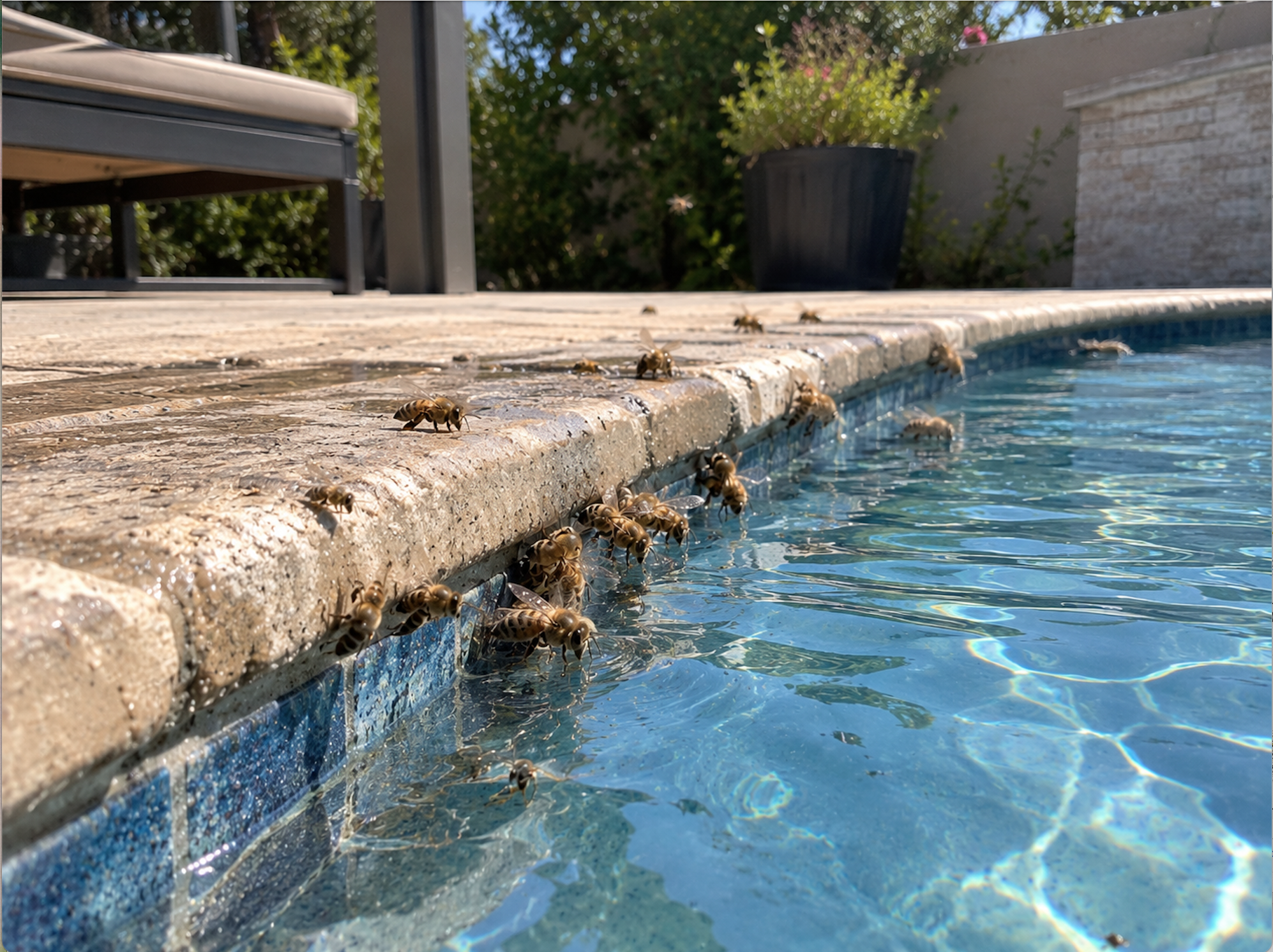
What to do now: Do not spray the bees. Do not block the entry point. Keep people and pets away. Take a photo or short video from a safe distance if possible. Call Beecasso for an assessment before the bees move deeper into the structure.
The appeal is understandable: the hardware store carries bee spray, the hive is there, and calling someone feels like an unnecessary expense. Here is what actually happens when amateur removal goes wrong in Los Angeles, and why the failure mode here is worse than in cooler climates.
For the full list of signs that require immediate action, see our Signs You Need Professional Bee Removal guide.
The comb problem, and why LA heat makes it much worse
When most people try DIY bee removal, they focus on killing or driving off the bees. What they miss is the comb. Honeycomb is wax, honey, brood, and pollen, biological material that does not disappear when the bees do.
In Southern California summer heat, honey inside the comb liquefies and the wax softens. Wall cavities routinely exceed 100 degrees in summer, well into the range where comb collapses and honey drains through the wall structure. The interior of a wall cavity in Los Angeles in July can exceed 120 degrees. If you spray a colony and kill the bees, or smoke them out without removing the comb, the wax and honey left behind will liquefy in the summer heat. Honey drains through wall cavities, saturates insulation, seeps through drywall paper, and stains ceilings. It ferments. It attracts ants, cockroaches, and rodents. And the residual pheromone scent embedded in the wax, the smell that signals "established hive here" to scout bees, can remain detectable for years, drawing new swarms to the exact same location every spring.
This is not a theoretical risk in coastal and valley communities. Beecasso has fielded calls from homeowners throughout the Los Angeles metro area who did a DIY job in early spring and were dealing with a new infestation plus structural staining by August.
What spray actually accomplishes
Raid or any contact kill spray kills the bees it contacts. It does not kill the entire colony: the queen, deep brood frames, and bees deeper in the structure are often untouched. The bees that are not killed immediately will eventually die or relocate, but again: the comb stays. You have created a partial kill plus comb-in-wall, which is the worst outcome. Some of the surviving bees may emerge from a different gap, now confused and defensive.
Smoke-out attempts
Smoke calms bees temporarily by mimicking the signal for "evacuate the hive": they fill up on honey in preparation for fleeing. But a smoke-out without physical extraction does not remove the colony. Bees in established hives are deeply invested in the location: the queen does not simply leave because there is smoke. Most smoke-outs succeed in making the bees very angry, not in removing them.
The sting and injury angle
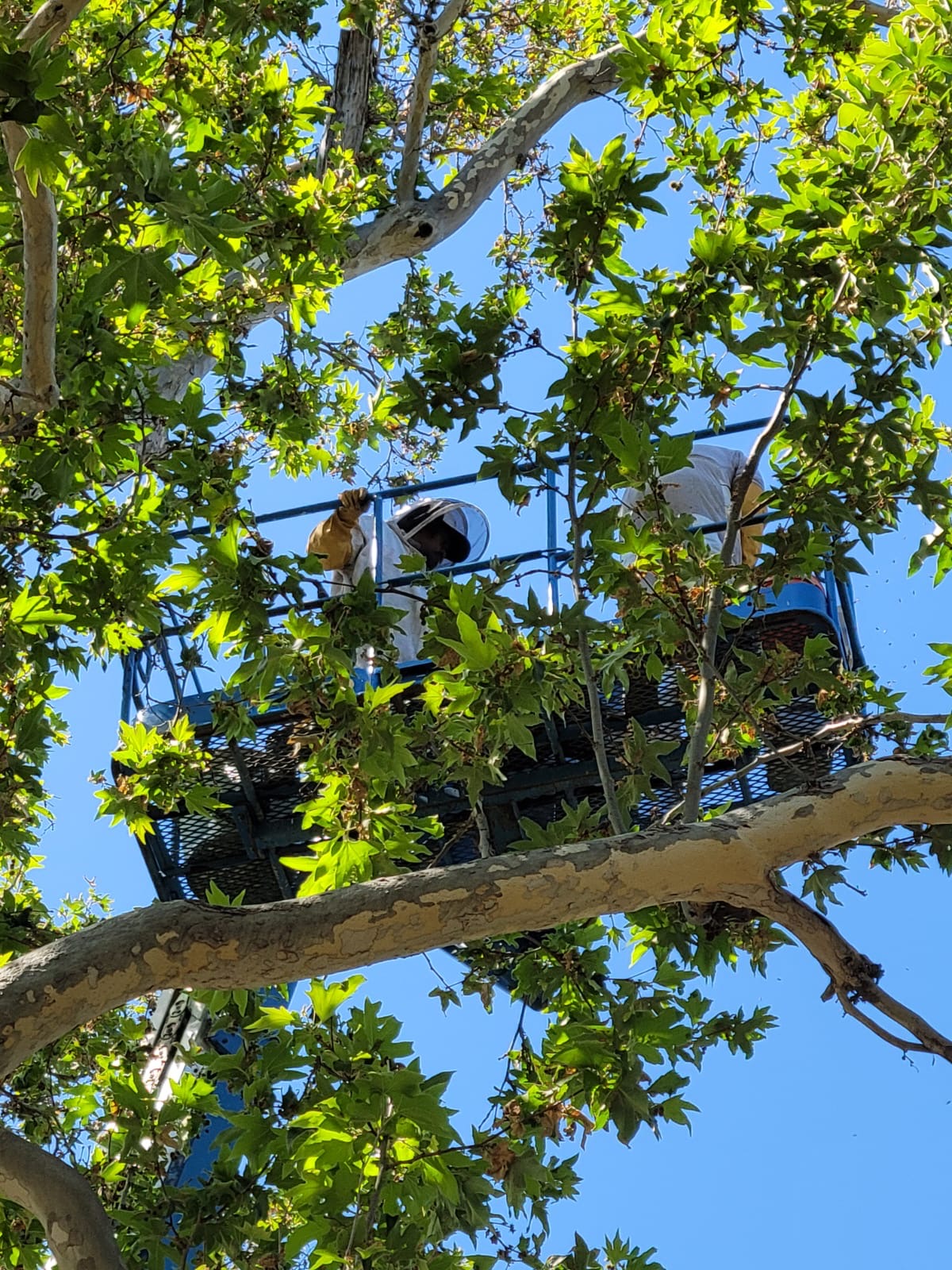
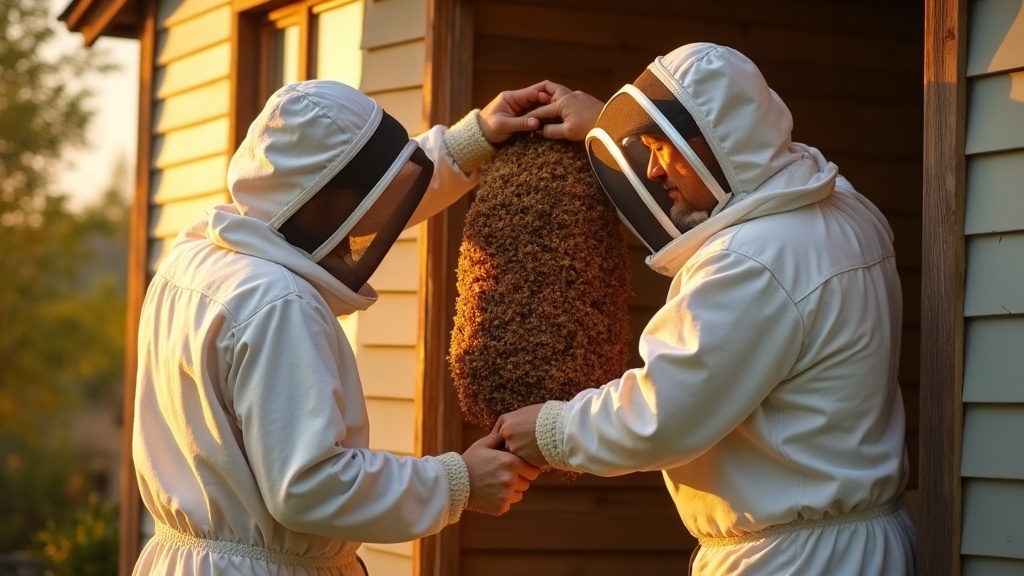
It is secondary, but real. A defensive colony in a confined void, inside a wall, in a crawl space, has no escape route for the smoke or spray and no option but to defend. A professional works with bee suits, a bee vacuum to capture rather than agitate, and knowledge of how to locate and access the hive before breaking through. DIY attempts frequently involve discovering the hive's extent mid-job, through a wall opening that is in the wrong place, with no protective gear adequate for a defensive colony of 30,000 bees.
Africanized honeybee genetics are present throughout Southern California. Africanized colonies are not necessarily more venomous: their sting is the same as a European honeybee, but they are significantly more defensive, respond faster, pursue further, and have lower thresholds for perceiving threat. If the colony you are treating is Africanized, the risk profile changes substantially. A professional can often identify behavioral markers in the field before approaching the hive.
When DIY is actually acceptable
Rarely, but it exists: a fresh swarm, hanging in an open accessible location, with no sign of established comb, low or no traffic into a structure, and the homeowner has some bee experience or good protective gear. A small surface swarm that arrived within the last 24 to 48 hours can sometimes be relocated by an experienced person with a cardboard box and the sense to move slowly.
That is the narrow window. Once there is comb (once bees have begun establishing in a structure), DIY removal risks are real and the cost of getting it wrong (structural repair, re-infestation, extended pest attraction) routinely exceeds what a professional removal would have cost.
If you are in Los Angeles County or Orange County, Beecasso handles the extraction, the comb removal, and the entry point sealing. One call, one clean job.
Serving Los Angeles County and Orange County. Free assessments.
Provided by Beecasso. Last updated June 2026.