Why Do Bees Swarm? What Homeowners Need to Know
March 13, 2025 · 4 min read
What to do now: Do not spray the bees. Do not block the entry point. Keep people and pets away. Take a photo or short video from a safe distance if possible. Call Beecasso for an assessment before the bees move deeper into the structure.
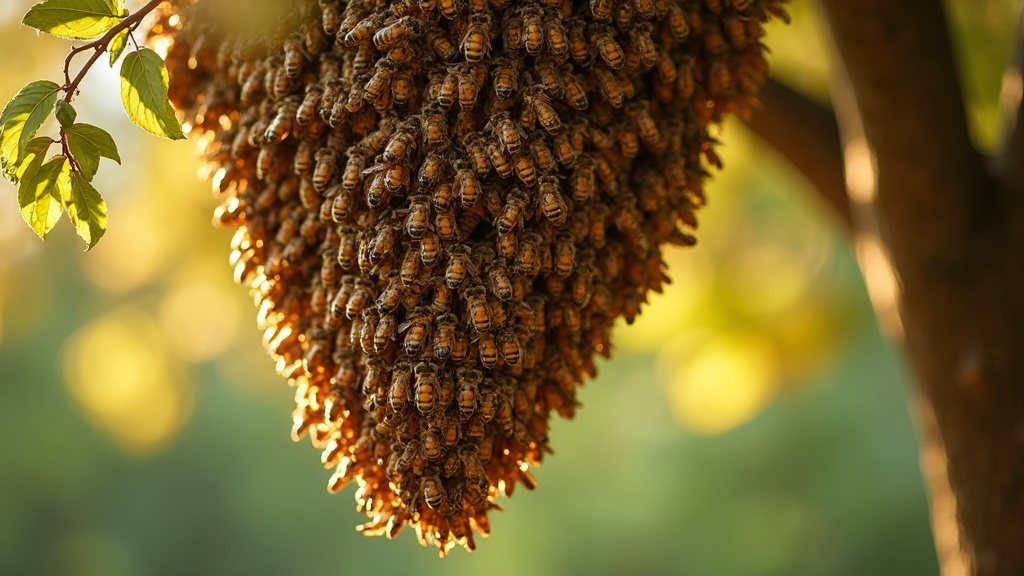
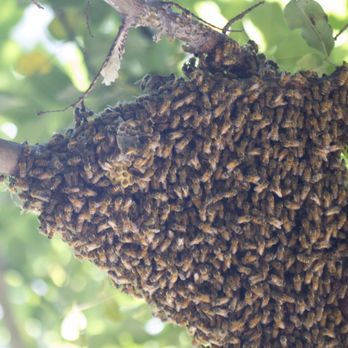
If you have ever seen it, a bee swarm is hard to forget: a dense, roaring cloud of thousands of bees suddenly appearing, then coalescing into a hanging mass on a tree branch or fence post. Here is what is actually happening, why the window to act is short, and what a homeowner should do.
For the full list of signs that require immediate action, see our Signs You Need Professional Bee Removal guide.
What you are seeing: a colony in transit
A swarm is not bees attacking. It is a colony splitting in half and relocating.
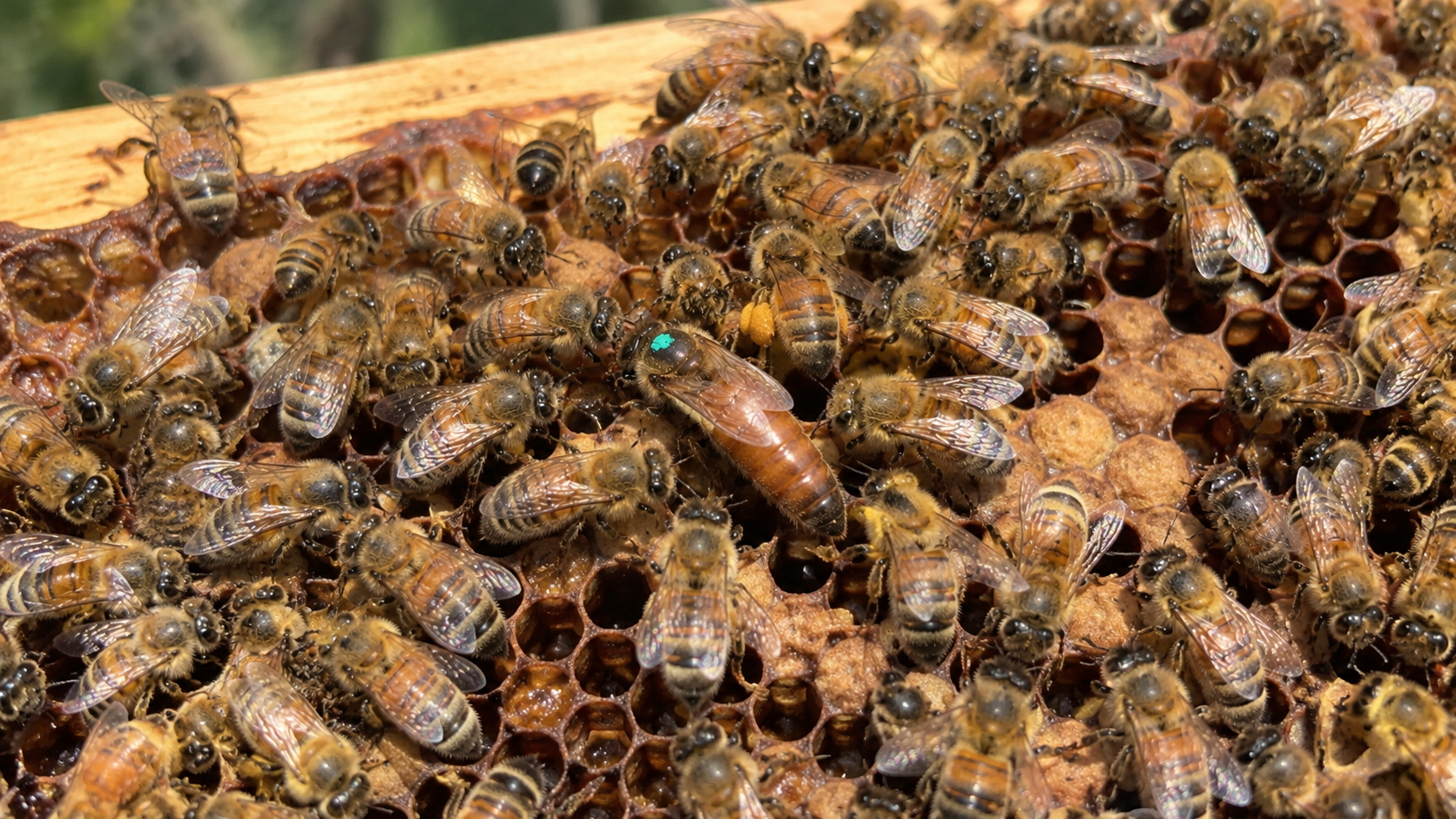
Here is the biology in practical terms. A healthy honeybee colony grows throughout late winter and spring. As the population expands, the hive reaches capacity: not enough space for new comb, too many bees for the queen to maintain order. When that threshold is hit, the old queen stops laying, the colony prepares a new queen in a special cell, and the old queen leaves with roughly half the workers.
That mass, the old queen surrounded by 10,000 to 30,000 bees, is the swarm. They leave together, flying in a cloud, and travel to a temporary staging location while scout bees fan out to evaluate potential new homes. That is the hanging cluster you are looking at: the entire swarm waiting for scouts to reach a consensus.
Why a swarm is less dangerous than it looks
The cluster is actually the most docile form a honeybee colony takes. These bees have no home to defend. They left the hive and everything in it. They are loaded with honey for the journey and have no comb, no brood, no investment in the spot they are sitting on. Absent direct disturbance, do not spray them, do not throw things, do not try to vacuum them up yourself: a swarm hanging on a tree branch poses minimal risk to people moving through the area at a respectful distance.
This is not license to ignore them. It is the context for understanding why calling a beekeeper right now is the right move, rather than panicking or escalating to something destructive.
The window to act
Scout bees conduct a democratic process. They return to the cluster and perform waggle dances indicating the quality of candidate sites. When consensus reaches a threshold, the swarm moves (all at once, in a second cloud) to the chosen location.
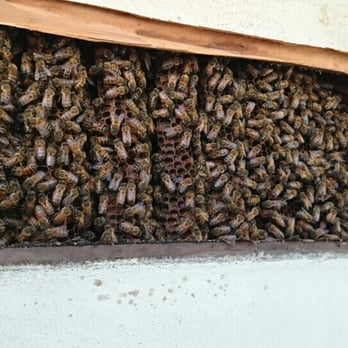
Once they enter a structure, the biology changes immediately. Bees in a new cavity begin drawing comb within hours. Comb building can begin within days of a swarm committing to a cavity. The queen has typically begun laying within 72 hours. Within a week, the colony is invested in the location and increasingly defensive of it.
The swarm you can relocate today as a simple, non-invasive job will be a structural wall extraction within 72 hours if it finds a gap in your eave.
What to do
Do not disturb the cluster. Do not spray it with anything: Raid, water from a hose, nothing. Keep children and pets away from the immediate area.
A photo or short video from a safe distance helps us assess the situation before the visit, and we can often tell the species and access point before we arrive.
Call a bee removal specialist while it is still a swarm. Beecasso is often available same day, weather permitting. It is the fastest possible job: the bees are accessible, there is no comb to extract, and they can be transferred directly into a hive box and relocated to a beekeeper partner.
If the swarm has been in place more than 48 hours and you are noticing bees investigating gaps in your exterior, eave openings, siding seams, utility entry points, call urgently. They may be in the evaluation phase, still before commitment. That is still a better situation than established comb.
After the swarm is gone
If you see a swarm cluster for a day or two and then it disappears on its own, that is not necessarily good news. They moved, probably into a structure somewhere nearby. If you start noticing bee traffic at a specific gap on your property in the weeks after a swarm, it is likely the same colony. Call for an assessment.
If you are in Los Angeles County or Orange County and you are looking at a swarm right now, Beecasso is worth calling. The window is real. Serving Los Angeles County and Orange County. Free assessments.
Provided by Beecasso. Last updated June 2026.
Frequently Asked Questions
Should I spray a bee swarm?
No. Spraying a swarm does not solve the problem: it agitates thousands of bees that are currently in their calmest state. If any survive, they are now defensive and disorganized near your property. Spraying also kills bees that could be relocated to a managed hive. A swarm that has not entered a structure is the easiest possible bee removal job. Do not spray it; call for collection.