What to Do If You Find a Beehive in Your Attic
December 1, 2025 · 3 min read
What to do now: Do not spray the bees. Do not block the entry point. Keep people and pets away. Take a photo or short video from a safe distance if possible. Call Beecasso for an assessment before the bees move deeper into the structure.
You found bees. You are looking at them and you have your phone in your hand. Here is what to do.
Immediately
Do not disturb the hive or swarm. Do not tap the wall, do not spray anything at it, do not try to cover the entry with tape or caulk while bees are actively using it. Any disturbance to an established hive will provoke a defensive response.
Keep people and pets away from the immediate area. Give the activity zone a comfortable margin: 15 to 20 feet is reasonable for a calm, established colony. If the bees seem unusually aggressive, give more distance and stay indoors.
For the full list of signs that require immediate action, see our Signs You Need Professional Bee Removal guide.
Call now: while you are looking at it
The information that helps us give you an accurate response:
Where on the property? Wall, eave, soffit, tree, fence: the location tells us the likely access difficulty and whether this is a structural job or an open removal.
Approximate size of the activity? Dozens of bees going in and out, or hundreds? A visible swarm cluster, or just traffic at an entry point?
Are you seeing bees entering through a specific gap? If yes, where, low to the ground, high up at the eave line, around a utility penetration? And are you seeing them come out of the same point, or a different one?
How long has it been there? Days, weeks, months? A fresh swarm and a year-old colony in a wall are completely different jobs. Neither is better to delay on, but the approach differs. The timeline is also the biggest driver of cost: see our guide to bee removal costs in California.
A photo or short video from a safe distance helps us assess the situation before the visit, and we can often tell the species and access point before we arrive.
What happens if you wait
Bees do not resolve on their own in Southern California. The climate is too mild for colonies to die off seasonally. A colony that established in your wall in April is still there in October, larger than it was in spring.
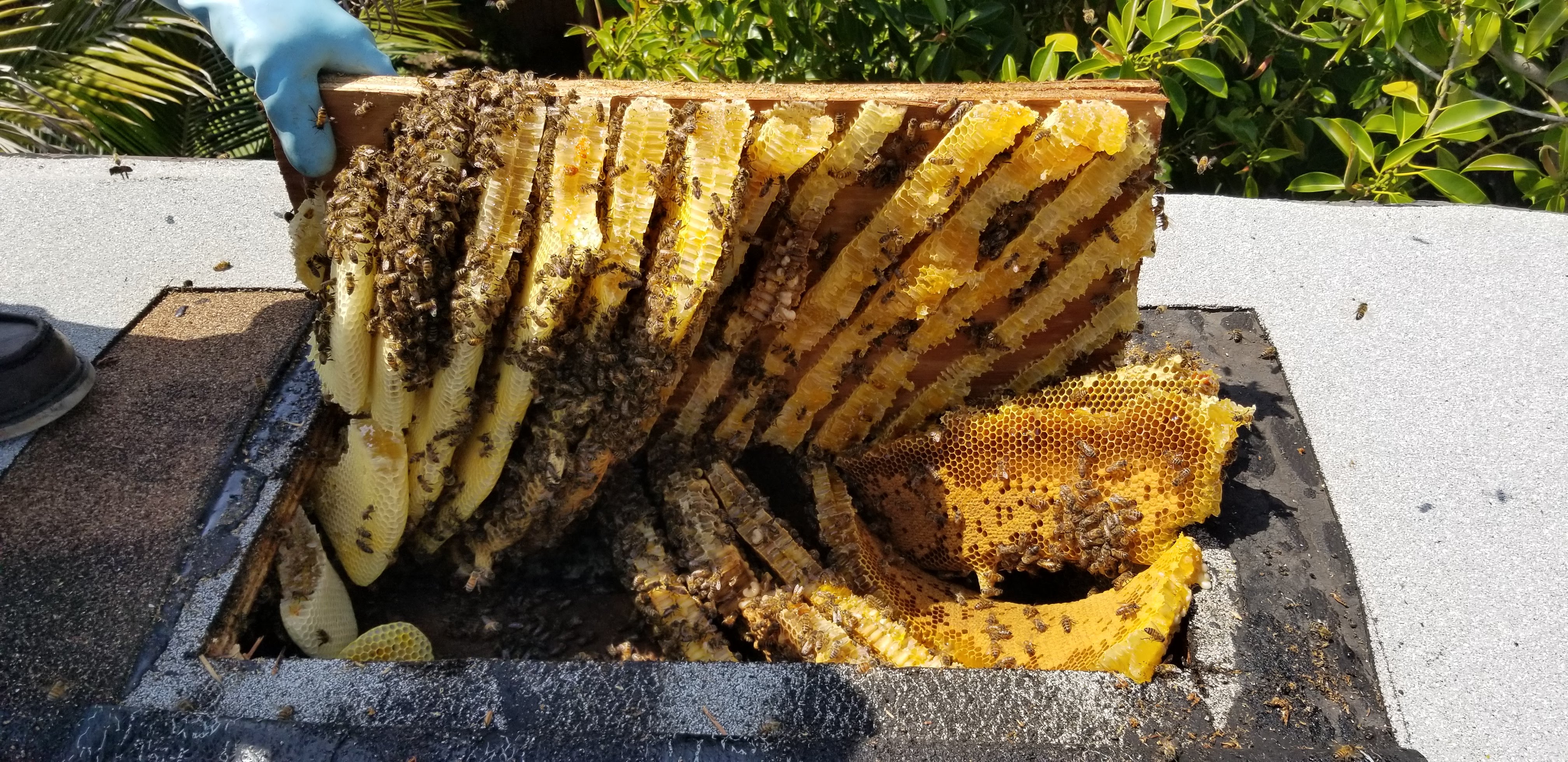
The longer they are in a structure, the more comb. The more complex the extraction process and the higher the structural risk in summer heat. Honey and wax in a wall cavity, disrupted without being fully removed, creates a long-term problem with moisture, staining, and pest attraction that a timely removal would not have.
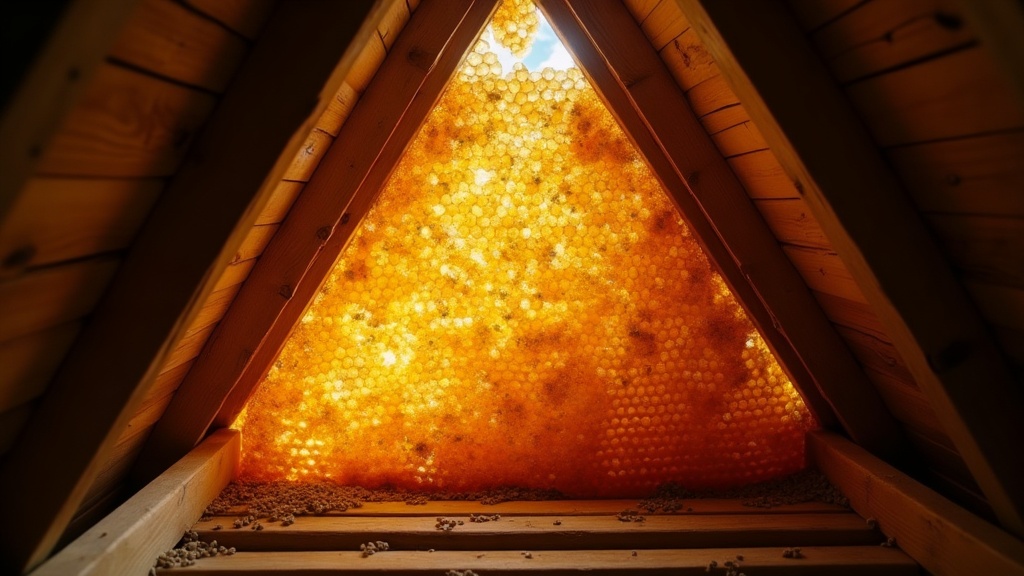
A complete bee removal is not just removing bees. It means locating the colony, safely collecting the bees, removing the comb, cleaning the cavity, sealing the entry points, and relocating the viable colony whenever possible. Comb left behind liquefies in Southern California summer heat, damages the wall structure, and its pheromone signature attracts new swarms to the same spot year after year.
Call Beecasso
Beecasso serves Los Angeles County and Orange County. Live removal and relocation: whenever possible, colonies are relocated to local beekeepers and apiary partners, not a trash bag. Free assessments. Call now.
Serving Los Angeles County and Orange County. Free assessments.
Provided by Beecasso. Last updated June 2026.
Frequently Asked Questions
Why do bees come back to the same wall?
Because the pheromone signal from old comb does not disappear when the bees do. Honeycomb contains compounds, from brood, from propolis, from the nest itself, that are detectable to scout bees for years after the colony is gone. That signal means "established hive here, evaluated and approved." A location where bees were removed without full remediation, comb extracted, cavity cleaned, entry points sealed, is functionally advertising itself to every new swarm that passes through. Complete removal matters for exactly this reason.